Emergency guide
Your roof is leaking in Memphis. Here is what to do first.
The first fifteen minutes, the usual culprits, and what to expect when the roofer arrives.
By Cora Padgett, Roofing Guides Editor Updated October 2026
We answer 24/7 across Memphis and Shelby County
Quick answer
When a roof leaks in Memphis, spend the first 15 minutes protecting the inside: put buckets under drips, move electronics, switch off power to wet rooms, drain a bulging ceiling spot into a bucket, and photograph everything. Stay off the roof. Then call a roofer who answers 24/7 to cover it and trace the source.
In the first 15 minutes
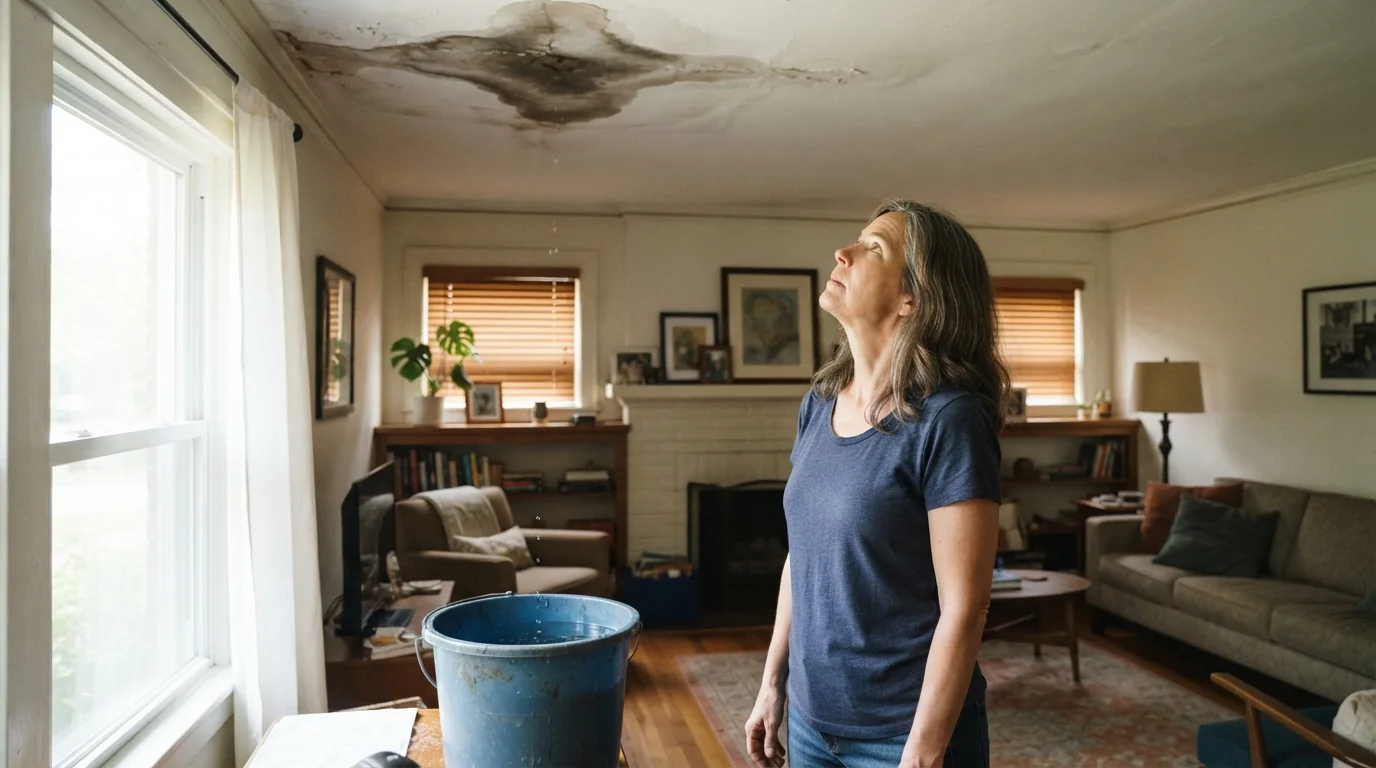
- Put a bucket or pot under every drip, with a towel inside to stop splashing.
- Move furniture, rugs and electronics out of the way, and lay plastic over anything that cannot move.
- Turn off power to rooms where water is near lights, outlets or ceiling fans.
- If the ceiling is bulging, pierce a small hole at the lowest point over a bucket so the water drains instead of bringing the drywall down.
- Photograph the ceiling, the wet areas and anything damaged.
- Call your roofer, and your insurer if a storm caused it.
What you should not do is climb onto the roof, especially at night, in rain or after a storm. Wet shingles are slick, and storm-damaged decking can give way.
Why the drip is not where the leak is
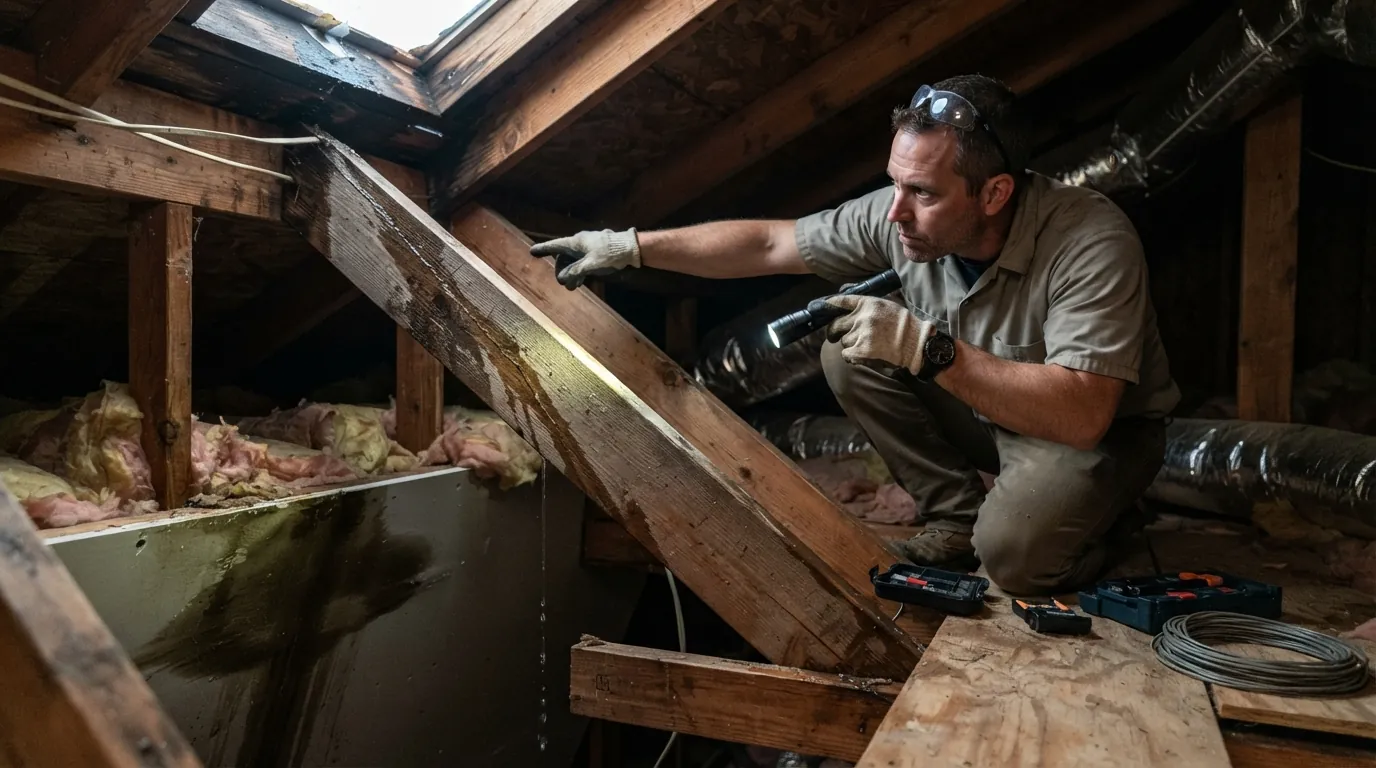
Water rarely falls straight through a roof. It gets past the shingles at one point, runs down the underlayment or along a rafter, and drops wherever it finds a nail, seam or gap. On a sloped roof the entry point is usually upslope of the stain, sometimes by several feet, which is why patching the shingles right above the stain so often fails.
A roofer traces it from both ends: in the attic, following the water marks up the rafters, and on the roof, checking every joint and penetration above that line.
The usual culprits on a Memphis roof
- Pipe boots. Rubber collars around plumbing vents crack in summer sun and leak straight down the pipe; see roof leak repair.
- Flashing. Chimneys, walls and dormers leak where metal has rusted or was replaced with caulk; see chimney and wall flashing repair.
- Valleys. The busiest water path on the roof, and the first to leak when debris piles up.
- Lifted shingles. Wind breaks the seal strip and water gets in at the nail line after the next storm; see storm damage repair.
- Skylights. Usually the flashing around the curb, not the glass.
Water coming in right now?
We answer 24/7 and can cover the roof tonight so the repair happens in daylight.
Call (901) 459-6395When to tarp and when to wait
If rain is still falling or more is forecast, the roof needs a temporary cover: a tarp run over the ridge and fastened with wood battens, or a sealed cover on a failed boot or flashing. That work is done when it is safe, not during lightning. Our emergency roof repair page describes what that visit includes.
If the rain has stopped and the drip is slow, it is often better to protect the inside and have the roof looked at in daylight, when the source can be traced properly instead of guessed at.
What to tell the roofer when you call
A few details make the first visit faster and more accurate:
- Where the water is showing, which room and which part of the ceiling
- Whether it started after a storm, heavy rain or wind from one direction
- Whether it drips in every rain or only some storms
- Whether there is attic access above the spot
- Roughly how old the roof is, if you know

Sudden leaks, slow leaks and insurance
Most homeowner policies treat sudden damage from a covered event, such as wind tearing shingles off, differently from slow leaks caused by wear. A new stain after a storm is worth documenting and reporting; a stain that has spread slowly for months may not be covered. Keep the photos from the first 15 minutes either way, and our guide to filing a roof insurance claim in Memphis covers what carriers look for.
After the repair
Once the entry point is fixed, the inside needs to dry before it is repaired. Wet attic insulation should be pulled and replaced, and stained drywall can often be dried, sealed with a stain-blocking primer and painted rather than replaced. If a leak ran for a long time, have the roof decking checked from the attic; soft wood is easier to fix before it spreads.

FAQ
Roof leak questions
No. Wet or storm-damaged roofs are dangerous. Protect the inside, photograph it, and let a roofer trace it.
Wind-driven rain reaches spots that straight-down rain does not, such as flashing on one side of a chimney. Those leaks often need a water test to find.
It can be covered in the rain. Permanent repairs need a dry surface to seal, so they follow once the roof dries.
Rarely. Most leaks come from one failed part, such as a boot, flashing joint or valley.
Quickly. A slow drip soaks insulation and decking long before the stain looks serious.
Often not. Once dry, stained drywall can usually be sealed and painted. Sagging or crumbling drywall needs replacing.