Replacement & Installation
Cedar shake roof repair and replacement for Memphis homes
Cedar shakes give a house a look no shingle quite matches, but wood in this climate needs steady care. Humidity, shade and summer sun work on a shake roof every year.
We answer 24/7 across Memphis and Shelby County
The job
What cedar shake roofing involves in Memphis
Quick answer
Cedar shake roofing in Memphis covers repairing split or missing shakes, replacing worn sections, and full replacement in new cedar or a synthetic shake. We inspect the whole roof first, because moss, rot and failed interlayment often hide under shakes that look fine from the ground. In historic districts, a change of material may need city review.
Cedar shakes are split or sawn wood laid in overlapping courses, usually with an interlayment between them, over spaced boards or solid decking. While the wood is sound they shed water well and breathe better than asphalt. Their weak points are moisture and time: shakes cup, split and lose thickness, and shaded slopes grow moss that holds water against the wood.
Memphis is hard on wood roofs. Long humid summers and shade from mature trees keep shakes damp, while hot afternoon sun on the south and west slopes dries and splits them. A shake roof here needs regular cleaning, prompt replacement of split shakes and attention to flashing far more often than an asphalt roof does.
Many of the shake roofs left in the area sit on older homes in established neighborhoods, some of them inside historic districts. That matters when replacement comes up, because a change of material on a roof visible from the street may need review before work starts.
Cost
What affects the cost of cedar shake work
Shake roof work is priced by roof area, the condition of the wood and decking, and the material chosen.
- Roof area
Measured in squares of 100 square feet.
- Repair or replace
Spot repairs cost far less than a new roof.
- Shake grade
Thicker, higher grades cost more and last longer.
- Decking
Spaced boards may need solid sheathing added.
- Roof pitch
Steep roofs need more staging and time.
- Flashing
Chimneys, valleys and walls add metal work.
- Review
Historic-district approval can add lead time.
Your options
Cedar shakes, synthetic shakes or Shake-Style shingles?
| Cedar shakes | Synthetic shakes | Shake-style shingles | |
|---|---|---|---|
| Look | Natural wood that grays with age | Wood-like, holds its color | Textured, flatter profile |
| Upkeep | Cleaning and shake replacement | Low | Low |
| Best for | Keeping an original look | Wood look with less upkeep | Shake texture at a lower price |
Shake roof repair
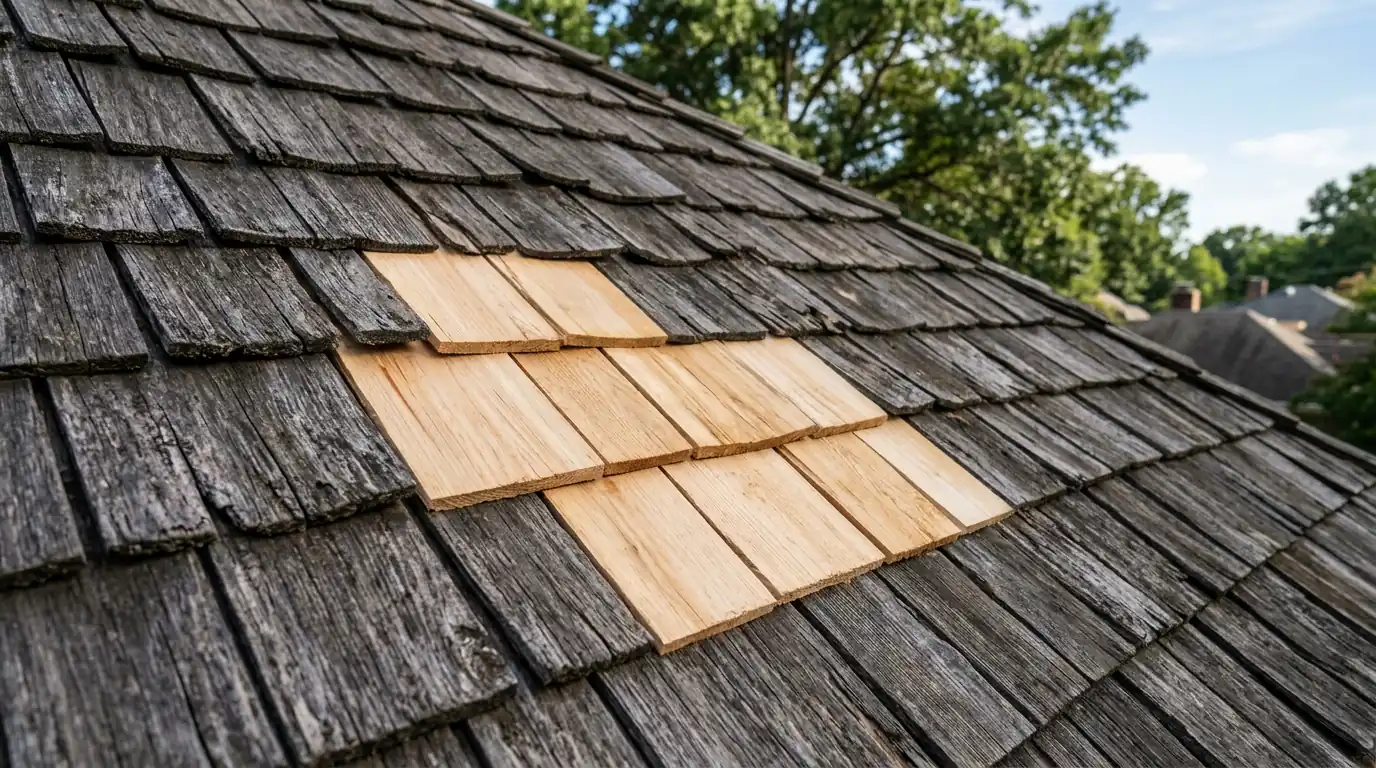
Most shake roof calls start with a leak or a few missing shakes after a storm. We replace split, cupped and missing shakes one by one, slipping new wood into the course and fastening it so it lines up with its neighbors, and we check the interlayment beneath while the old shakes are out. New cedar starts out lighter than the weathered roof around it and grays down over a season or two. If the leak sits at a valley, chimney or wall, the fix is usually flashing rather than wood, and we photograph the source so you can see the difference before anything is replaced.
Cedar shake replacement
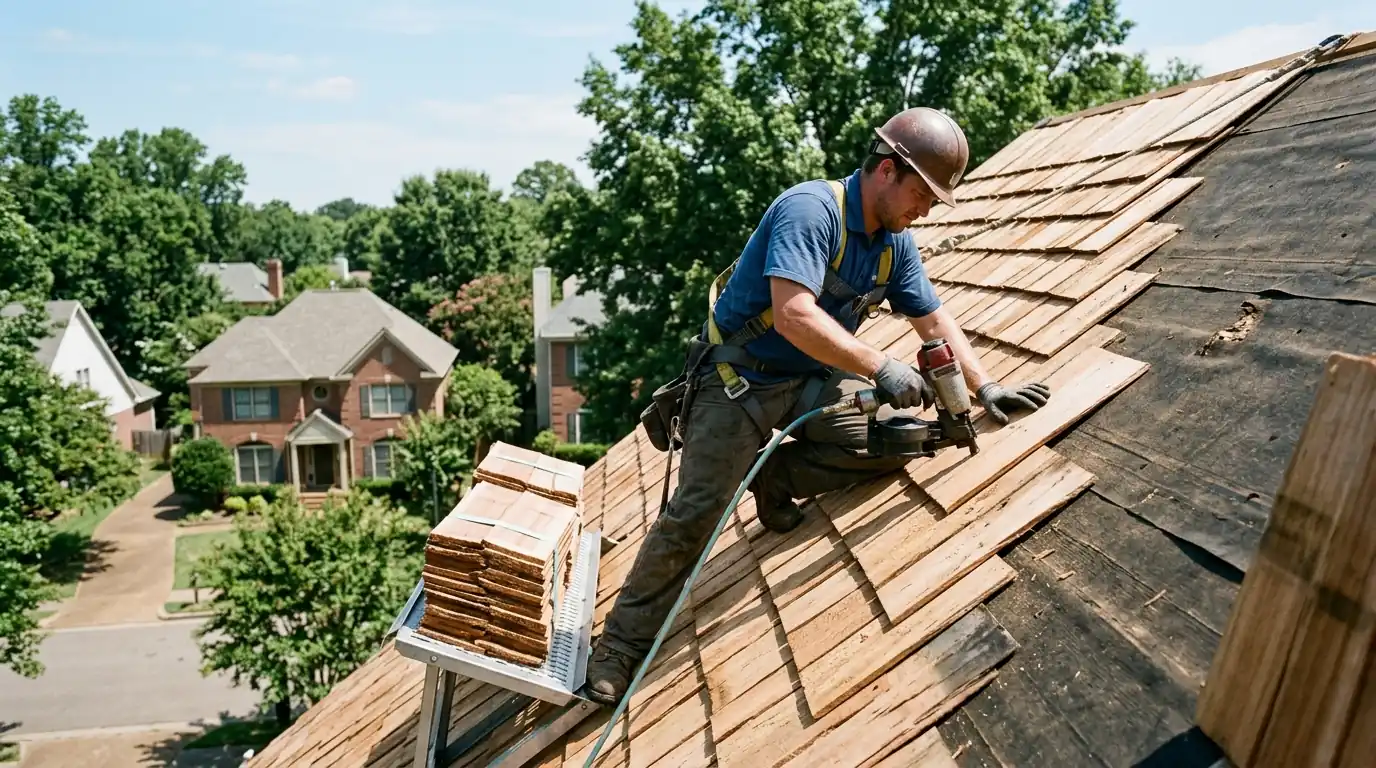
When shakes are thin, brittle or rotting across whole slopes, patching stops paying off. Replacement starts with a tear-off down to the decking, which on older homes is often spaced boards, and we add solid sheathing where the new system calls for it. Then come interlayment, new flashing and new shakes laid to the manufacturer's exposure. Cedar comes in several grades and thicknesses, and the heavier grades hold up longer on shaded slopes. We explain the options, price each one in writing, and keep the roof dried in every night until the job is done.
Synthetic shakes and other alternatives
Some homeowners want the look of shakes without the upkeep. Synthetic shakes made from composite materials, and heavy architectural shingles with a shake-style profile, give a similar texture with less maintenance and far better resistance to rot and moss. They weigh and install differently from wood, so we check the decking and the flashing details before quoting. On a home inside a historic district, a change away from wood may need approval first, so we confirm what applies to your address before you settle on a material.
Local conditions
Shake roofs in Memphis historic districts
Many of the wood roofs left in Memphis are on older homes, and some of those homes sit in the city's historic districts. The Memphis Landmarks Commission reviews work visible from the street in those districts, including exterior alterations, through a Certificate of Appropriateness. It has also set roofing-material conditions there, for example requiring architectural shingles on a new house built in a district. Before a shake roof in a district is replaced with another material, we check what review the address needs, so the job is not stopped halfway.
How it runs
How a cedar shake job runs
- 01
Roof walk
Shakes, flashing and decking checked and photographed.
- 02
Written scope
Repair or replacement, material and grade listed.
- 03
Review check
District or permit needs confirmed for your address.
- 04
Prep
Damaged shakes removed and the roof protected.
- 05
Install
New shakes laid to exposure with proper flashing.
- 06
Clean up
Nails swept, debris hauled and photos sent.
Shakes splitting or turning green?
Call and we will walk the roof, photograph the worn shakes and tell you whether repair still makes sense.
Call (901) 459-6395FAQ
Cedar shake questions from Memphis homeowners
It depends on the grade, the ventilation and the shade. Regular cleaning and prompt shake replacement add years, while neglected roofs in heavy shade wear out much sooner.
Yes. We replace split, missing and rotted shakes individually and check the interlayment underneath.
New cedar starts lighter than weathered wood and grays down over a season or two.
Often, yes. In a historic district the change may need approval first, so we check before you decide.
Yes. Moss holds water against the wood and speeds rot. We remove it gently and treat the roof so it grows back more slowly.