Repairs & Leaks
Roof leak repair in Memphis that starts at the source
If your ceiling stained after the last storm, the leak is usually not directly above the stain. Water runs along the decking and rafters and drops where it finds a gap. We follow it back to where it gets in, and fix that.
We answer 24/7 for roof leaks across Memphis and Shelby County
The job
How water travels before it stains the ceiling
Quick answer
Roof leak repair in Memphis starts with tracing: water enters at a pipe boot, flashing joint, valley or lifted shingle, then runs several feet along the decking before it drips. Most leaks are one failed part, not a failed roof, so the repair targets that part and usually takes a few hours once the entry point is found.
A roof leak is a path, not a hole. Water gets past the shingles at one point, runs down the underlayment or the top of a rafter, and falls wherever a nail, seam or truss gives it somewhere to drip. The stain on your ceiling is the end of that path.
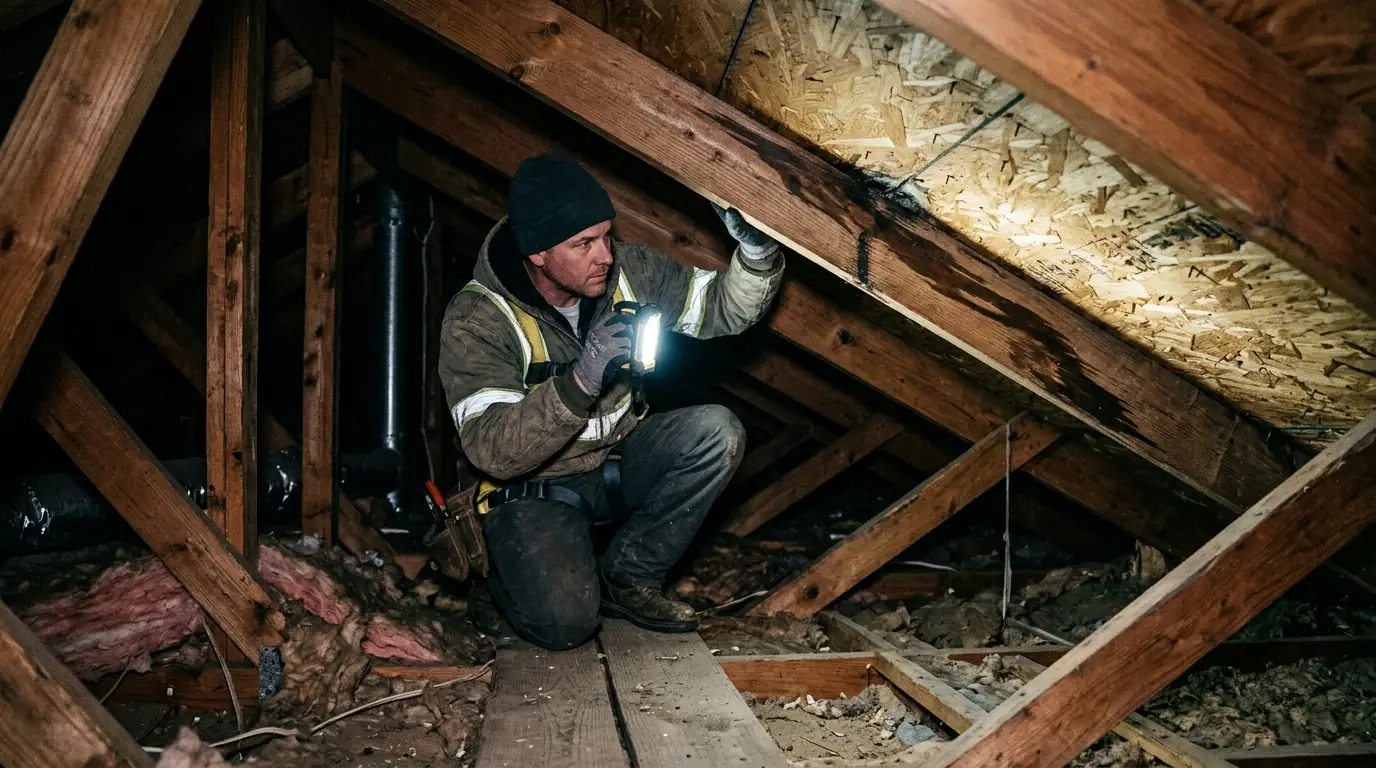
We trace it from the attic, following water marks upslope, and from the roof above the stain. The entry point is photographed before and after the fix.
Warning signs
Signs of a roof leak even without a drip
- Ceiling or wall stains
Brown rings that grow after each rain.
- Peeling paint up high
Moisture lifting paint along upper walls.
- Damp attic insulation
Matted or dark patches under the roof deck.
- Musty upstairs smell
Hidden moisture in the attic or walls.
- Daylight in the attic
Light through the deck means water can get in too.
How it runs
How we find and fix a roof leak
- 01
Call
We answer 24/7; active leaks get covered first.
- 02
Attic trace
Water marks followed upslope from the stain.
- 03
Roof check
Every penetration and joint above the stain inspected.
- 04
Water test if needed
A hose run slope by slope to confirm the entry.
- 05
Repair the entry
The failed part replaced and sealed correctly.
- 06
Show you
Before and after photos of what failed and the fix.
Local conditions
Leaks on older Midtown roofs
The early-1900s houses of Central Gardens are full of the roof details that leak: dead valleys behind dormers, a chimney on nearly every slope, and walls where one roofline meets another. Shelby County allows repairs with new shingles, but its guidance notes that shingle sizes have changed over the years, which matters on a roof that may have been reshingled more than once. On those houses we match the existing exposure as well as the color, so the repaired courses lie flat and shed water like the rest of the slope.
Ceiling stain leaks
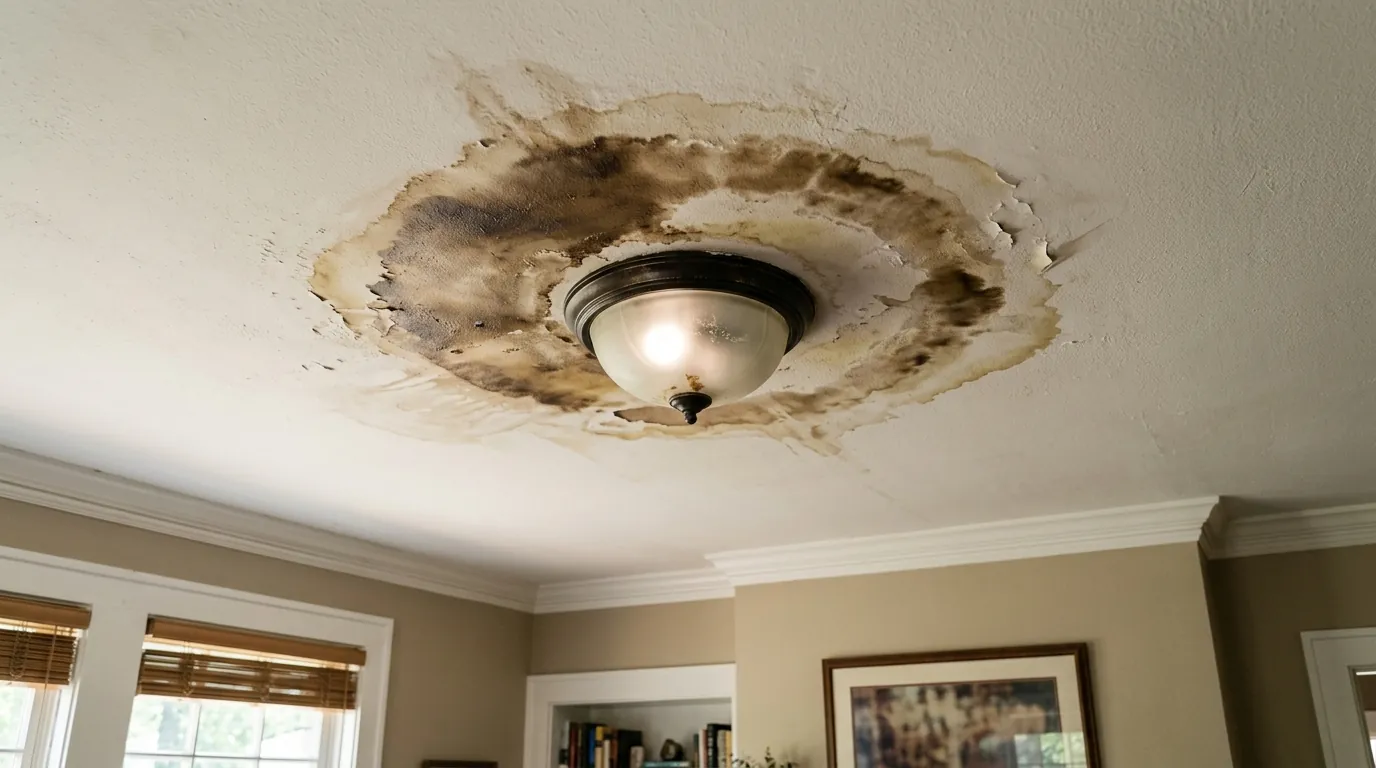
A ceiling stain is where a leak ends, not where it starts. On a sloped roof, water usually enters upslope of the stain, sometimes by several feet, and follows rafters or the underside of the deck until it drops. We mark the stain's position in the attic, follow the water trail back up the rafters with a light, then check every shingle course, nail and penetration on the roof above that line. Once the entry point is fixed, we tell you whether the drywall needs replacing or just drying and repainting.
Valley and Dead-Valley leaks
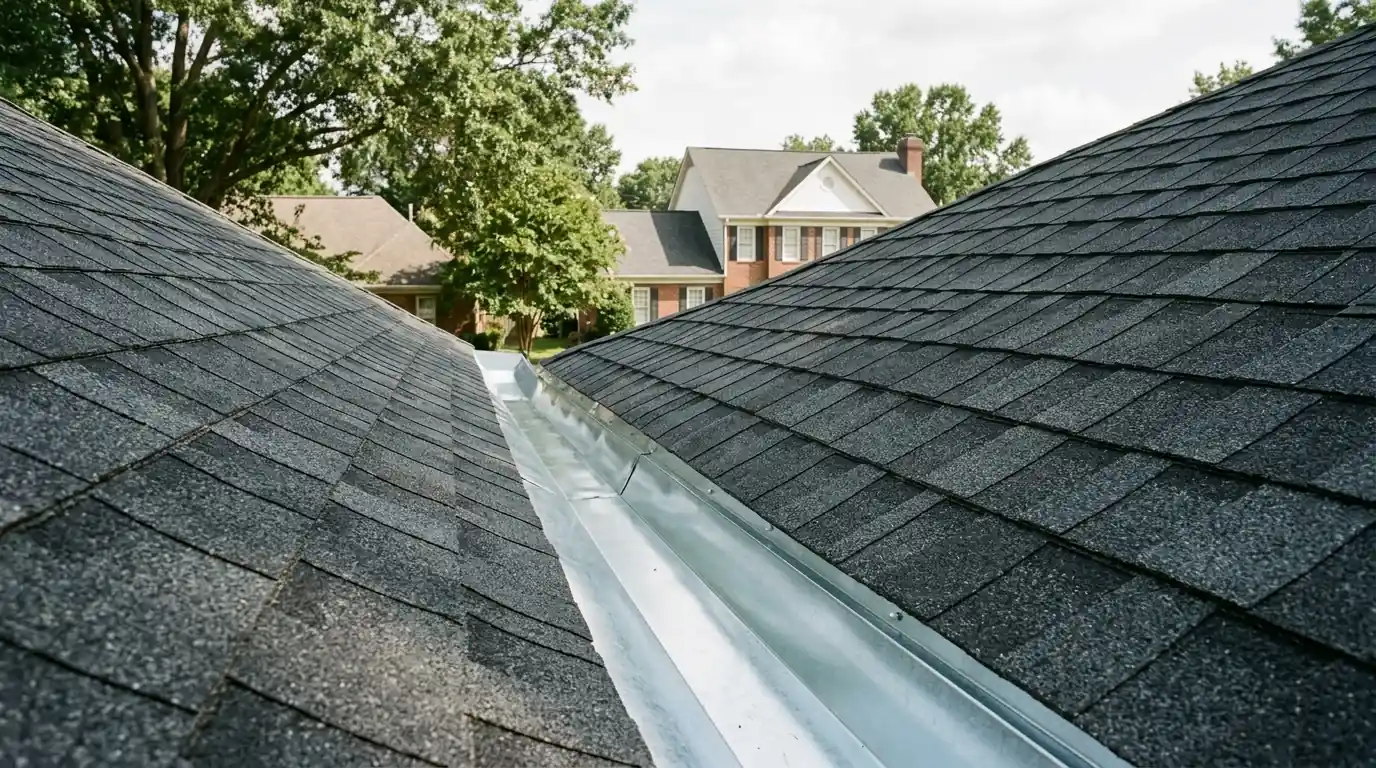
Valleys carry more water than any other part of the roof, and they leak when shingles are cut short, nails sit too close to the center, or debris dams the flow. Dead valleys, where a slope runs into a wall or another roof with no way out, are worse: water pools there in every storm. We rebuild valleys with ice and water membrane underneath and either open metal or properly woven shingles on top. For dead valleys, we add a cricket or rework the flashing so water has somewhere to go.
Pipe boot and vent leaks
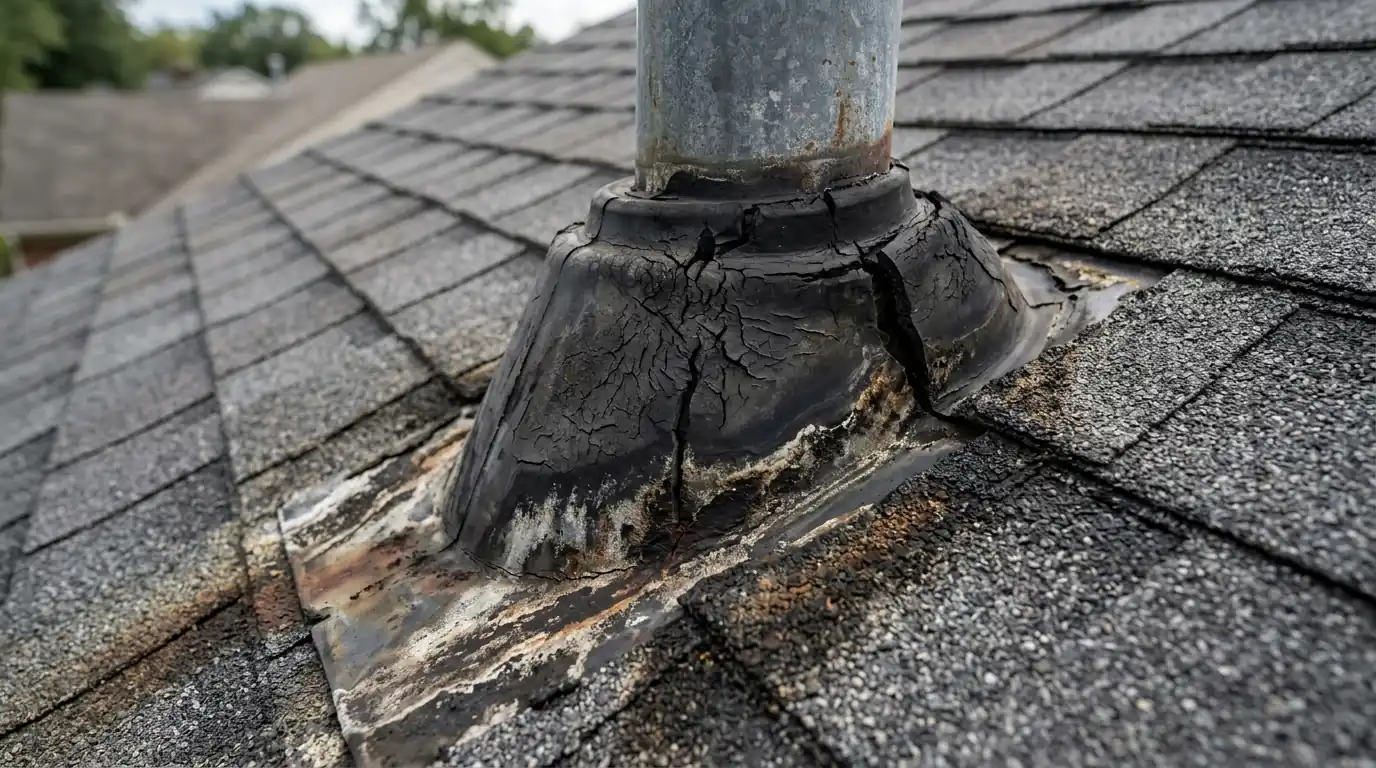
The rubber collar around a plumbing vent is one of the most common leak sources on any shingle roof. Summer sun cracks the rubber, and water runs straight down the pipe into the ceiling below, often near a bathroom. We replace the boot with a longer-lasting style, check that the shingles around it are lapped correctly, and inspect roof vents and exhaust hoods on the same visit, since loose fasteners and cracked housings leak the same way. Missing or rusted vent screws are replaced with gasketed ones.
Skylight leaks
Skylights leak at their flashing far more often than at the glass. Old installs that relied on caulk instead of step flashing fail as the caulk dries, and leaves piled on the uphill side hold water against the curb. We separate condensation from true leaks first, then reflash the unit or replace it if the frame has failed. Our skylight replacement and reflashing page covers the options in more detail, including when a new unit makes more sense than new flashing and when to pair it with a reroof.
Dripping right now?
Put a bucket under it and call. We answer 24/7 and can cover the roof tonight so the repair happens in daylight.
Call (901) 459-6395Cost
What affects the cost of a leak repair
Leak repairs are priced once the entry point is found, because the fix depends on what failed.
- What failed
A pipe boot, a flashing joint and a valley are different jobs.
- How long it leaked
Long leaks can rot decking that then needs replacing.
- Access to the spot
Steep slopes and upper roofs take more setup.
- Tracing time
Intermittent leaks may need a water test to pin down.
- Shingle match
Old or discontinued shingles are harder to blend.
- Interior repair
Drywall and paint are separate from the roof fix.
- More than one entry
Some roofs leak in more than one place.
FAQ
Roof leak questions from Memphis homeowners
Water travels along rafters and decking before it drips. The entry point is usually upslope, sometimes several feet away.
Rarely. Most leaks are one failed part, such as a boot, flashing or valley. A roof that leaks in many places at once is a different story.
Wind-driven rain reaches spots that straight-down rain does not. Those leaks often need a water test to find.
We can cover it in the rain. Permanent repairs need a dry surface, so they follow once the roof dries.
Sudden damage from a covered storm often is; slow leaks from wear usually are not. Our photos help show which it was.