Storm & Emergency
Emergency roof repair in Memphis, answered around the clock
Water coming through the ceiling at 2 a.m. is when you find out whether a roofer answers the phone. We do. We cover the roof, stop the active leak, and come back in daylight for the real repair.
We answer 24/7, nights, weekends and holidays, across Memphis
The job
What an emergency visit actually does
Quick answer
Emergency roof repair in Memphis is temporary work done at night, in weather or right after a storm to stop water getting in: a tarp fastened over the damaged area, a temporary cover over a hole, or a sealant stop on a failed spot. The permanent repair follows once the roof is dry and the right materials are on hand.
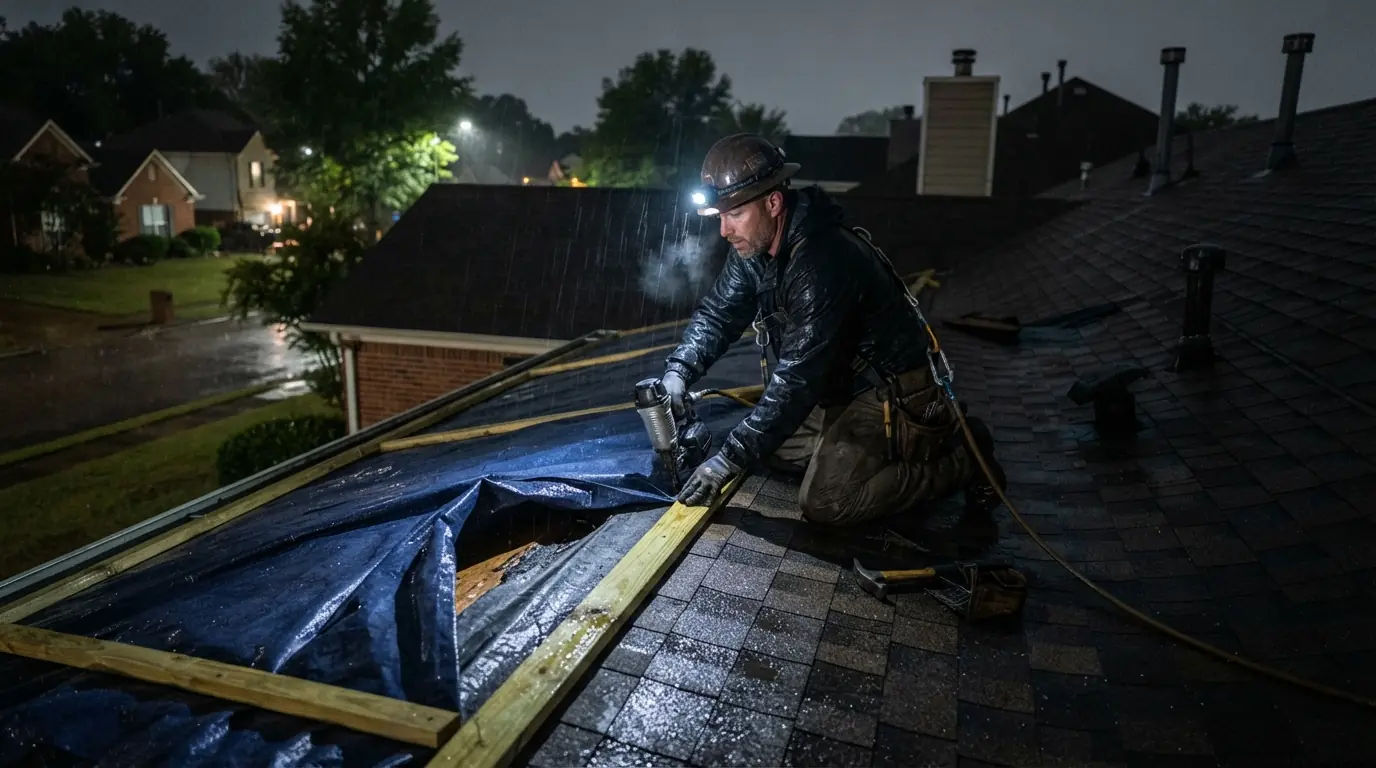
An emergency visit has one goal: stop water getting into the house tonight without making tomorrow's repair harder. That means covering the damage in a way that holds through wind and rain, and knowing when a temporary fix is safe and when it is not.
It is not the time for a full repair, since shingles do not seal in rain.
How it runs
What happens when you call in an emergency
- 01
Call any hour
We answer 24/7, nights, weekends and holidays.
- 02
Safety questions
Anyone below the damage? Lines down? Ceiling sagging?
- 03
Inside first
You get steps to protect the house while the crew is on the way.
- 04
Cover the roof
Tarp, hard cover or leak stop, fastened for wind.
- 05
Photograph
Damage and temporary work documented for your insurer.
- 06
Permanent repair
Scheduled once the roof is dry and materials are in.
Timeline
How long an emergency tarp holds
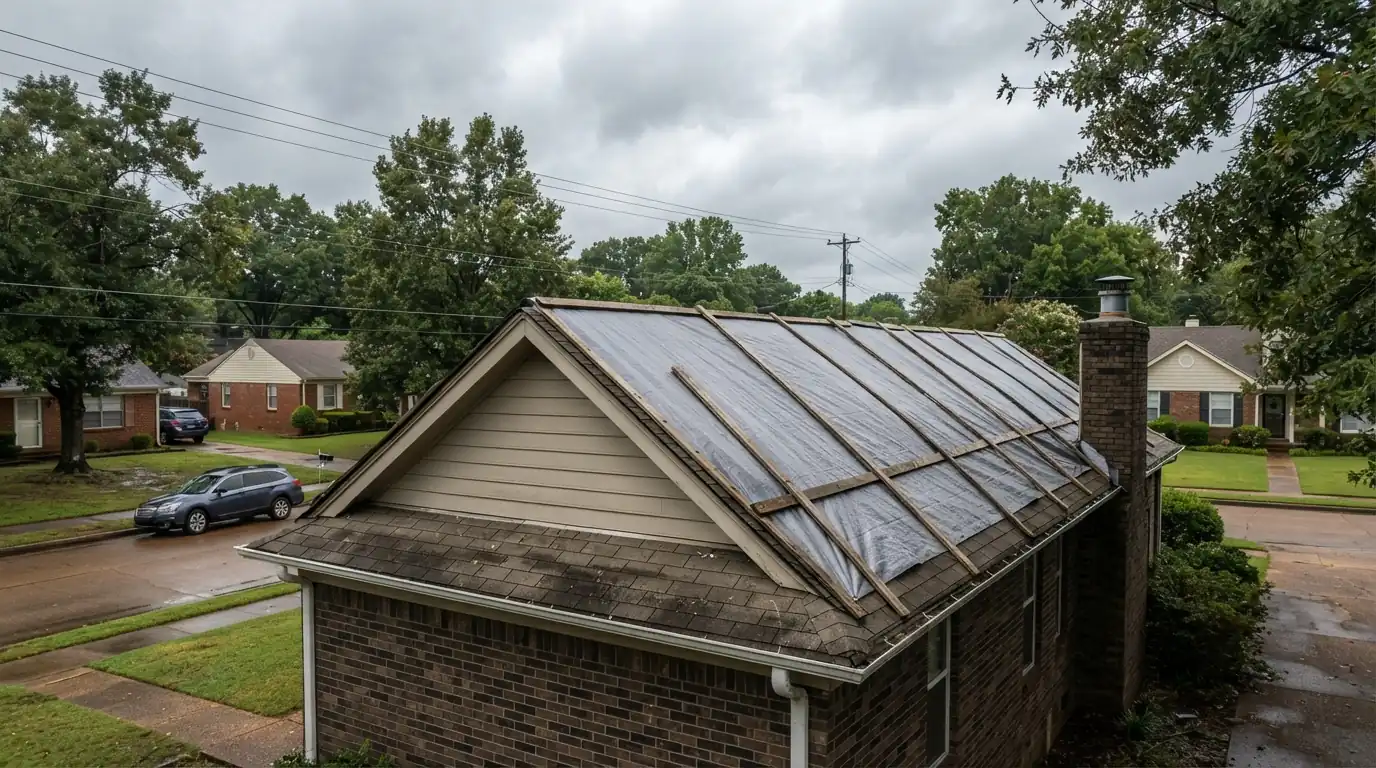
A properly installed tarp, run over the ridge and fastened with wood battens rather than weighted, can hold for weeks. One held down with bricks may not survive the next gust. Sun breaks tarps down over time, so they are a bridge to the repair, not a substitute for it.
We check the cover if more storms come through before the repair.
Local conditions
When storms hit Memphis after dark
The August 2026 storm that cut power to more than 120,000 MLGW customers came through late on a Saturday afternoon, and by the next morning streets across Memphis were littered with fallen trees, many of them on homes. That is what emergency roofing here looks like: calls from houses with no power, wind still gusting, and water already inside. It is why an emergency cover in this city has to be built for the next gust, not just the rain, and why our first question on every call is whether anyone is in a room below the damage.
Emergency roof tarping
A tarp only works if water cannot run under it. We run it over the ridge where possible, so the top edge sheds water instead of catching it, and fasten it with wood battens screwed into the deck along every edge. That spreads the load so wind cannot tear the grommets, and it keeps screws out of shingles that will be reused. Around chimneys and walls, we tuck and lap the tarp so water is directed onto it, not behind it. Heavy-duty tarps outlast the thin blue ones from the hardware store by a long way.
After-Hours leak stops
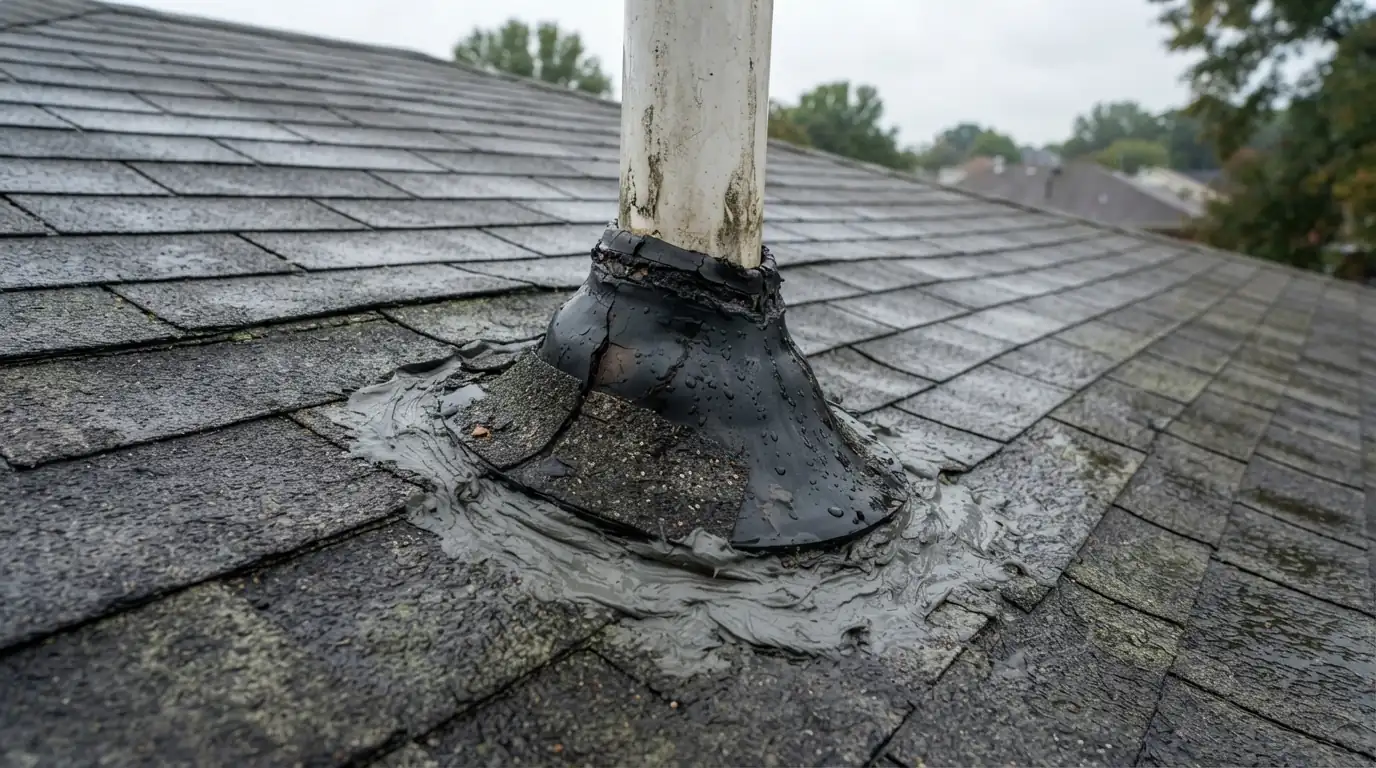
Not every emergency needs a tarp. A cracked pipe boot, a blown-off section of ridge cap or a lifted flashing edge can often be stopped on the spot with a boot cover, a temporary cap or a wet-surface roofing sealant. These products are made to bond in damp conditions and buy time until the permanent part can be installed. We tell you plainly that it is a temporary fix, note what the permanent repair will involve, and photograph both so there is no confusion later.
Temporary decking covers
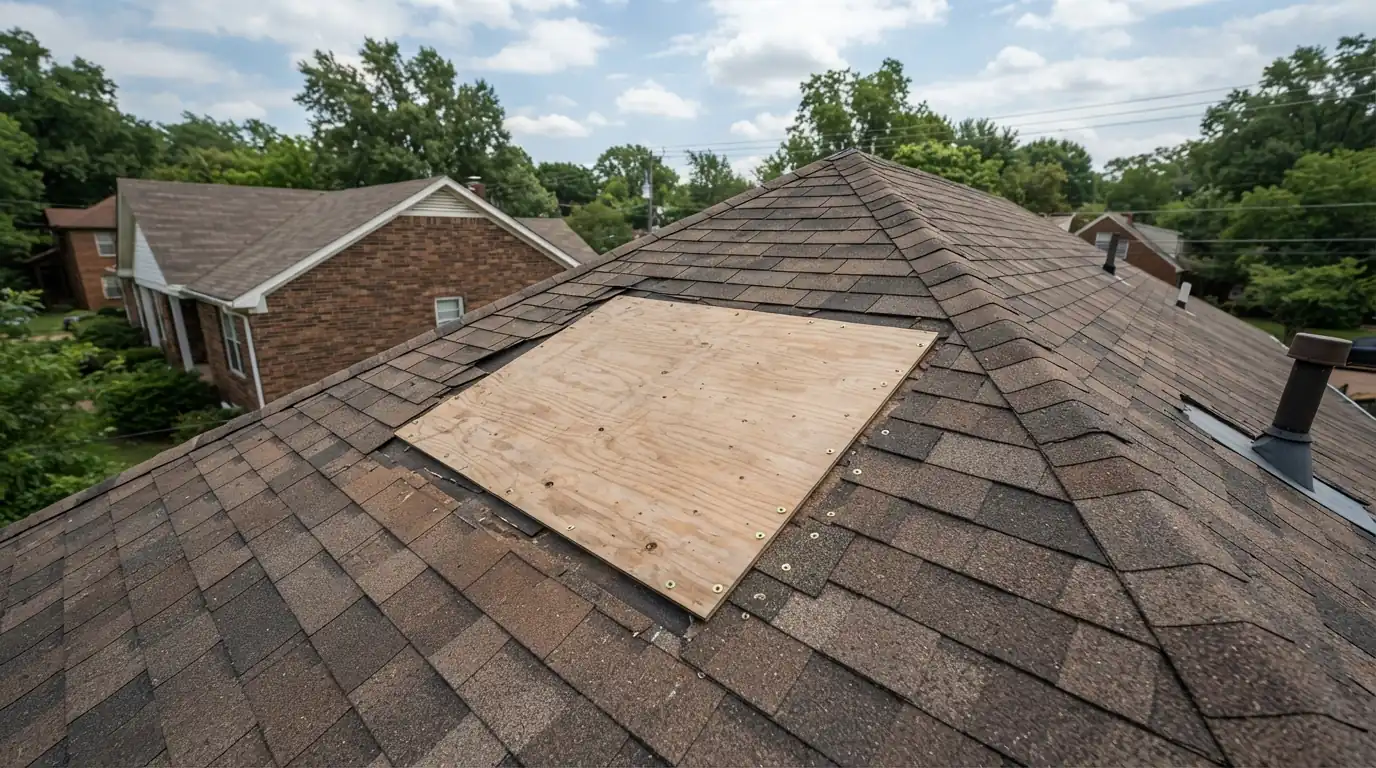
When there is an actual hole, from a limb or a blown-off section, a tarp alone can sag into it and pond water. We cut plywood to cover the opening, fasten it to sound framing, and wrap it with underlayment or a tarp so the house is closed to weather. Anything structural gets a look from the attic side first, to make sure the framing will carry the cover and a person on the roof. The permanent repair later replaces the cover with new decking tied properly into the rafters.
Water coming in right now?
Call. We answer 24/7, nights, weekends and holidays, and cover the roof as soon as it is safe to get on it.
Call (901) 459-6395Do it yourself or call
What to do before we get there
Do this now
- Put buckets under drips and move furniture and electronics away
- Pierce a small hole in a bulging ceiling spot over a bucket to drain it
- Turn off power to rooms where water is near lights or outlets
- Photograph the damage inside for your records
Do not do this
- Climb onto a wet or storm-damaged roof
- Go into an attic above a sagging ceiling
- Stand under a ceiling that is bowing with water
- Try tarping in lightning or high wind
Cost
What affects the cost of an emergency visit
Emergency work is priced by what it takes to close the roof safely tonight; the permanent repair is quoted separately.
- Size of the opening
A cracked boot and a torn-off slope are different jobs.
- Tarp or hard cover
Plywood covers take more material and time.
- Pitch and height
Steep and two-story roofs need more setup in the dark.
- Weather
Work waits for lightning to pass, which can extend a visit.
- Interior protection
Moving belongings or draining a ceiling adds time.
- Access
Blocked driveways or downed limbs slow reaching the roof.
- Return visit
Checking the cover after more storms, if needed.
FAQ
Emergency roof questions from Memphis homeowners
Yes. We answer 24/7, including weekends and holidays. Roof work itself waits for lightning and dangerous wind to pass.
Most policies expect you to prevent further damage, and emergency covers are often part of a covered claim. Keep the photos and invoice.
Rarely, and not in rain. Shingles and membranes need a dry surface to seal, so the permanent repair follows once the roof dries.
Weeks when fastened with battens, but sun and wind wear it out. Treat it as a bridge to the repair.
Not on a wet or steep roof, at night or in wind. Falls are the real danger in a roofing emergency.