Replacement & Installation
Standing seam and metal panel roofs installed in Memphis
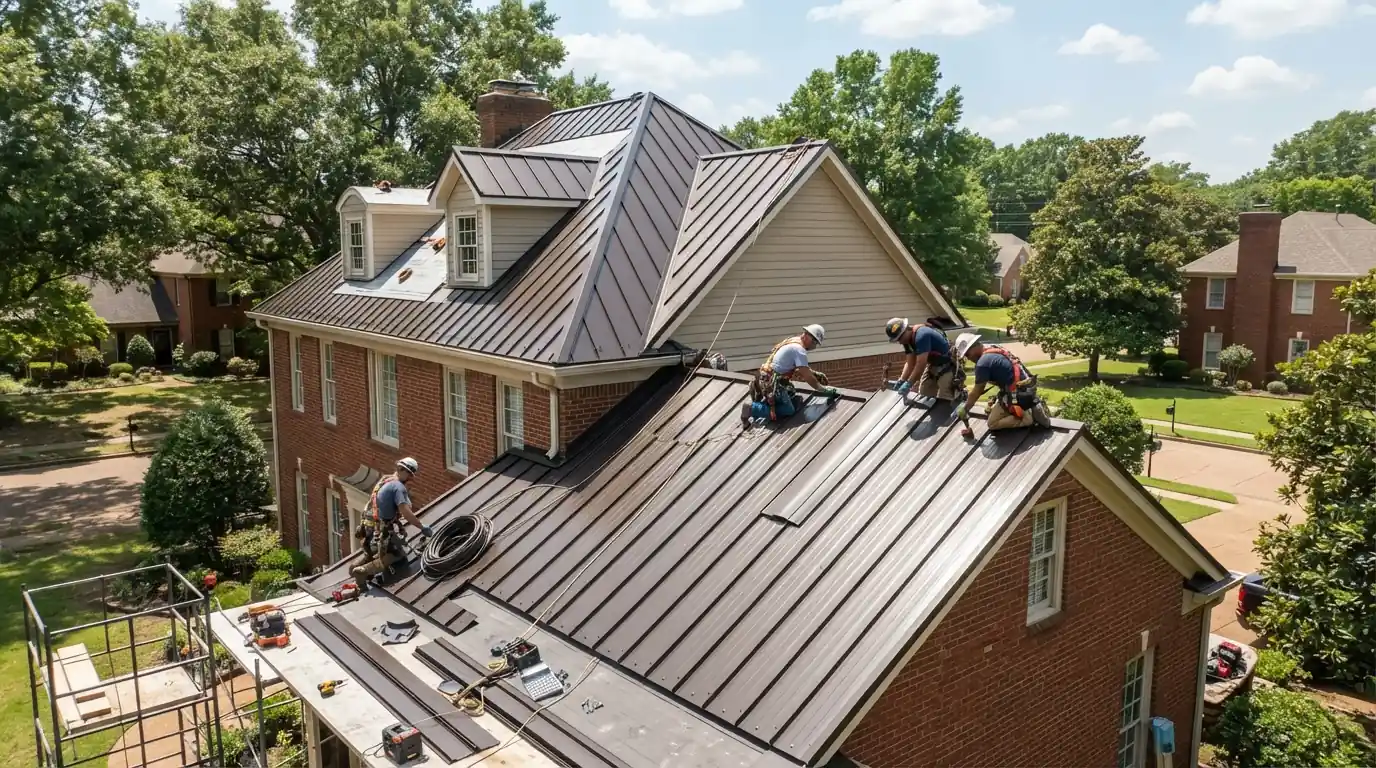
A metal roof is the last roof many homeowners plan to buy. It sheds wind, reflects summer heat and can outlast shingles by a wide margin, but only when the panels, clips, closures and flashing go on as one system.
We answer 24/7 across Memphis and Shelby County
The job
What makes a metal roof last
Quick answer
Metal roofing in Memphis comes in two main types: standing seam, with concealed clips and raised seams that leave no exposed screws, and exposed-fastener panels screwed through the face. Standing seam costs more and needs little upkeep; exposed-fastener panels cost less but need screws checked and replaced over the years.
Metal itself rarely fails. Leaks on metal roofs come from the details: screws that back out as panels expand and contract, missing closures at the ridge and eaves, and trim bent on site without enough overlap.
We install metal over an underlayment rated for the heat under it, with closures, trims and flashings designed for that panel, and fastening that lets the metal move with the seasons without tearing its own fasteners loose.
Cost
What a metal roof costs in Memphis
Metal is priced per square foot of roof, and the panel type sets most of the number.
- Panel type
Standing seam costs more than exposed-fastener panels.
- Metal and gauge
Steel gauge, aluminum or copper change the material price.
- Finish
Premium paint systems and textures cost more.
- Roof shape
Valleys, hips and dormers add trim and labor.
- Tear-off
Removing old shingles adds labor and disposal.
- Underlayment
High-temperature underlayment is needed under metal.
- Pitch and height
Steep and tall roofs slow panel handling.
One 2026 Memphis cost calculator puts metal at about $8.25 per square foot installed against $4.00 for asphalt shingles, and a local guide puts premium systems such as standing seam at $40,000 to $100,000 on a 2,500 square foot home. Planning ranges only, not a quote.
What is included
What a metal roof installation includes
- Deck preparation
Old roof removed or deck prepared as the system requires.
- High-temperature underlayment
Rated for the heat under metal.
- Panels
Cut to length for each slope.
- Clips or fasteners
Concealed clips or gasketed screws at set spacing.
- Closures
Foam or metal closures at ridge and eaves.
- Trim package
Rake, eave, ridge and valley trims.
- Flashings
Chimney, wall and pipe details made for metal.
- Transitions
Where metal meets shingle or flat sections.
- Cleanup and photos
Shavings removed and every stage photographed.
Standing seam metal roofs
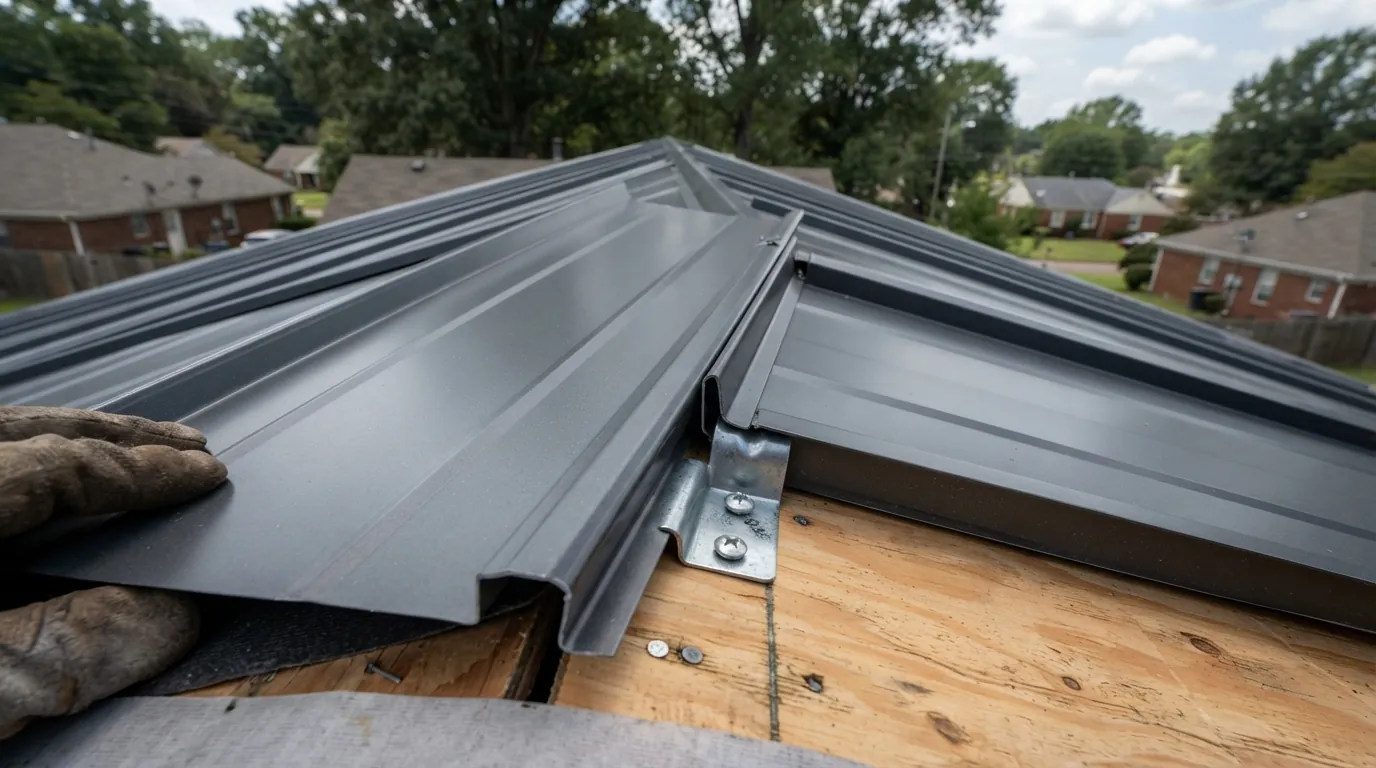
Standing seam panels lock together at raised seams and fasten to the deck with hidden clips, so there are no screws through the face of the roof to leak. The clips let each panel expand and contract along its length, which matters on long panels in summer heat. We use panels from makers such as McElroy Metal and Drexel Metals, formed to the length of each slope so there are no end laps. Painted finishes with reflective pigments cut heat gain, and the look suits modern and traditional houses alike.
Exposed-Fastener metal panels
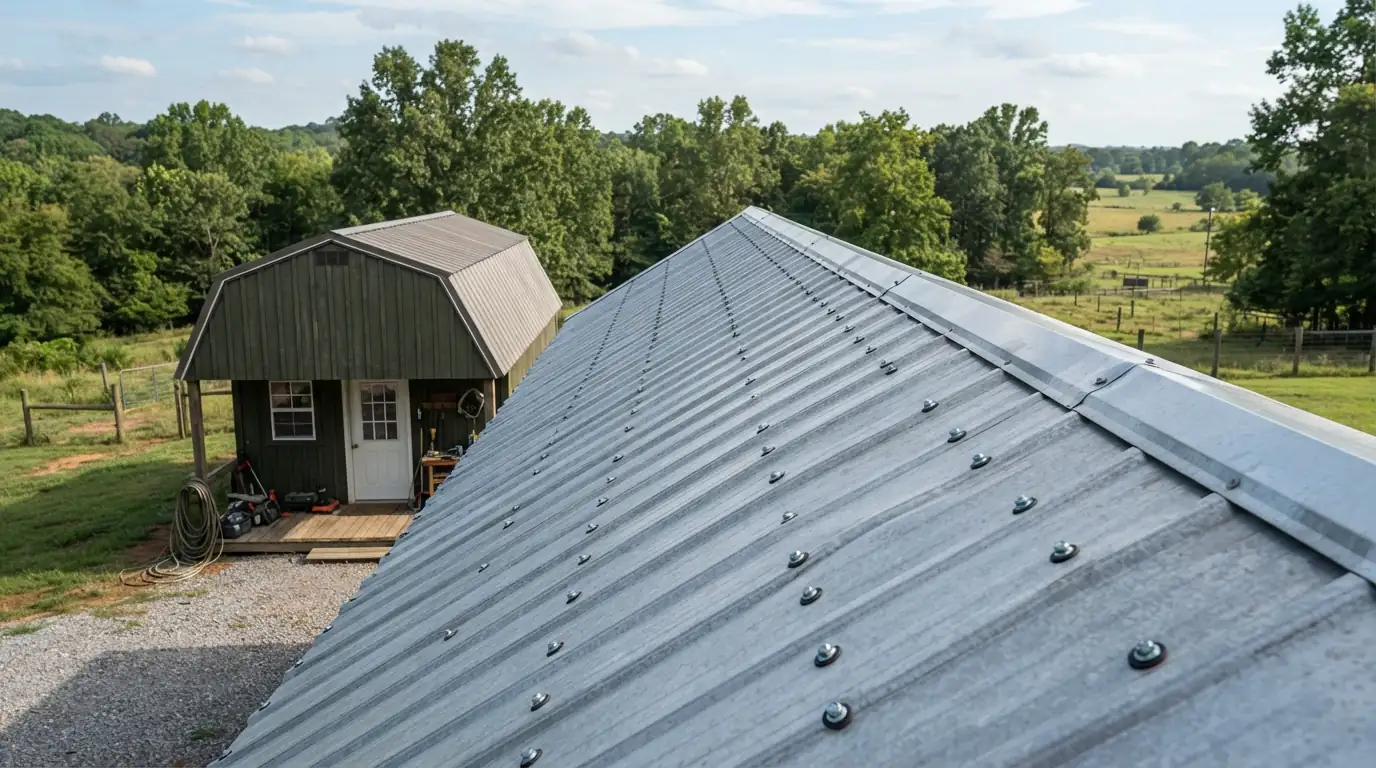
Exposed-fastener panels, often called ribbed or R-panels, are screwed through the face into the deck or purlins with gasketed screws. They cost less and go on faster than standing seam, which makes them common on shops, barns and budget-minded homes. The tradeoff is upkeep: gaskets age in the sun and screws loosen as panels move, so they need checking every few years and replacing over the roof's life. We set screws at the maker's spacing, on the flat or the rib as the panel requires, without overdriving the washers.
Metal roof repair and resealing
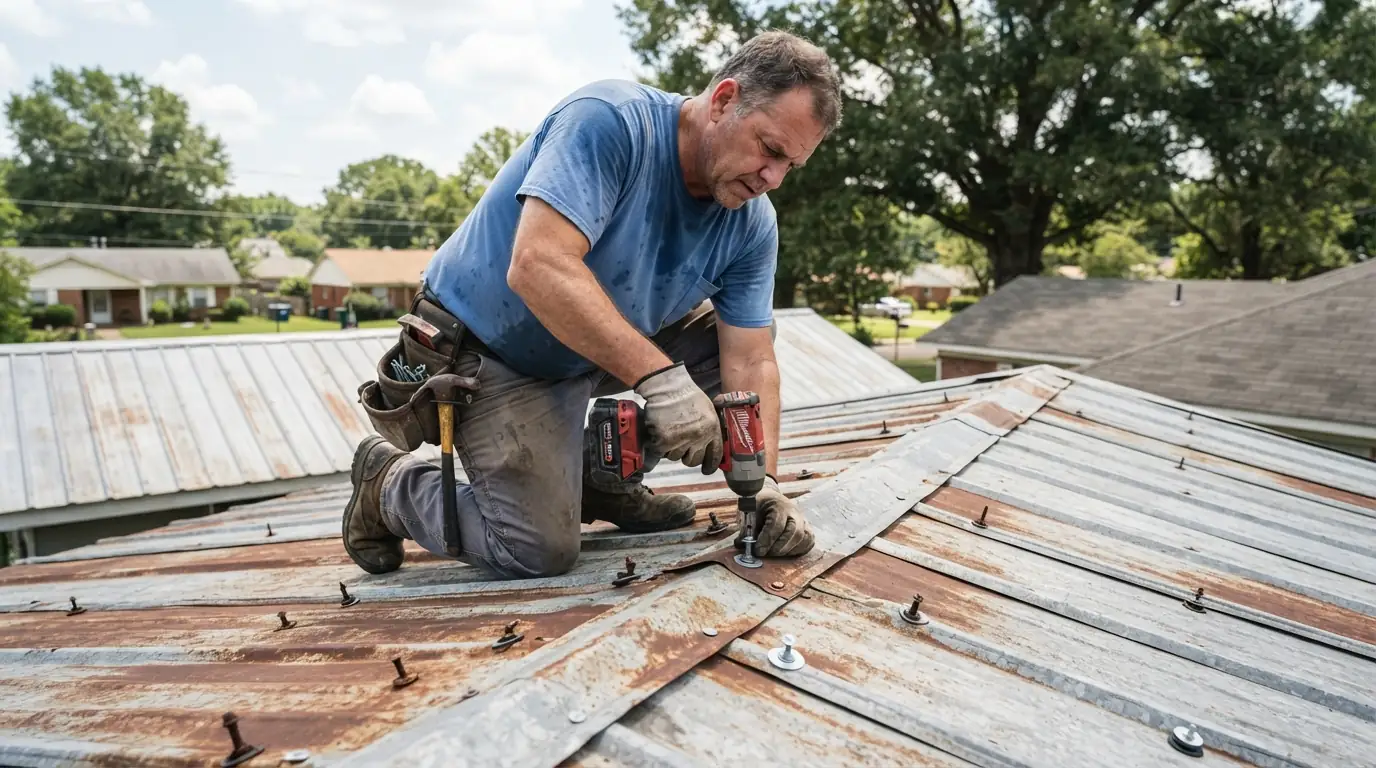
Most metal roof repairs are at fasteners, laps and trim. We replace backed-out or stripped screws with oversized gasketed ones, reseal laps with butyl tape rather than surface caulk, and rebuild trim and flashing that were bent too short or never had closures. Rust spots on older galvanized panels are cleaned and primed before sealing. Coated finishes such as PAC-CLAD can be touched up with matching paint, and a roof with widespread fastener trouble is often a better candidate for a restoration coating than piece-by-piece repair.
Local conditions
Metal on Bartlett ranch homes and in hail season
Bartlett's many ranch-style homes often have long, simple roof planes that suit metal well, with few valleys to detail and panels that run eave to ridge in one piece. Hail is the question to weigh here: a September 2026 watch listed hail damage and wind damage to roofs as expected impacts for Bartlett and Millington. Metal rarely leaks after hail, but it can dent, so where looks matter we suggest textured or striated panels, which hide small dents far better than flat ones.
How it runs
How a metal roof goes on
- 01
Measure
Every slope measured so panels can be ordered to length.
- 02
Order and form
Panels and trims made to your roof and color.
- 03
Prepare the deck
Tear-off, deck repairs and high-temperature underlayment.
- 04
Trim and panels
Eave trim first, then panels with clips or screws.
- 05
Flash and close
Ridge, rake, wall and pipe details sealed with closures.
- 06
Clean and walk
Metal shavings swept off and a final walk with you.
Thinking about metal for your next roof?
Call and we will measure the roof, walk you through standing seam and panel options, and price both.
Call (901) 459-6395Brands we install and service
Shingles, membranes, metal and skylights from McElroy Metal, Drexel Metals, Sheffield Metals and the other makers below.
FAQ
Metal roofing questions from Memphis homeowners
Not over a solid deck with underlayment and an insulated attic. The noise people remember comes from metal on open purlins over barns.
Usually the opposite. Reflective finishes send back much of the summer sun, and the attic runs cooler than under dark shingles.
No. It is no more likely to be struck, and metal does not burn if it is.
Some systems allow it, but we usually tear off to check the deck and avoid trapping moisture between layers.
Well beyond typical shingles when installed and maintained correctly; exposed-fastener roofs need screws replaced along the way.