Commercial
Commercial roofs for Memphis offices, retail and warehouses
A commercial roof is a system of membrane, insulation, drains and flashing, and it is judged by one thing: whether the business underneath stays dry and open. We install and replace low-slope roofs on offices, retail and warehouses.
We answer 24/7 for commercial roof calls across Memphis
The job
How we approach a commercial roof
Quick answer
Commercial roofing in Memphis mostly means low-slope roofs with one of three membrane types: TPO or PVC single-ply, EPDM rubber, or modified bitumen. The right one depends on what the building does, how the roof drains, and how much foot traffic and rooftop equipment it carries, not on one product being best.
Commercial roofs fail at the details: seams, drains, curbs and the edges where membrane meets metal. A new membrane over wet insulation or a clogged drain will fail the same way the old one did.
Every project starts with a survey of the existing roof, including moisture readings, drain checks and core samples where needed, and ends with a system chosen for the building rather than for the installer's convenience.
Cost
What shapes a commercial roof price
Commercial roofs are priced per square foot of roof area, and the conditions underneath move it most.
- Roof area
Large open roofs cost less per foot than small, cut-up ones.
- Tear-off or recover
A recover over a dry roof avoids tear-off where code allows.
- Wet insulation
Saturated boards found in the survey must be replaced.
- Membrane type
TPO, PVC, EPDM and mod bit differ in material and labor.
- Insulation thickness
Energy code and your goals set how much goes back.
- Rooftop equipment
Curbs, pipes and units each need flashing.
- Access and hours
Night work, cranes or tight sites add cost.
Your options
TPO, EPDM or modified bitumen?
| TPO or PVC | EPDM | Modified bitumen | |
|---|---|---|---|
| Surface | White, reflective | Black rubber, white optional | Granulated cap sheet |
| Seams | Heat-welded | Taped or glued | Torched or cold-applied laps |
| Good for | Offices, retail, cooling loads | Simple roofs, tighter budgets | Busy roofs, small buildings |
TPO and PVC Single-Ply roofs
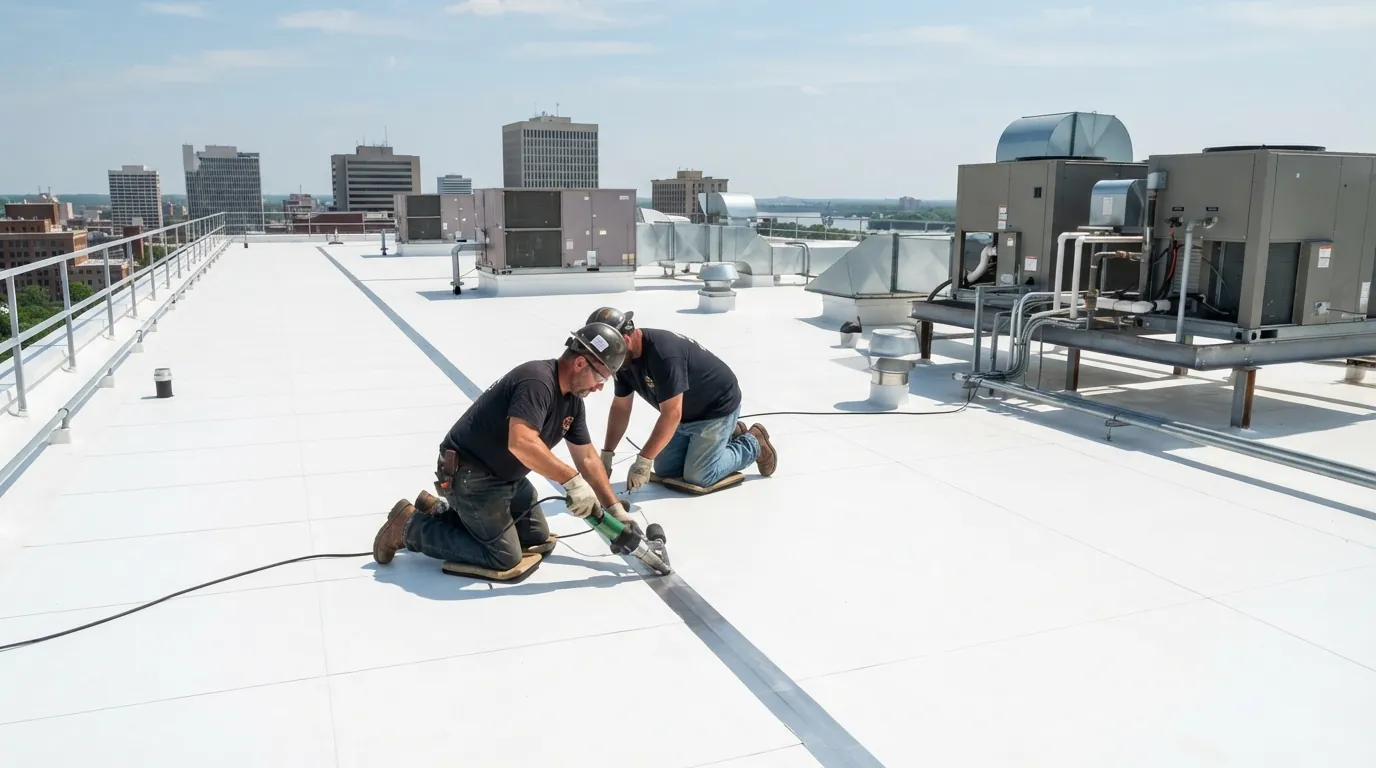
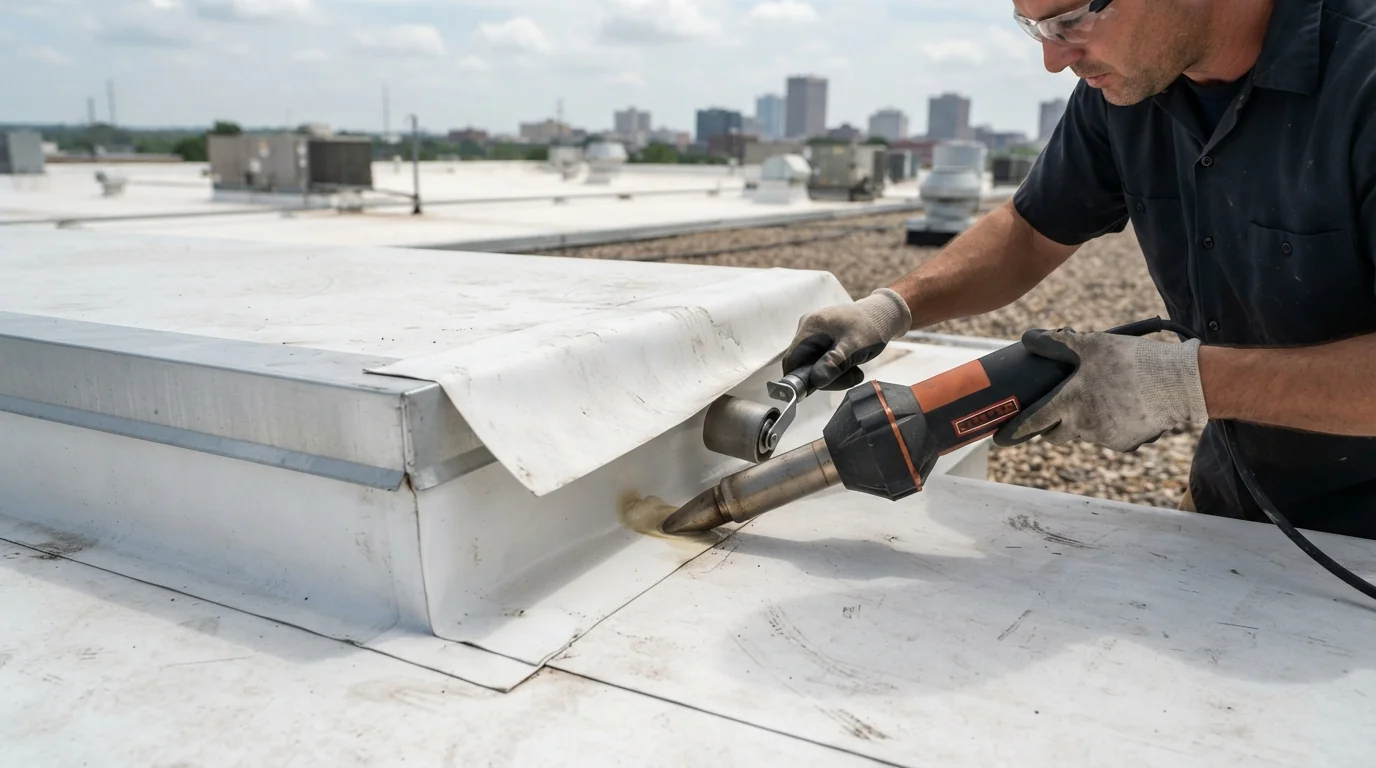
TPO and PVC are white single-ply membranes whose seams are welded with hot air, so each seam becomes as strong as the sheet. Their reflective surface keeps roof temperature down under a Memphis summer sun, which matters on buildings with big cooling loads. PVC holds up better where grease or chemicals reach the roof, as over restaurant kitchens. We install fully adhered or mechanically fastened systems from makers such as Carlisle and GAF over new insulation, with welded flashings at every curb and wall.
EPDM rubber roofs
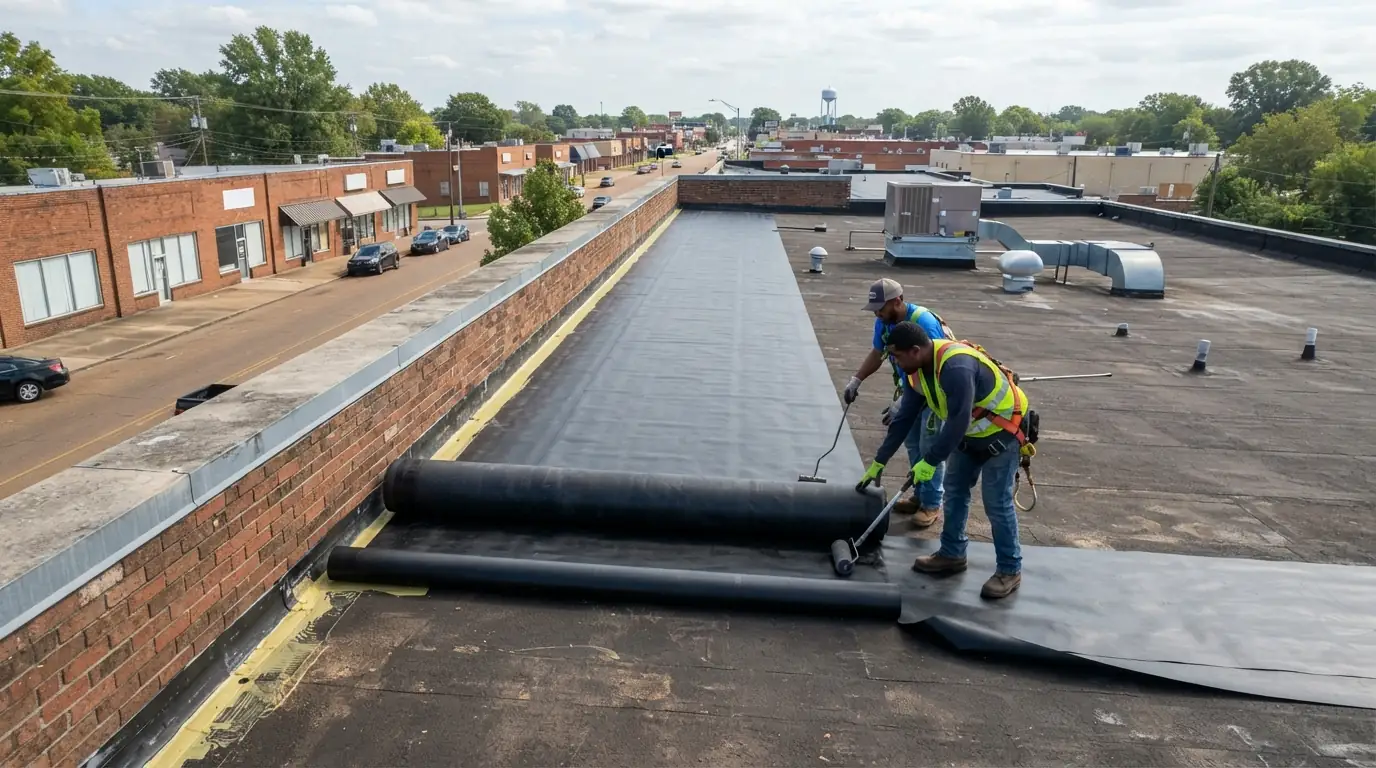
EPDM is a synthetic rubber sheet with decades of track record on low-slope roofs. It stays flexible through cold snaps and heat, comes in wide sheets with fewer seams, and is easy to repair. Its weak point is the seams, which rely on tape and adhesive rather than welding, and the black surface absorbs heat; white EPDM exists but costs more. We use EPDM where budget and simplicity lead, and on existing EPDM roofs we repair seams and flashings with compatible materials rather than mixing systems.
Modified bitumen roofs
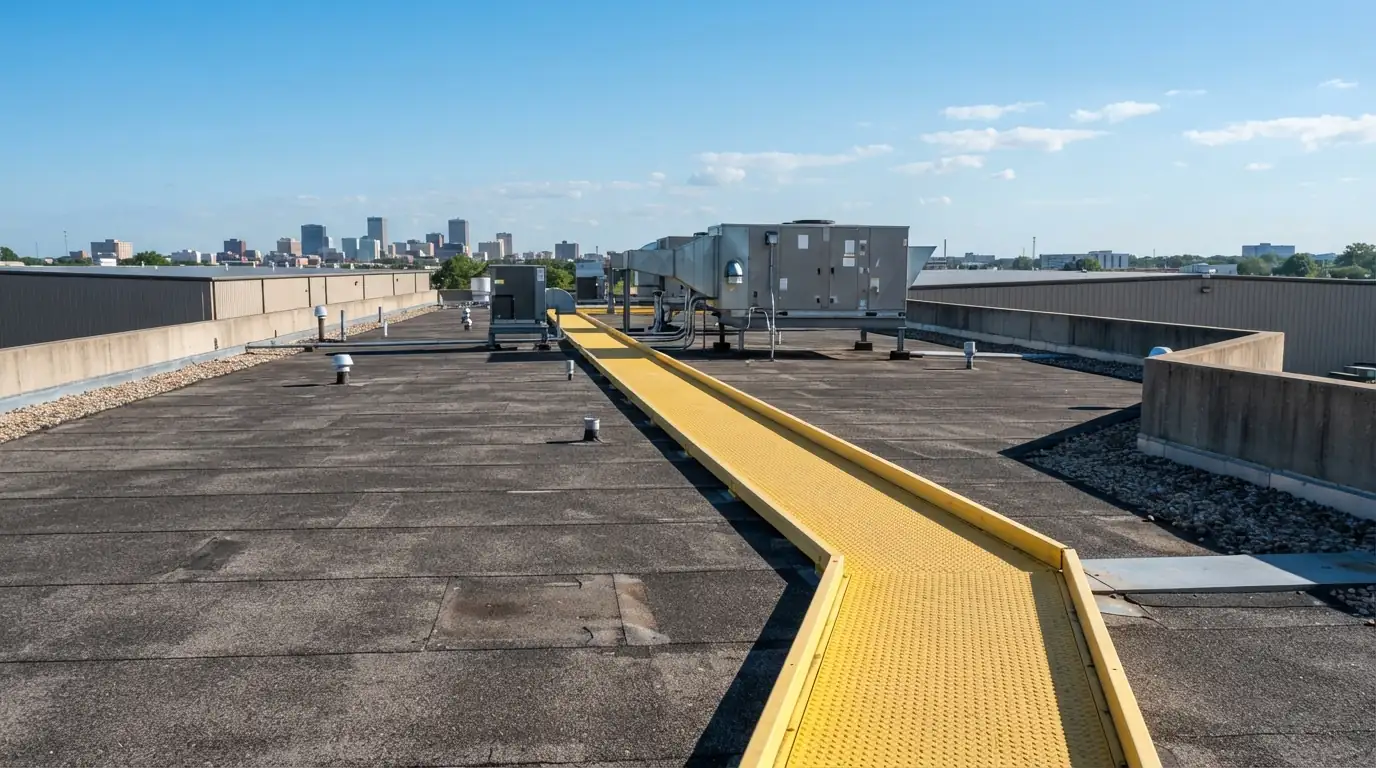
Modified bitumen is asphalt reinforced with polymers, laid in overlapping rolls with a granulated cap sheet on top. It is tough under foot traffic, which suits roofs where technicians walk to rooftop units often, and it is familiar to anyone who maintained the built-up roofs it replaced. Seams are torched, heat-welded or cold-applied depending on the building and its fire rules. Johns Manville and Polyglass make systems we install, and a white cap sheet or coating cuts heat gain on a mod bit roof.
Local conditions
Commercial roofs from Downtown to the suburbs
A commercial flat roof near Downtown is a different job from a simple residential roof, with different materials, drainage and price, and it needs a crew that works on membranes every week. Commercial work in Memphis, Germantown, Arlington, Lakeland and Millington also goes through one Construction Enforcement office, which reviews plans, issues permits and inspects building components across all of those towns. That gives most commercial buildings in the county a single permit path, and we handle it before the old roof comes off.
How it runs
How a commercial roof project runs
- 01
Survey
Moisture readings, drain checks and cores where needed.
- 02
Proposal
System, insulation, details and schedule in writing.
- 03
Permit and schedule
Permit pulled and work planned around your operations.
- 04
Tear-off in sections
Only what can be closed the same day is opened.
- 05
Install
Insulation, membrane and flashings to the manufacturer's spec.
- 06
Closeout
Drains tested, photos delivered, maintenance notes handed over.
Water coming through the ceiling at work?
Call any hour. We answer 24/7 for commercial leaks and can make a temporary seal so the business keeps running.
Call (901) 459-6395Brands we install and service
Shingles, membranes, metal and skylights from Carlisle SynTec, GAF, Johns Manville and the other makers below.
FAQ
Commercial roofing questions from Memphis building owners
Sometimes. A recover works when the existing roof is dry, within the allowed layers, and the structure can carry it. The survey decides.
It depends on size and weather. We open only what can be closed the same day, so the building stays dry throughout.
Usually. We plan noise, deliveries and access with you, and low-odor systems suit occupied spaces.
Each lasts well when installed and maintained correctly. The better question is which fits the building's use, drainage and budget.
Yes. Drains, seams and flashings checked on a schedule are the cheapest protection a commercial roof can get.