Commercial
Scheduled commercial roof maintenance for Memphis buildings
Commercial roofs rarely fail all at once. A clogged drain, an open seam or a loose piece of flashing turns into a leak over months. Scheduled maintenance finds those small failures while they are still small.
We answer 24/7 for commercial roof calls across Memphis
The job
What scheduled maintenance protects
Quick answer
Commercial roof maintenance in Memphis is a scheduled visit, usually twice a year in spring and fall plus after major storms, where drains and scuppers are cleared, seams, flashings and penetrations are checked and resealed, and every finding is photographed in a report. It extends the roof's life and keeps small failures from becoming interior leaks.
Low-slope roofs depend on water leaving through drains and scuppers. Leaves, bottles, loose gravel and filters left behind by equipment service block them, and water that stands on the roof finds every weak seam.
A maintenance program puts someone on the roof on a schedule, with a written record that shows the owner, manager or insurer what was checked, what was fixed and what is coming due.
What is included
What every maintenance visit covers
- Drains and scuppers
Strainers cleared and flow checked.
- Field of the roof
Blisters, punctures and ponding noted.
- Seams
Probed and resealed where open.
- Flashings
Walls, curbs and edges checked.
- Penetrations
Pipes, vents and supports sealed.
- Rooftop units
Panels and debris around equipment checked.
- Sealant and pitch pans
Renewed where dried or cracked.
- Debris removal
Loose items and trash taken off the roof.
- Photo report
Findings, fixes and upcoming work in writing.
Scheduled inspections and reports
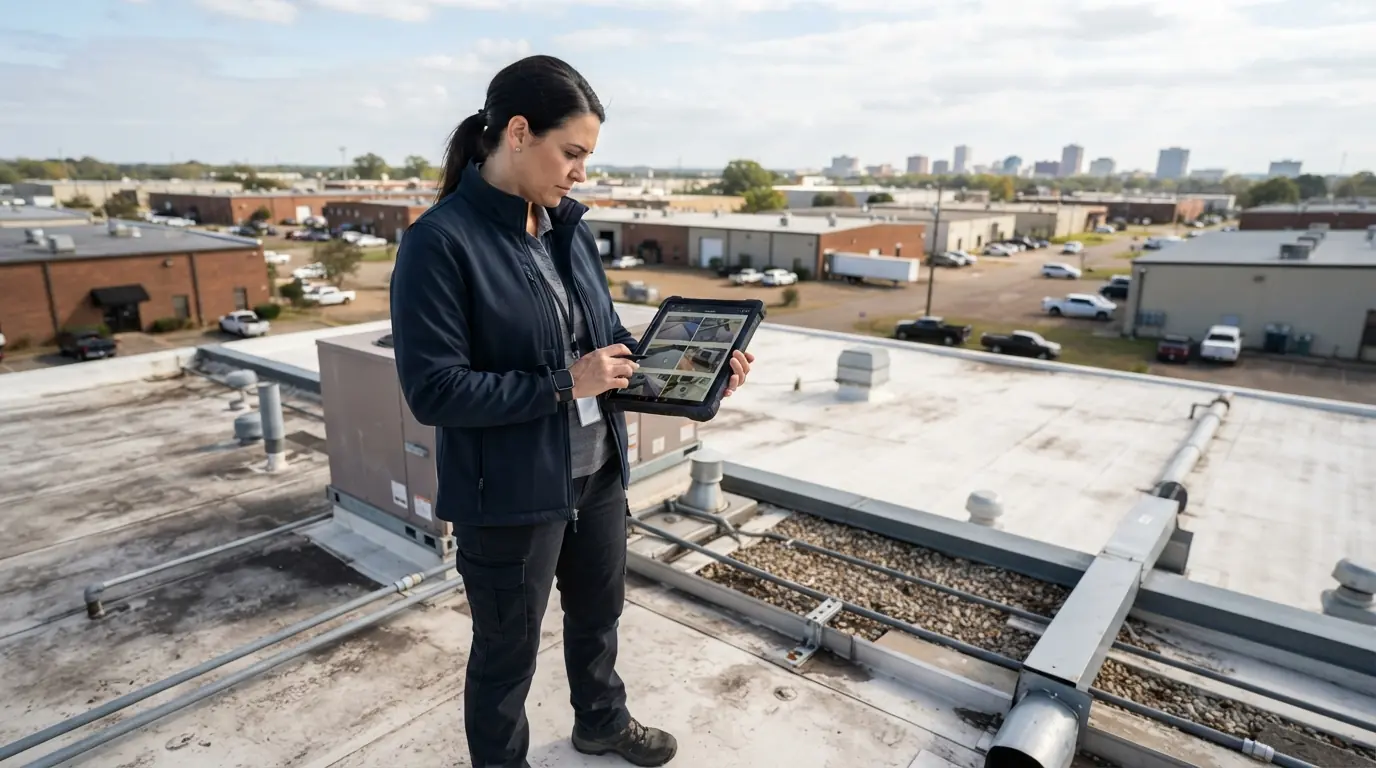
Most commercial roofs do well with two visits a year, spring and fall, plus a check after any storm strong enough to damage the neighborhood. Each visit ends with a report: photos of the whole roof, every issue found and fixed, and a short list of items to budget for. Over a few years, those reports become a record of the roof's condition that helps with insurance, warranty questions and planning the eventual replacement, instead of reacting to the first big leak.
Drain and debris maintenance
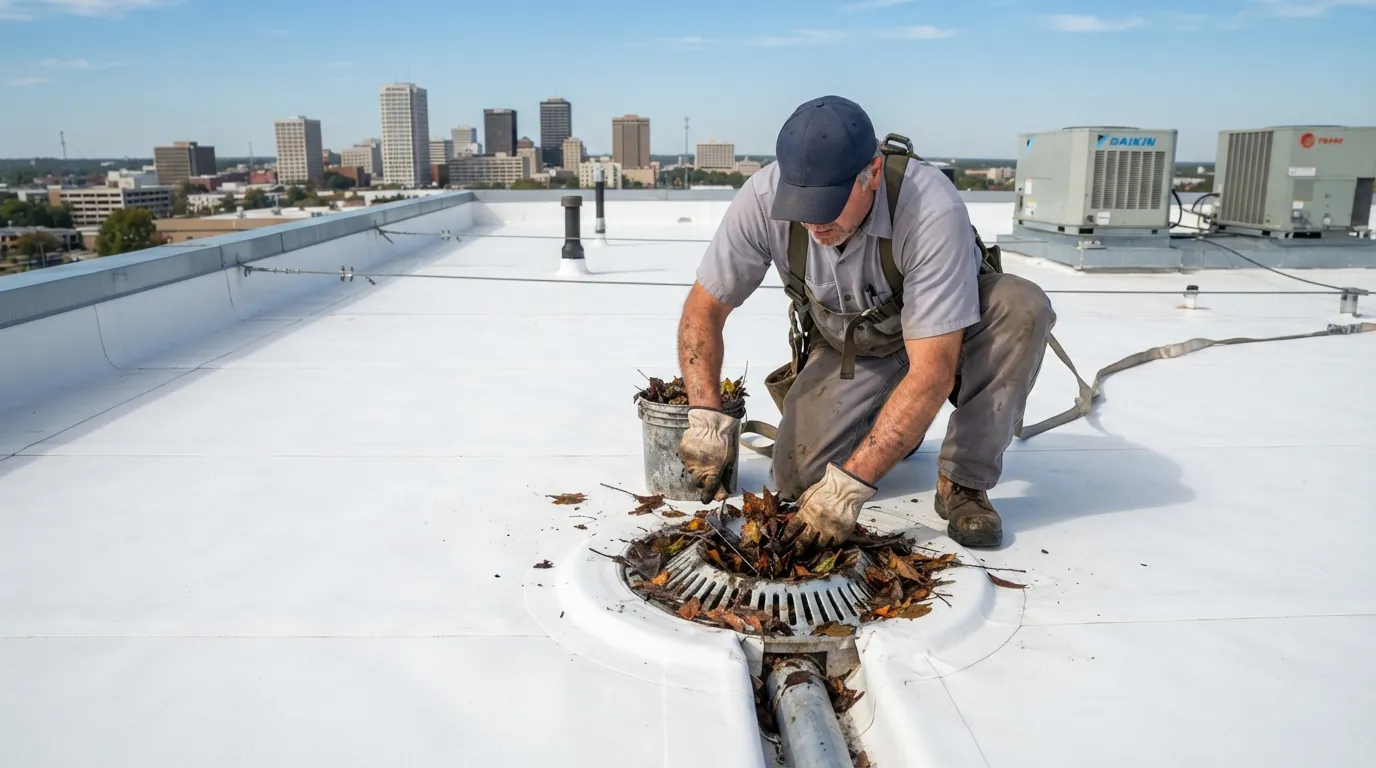
Drains are the first thing we check and the most common source of commercial leaks. Strainers are cleared and reset, lines are flushed where water drains slowly, and overflow scuppers are checked for blockages. Loose debris, from leaves to screws and filters left by equipment service, comes off the roof, because it collects at drains and punctures the membrane when stepped on. Ponding areas are measured and photographed so a drain problem can be traced to its cause, whether that is a clog, a sag in the deck or a drain set too high.
Seam, flashing and sealant upkeep
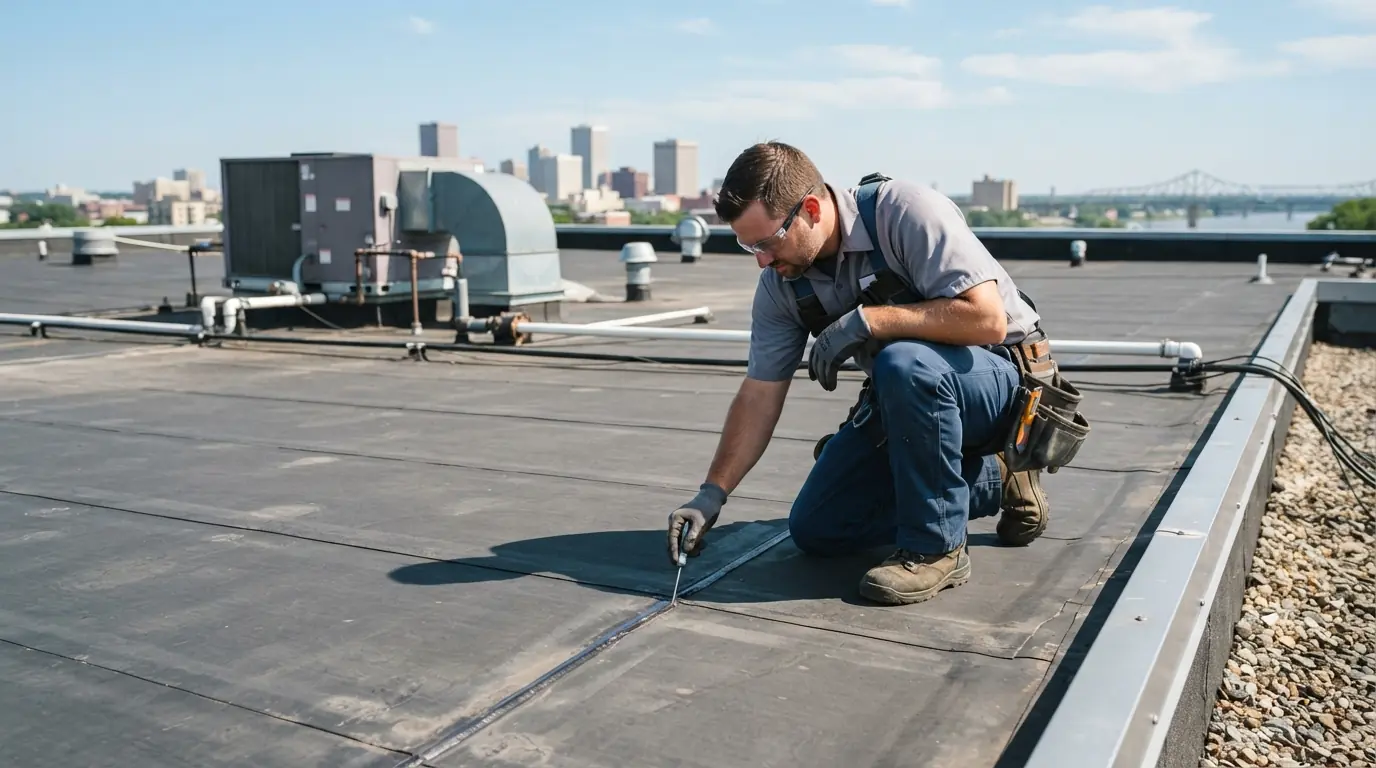
Seams, flashings and sealants age faster than the membrane around them. On each visit we probe seams for openings, check the base and counter flashings at walls and curbs, and renew sealant at pitch pans and terminations before it cracks through. Repairs use materials compatible with the roof system, which keeps manufacturer warranty requirements intact. Anything beyond small upkeep is photographed and quoted, never done without your approval. Rooftop unit curbs get extra attention, because equipment service traffic wears the membrane around them faster than anywhere else on the roof.
Local conditions
Commercial roofs and Memphis storm seasons
Straight-line winds above 60 to 70 mph are where MLGW says its grid turns vulnerable, and the storms that bring them are the same ones that lift commercial roof edges, loosen rooftop equipment and dump debris into drains across Memphis. That makes a post-storm visit part of any maintenance program here, alongside the spring and fall checks. A roof that is walked after each major storm catches wind damage while it is still an edge repair rather than a wet ceiling.
How it runs
How a maintenance program runs
- 01
Baseline survey
Full roof walk and photo report to start.
- 02
Written plan
Visit schedule, scope and pricing agreed.
- 03
Scheduled visits
Spring and fall checks and post-storm walks.
- 04
Small repairs
Seams, sealant and drains handled on the visit.
- 05
Report
Photos and findings sent after every visit.
- 06
Budget items
Larger repairs quoted separately for approval.
Standing water on your roof after every rain?
Call and we will walk the roof, clear the drains and tell you what is holding the water.
Call (901) 459-6395Cost
What shapes a maintenance program price
Programs are priced by roof size, complexity and how often we visit.
- Roof area
Larger roofs take longer to walk and report.
- Visit frequency
Two visits a year plus storm checks is typical.
- Rooftop equipment
More units mean more flashings and debris.
- Roof system
The membrane type sets repair materials.
- Access
Hatches, ladders or lifts affect setup time.
- Included repairs
Small repairs included or billed per visit.
- Reporting needs
Insurer or warranty documentation requirements.
FAQ
Commercial roof maintenance questions
Twice a year, spring and fall, plus after major storms. Roofs with heavy equipment traffic may need more.
Many manufacturer warranties expect regular maintenance, and dated reports help if you ever file a warranty claim.
Yes. We identify the system and use compatible materials for any repairs.
We photograph it, make it safe if needed, and quote the repair separately for your approval.
Yes. Reports can go to owners, managers and insurers, and visits are scheduled around tenants.