Exteriors
Chimney crown, cap and masonry repair in Memphis
Many chimney leaks start at the top, not at the flashing. A cracked crown or a missing cap lets rain straight into the masonry, where it soaks the brick, rusts the damper and runs down into the attic.
We answer 24/7 for chimney and roof leaks across Memphis
The job
Where a chimney takes on water
Quick answer
Chimney repair above the roofline in Memphis covers three jobs: rebuilding or sealing a cracked concrete crown, installing a cap that keeps rain and animals out of the flue, and repointing loose mortar joints. It is separate from chimney flashing, which seals the joint where the chimney meets the roof.
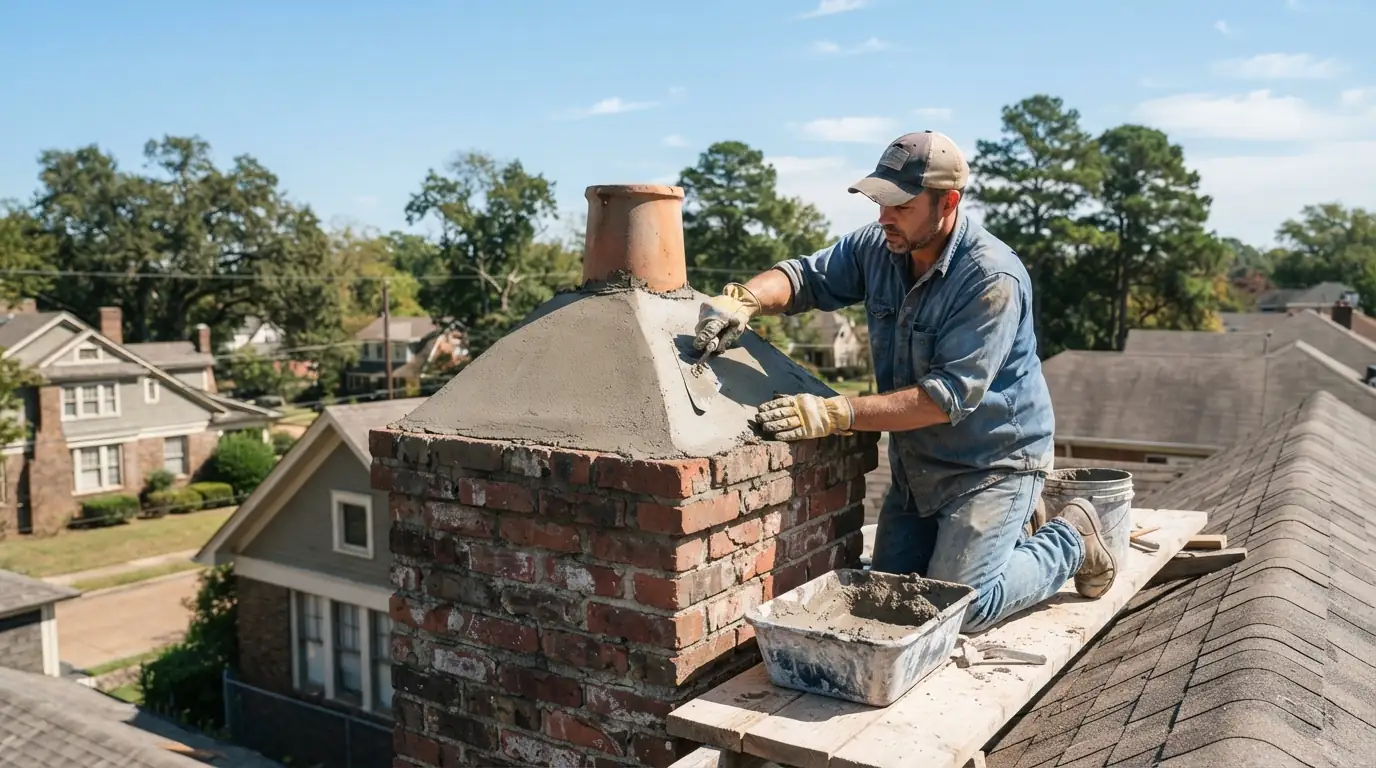
A chimney is a tall stack of porous masonry standing in the weather. The crown at the top is supposed to shed water away from the flue and the brick; when it cracks, every rain goes straight into the chimney. Mortar joints wear out on the weather side first, and once they open, water gets behind the brick face.
A stain on the ceiling beside a chimney can come from the crown, the masonry or the flashing, so we check all three before recommending anything.
Cost
What affects the cost of chimney repair
Chimney work is priced by what is failing and how hard it is to reach.
- Crown condition
Sealing hairline cracks costs far less than a rebuild.
- Cap size
Single and multi-flue caps differ in size and price.
- Mortar joints
Repointing is priced by the area of failed joints.
- Spalled brick
Damaged faces are replaced brick by brick.
- Height above the roof
Tall chimneys need staging and more time.
- Roof pitch
Steep roofs slow access to the chimney.
- Historic masonry
Soft historic brick needs matching mortar.
Chimney crown repair
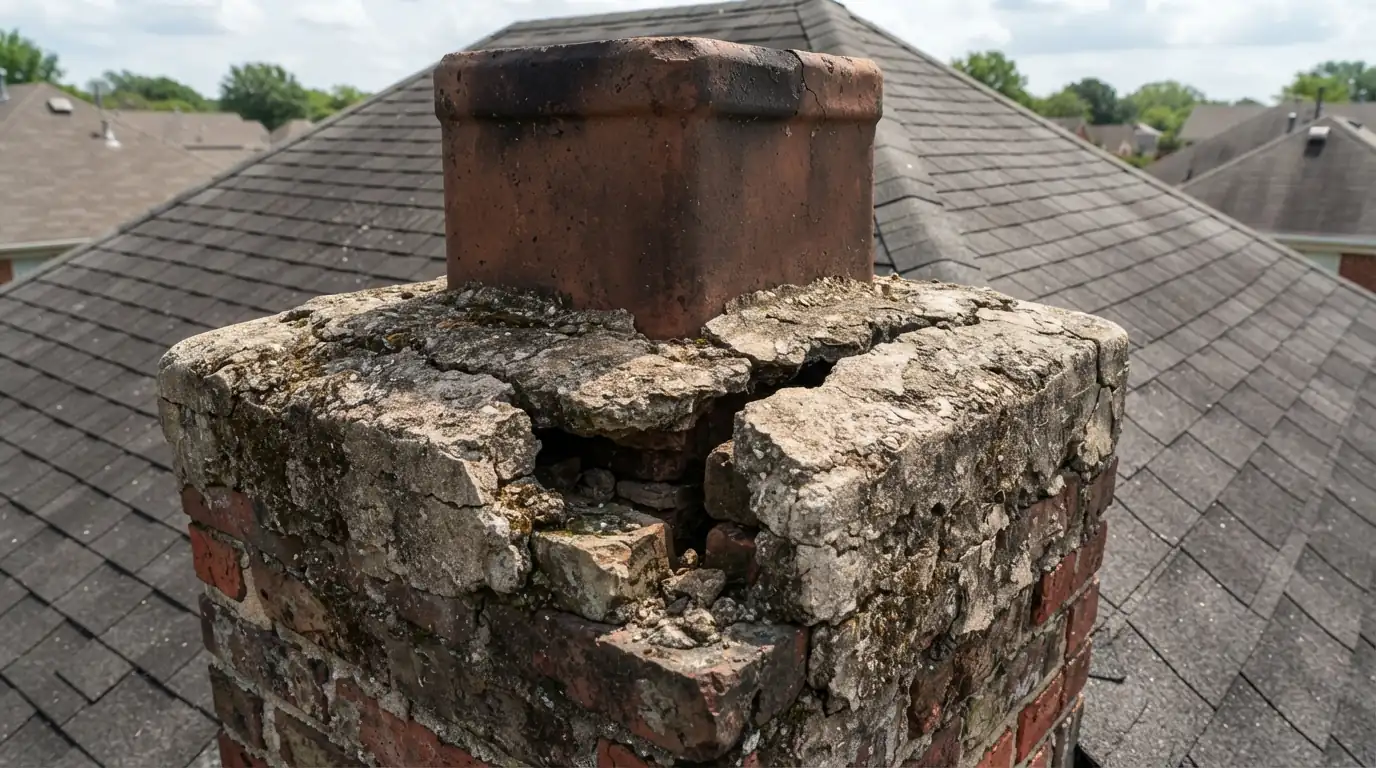
The crown is the concrete slab that caps the masonry around the flue. Many are poured too thin or too flat, with no overhang to throw water clear of the brick, and they crack as they age. Hairline cracks can be sealed with a flexible coating made for crowns. Wide cracks, broken edges or a crown that sheds water onto the brick need a rebuild: the old crown comes off, a new one is formed with a slope and a drip edge, and the flue gets an expansion gap so it does not crack the new crown.
Chimney cap installation
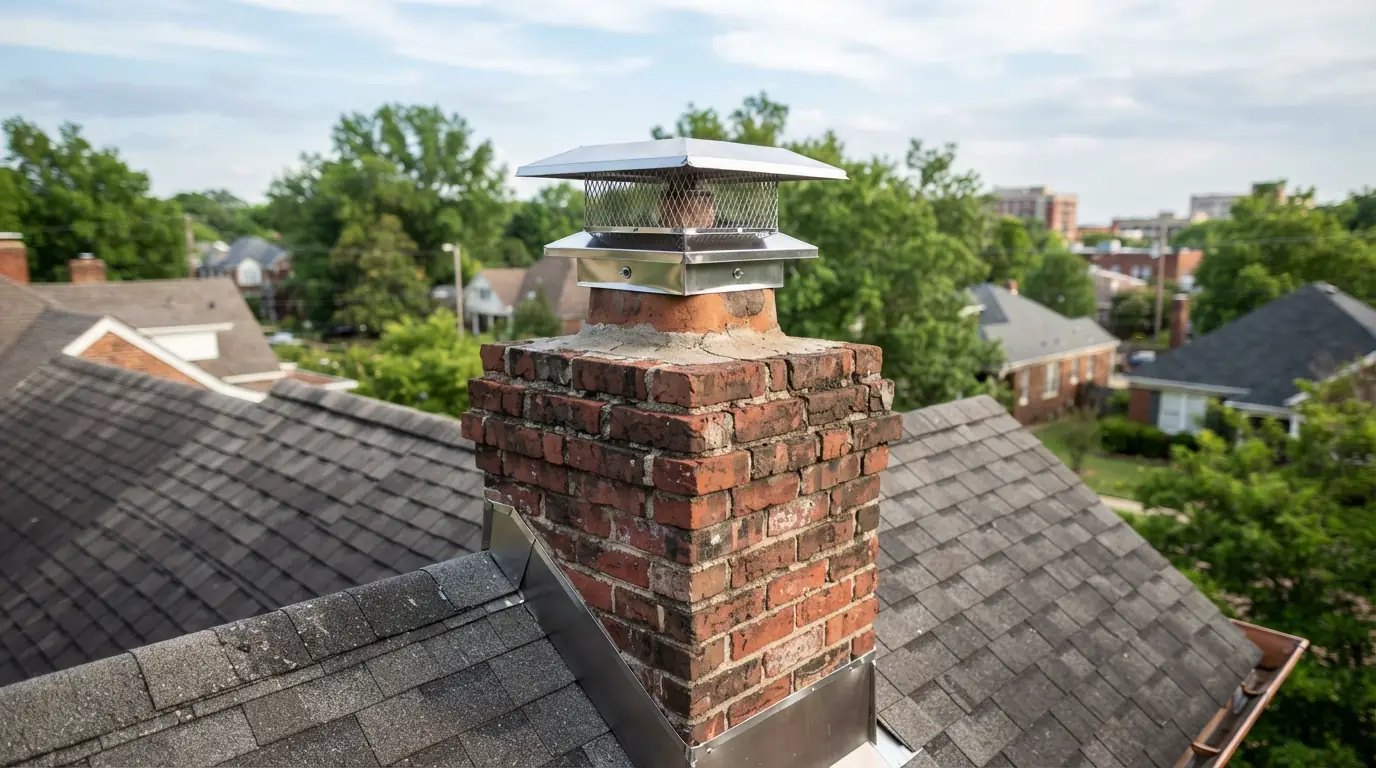
A cap keeps rain, leaves and animals out of the flue and stops sparks from landing on the roof. We measure each flue and fit a stainless or galvanized cap sized to it, or a single cap over a multi-flue chimney, fastened so storms cannot lift it. Caps also protect the damper and smoke chamber from rust. We check the flue opening for nests and debris before fitting anything, and on chimneys that are no longer used, a sealed top plate is sometimes the better choice.
Masonry and tuckpointing above the roofline
Tuckpointing means grinding failed mortar out to a set depth and packing new mortar in its place, restoring the joints that keep water out. On older brick, the mortar has to be softer than the brick so the joint fails before the brick does; hard modern mortar on soft historic brick makes the faces spall. We match mortar to the brick, replace spalled bricks one at a time, and leave unpainted masonry unpainted. Where a chimney is leaning or loose, we say so and scope a partial rebuild.
Local conditions
Chimneys in Memphis historic districts
Central Gardens was designated a Historic Conservation District by the Memphis City Council in 1992, and its design guidelines are approved by the Memphis Landmarks Commission. Guidelines in Memphis historic districts also say original chimneys that are prominent features should not be removed or changed, and unpainted chimney masonry should stay unpainted. On those houses we repair rather than remove, match the brick and mortar, and point owners to the Landmarks review before any change that will show from the street.
How it runs
How a chimney repair runs
- 01
Inspect from the roof
Crown, cap, masonry and flashing checked together.
- 02
Photos and scope
What failed, what it needs and the price.
- 03
Protect the roof
Shingles around the chimney protected from debris.
- 04
Repair
Crown, cap or joints repaired with matching materials.
- 05
Check the flashing
Flashing resealed, or flagged if it also failed.
- 06
Clean up
Mortar dust and debris removed; photos sent.
Water coming in beside the chimney?
Call any hour. We answer 24/7 and can cover the chimney top until the repair.
Call (901) 459-6395Warning signs
Signs your chimney needs repair
- Cracked crown
Visible cracks or gaps across the concrete top.
- Missing cap
An open flue lets in rain, leaves and animals.
- Crumbling mortar
Sandy, recessed joints on the weather side.
- Spalling brick
Brick faces flaking or popping off.
- Water in the firebox
Rust or damp at the bottom of the flue.
FAQ
Chimney questions from Memphis homeowners
It can be either. We check the crown, cap, masonry and flashing together before recommending a repair.
Yes. Rain and animals still get into an open flue. A sealed top is an option for chimneys no longer in use.
Hairline cracks can. Wide cracks, or a crown with no slope or overhang, need a rebuild.
Often hard mortar was used on soft brick. We repoint with mortar matched to the brick.
No. We repair the crown, cap and masonry above the roof; a chimney sweep cleans and inspects the flue.