Inspections & Maintenance
Attic ventilation that takes the heat off Memphis roofs
A Memphis attic in July holds heat that cooks shingles from underneath and loads the air conditioner. Balanced ventilation lets the attic breathe: cooler air in at the eaves, hot air out at the ridge.
We answer 24/7 across Memphis and Shelby County
The job
What poor attic ventilation does to a roof
Quick answer
Roof ventilation in Memphis works as a balanced system: intake vents at the soffits let outside air in low, and exhaust vents at or near the ridge let hot, humid air out high. A common rule of thumb is 1 square foot of net free vent area for every 150 square feet of attic floor, split between intake and exhaust.
An attic that cannot breathe stores heat all summer and moisture through the damp months. The heat ages shingles from underneath; the moisture condenses on the decking, where it feeds mold and rot.
Most problems we find are not a lack of vents but the wrong mix: plenty of exhaust with blocked or missing intake, or two kinds of exhaust fighting each other so one pulls air in through the other.
Cost
What changes the cost of ventilation work
Ventilation is priced by the parts the attic actually needs, which is why we look from inside before quoting.
- Ridge length
Longer ridges take more vent and more deck cutting.
- Intake condition
Blocked soffits need baffles; missing ones need new vent.
- Old vents removed
Box vents come out and the holes are decked and shingled.
- Fan type
Solar and hard-wired fans differ in price and install work.
- Roof pitch
Steep ridges take longer to work safely.
- Insulation work
Pulling insulation off the soffits adds attic time.
- Timing
Adding vents during a reroof costs less than a separate visit.
Ridge vent installation
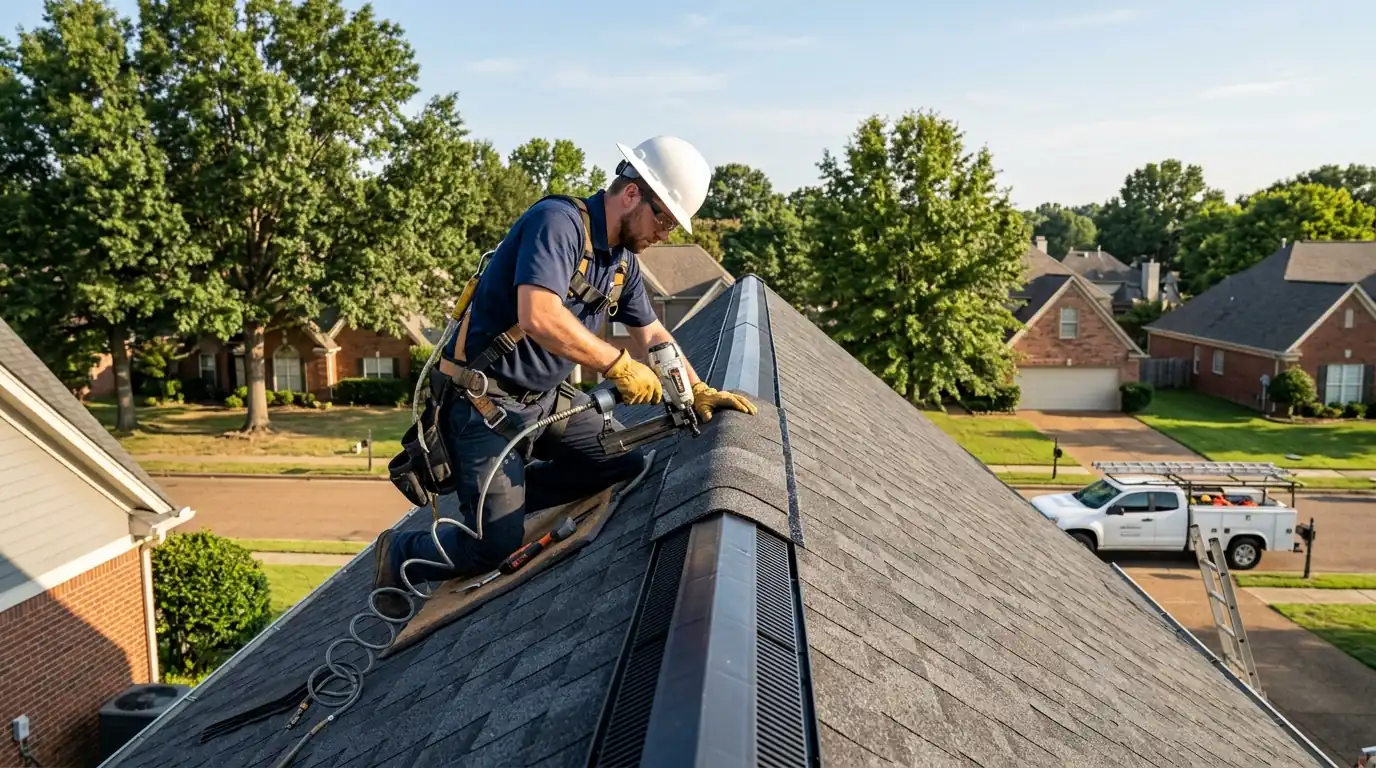
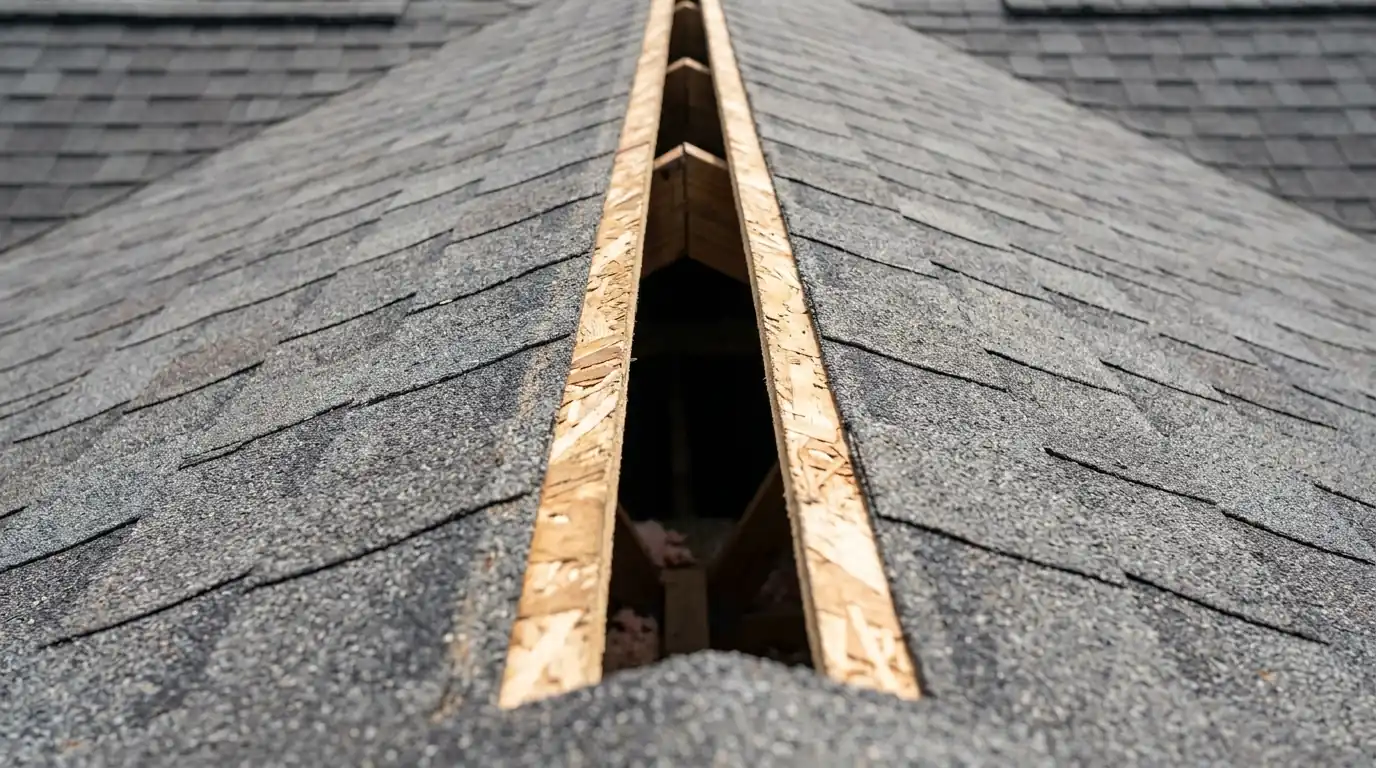
A continuous ridge vent runs the full length of the peak, letting hot air escape evenly along the whole attic instead of from a few spots. We cut a slot in the deck on each side of the ridge, stopping short of the ends and any wall above, and cap it with a baffled vent such as GAF Cobra or an Air Vent product so wind blows across it without driving rain in. When we add a ridge vent, we remove or seal the old box vents on those slopes, because mixing them lets the ridge pull air from the box vents instead of the soffits.
Attic intake and soffit venting
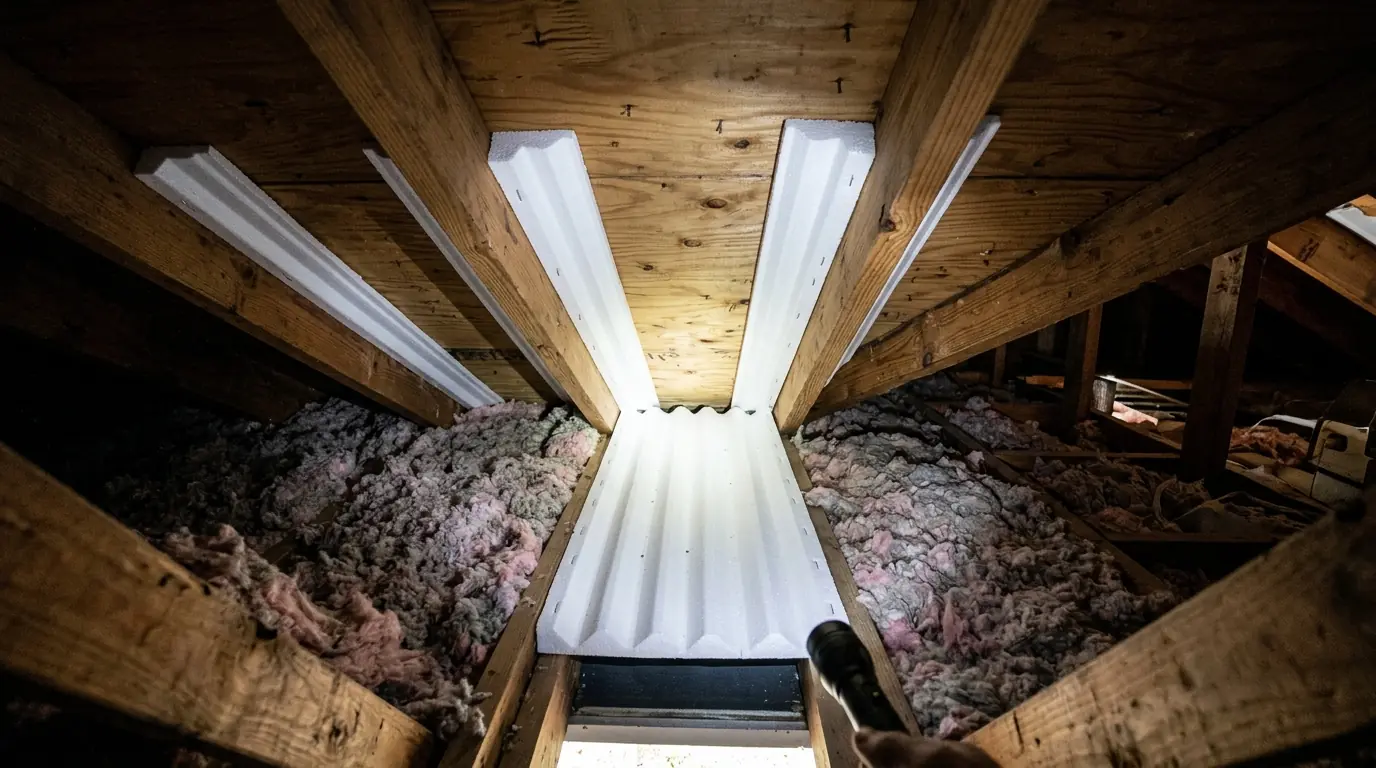
Exhaust only works if air can get in. Many houses have soffit vents that are painted shut, buried under blown-in insulation, or never cut through the wood behind the vent strip. We check from the attic, clear the paths with baffles at each rafter bay, and add continuous soffit vent where the eaves allow it. Where there is little or no soffit, as on some older homes with tight eaves, an intake vent installed along the roof edge can supply the air instead.
Powered and solar attic fans
Attic fans pull air out mechanically, and they help in the right attic: one with plenty of intake and no other exhaust competing on the same side. Put a fan in an attic with starved intake and it draws cooled air up from the house through ceiling gaps, which costs more than it saves. We use solar units from makers such as Solar Royal where there is no wiring nearby, and hard-wired fans with a thermostat where there is. Often the better answer is passive ridge venting with good intake, and we will say so.
Local conditions
Why ventilation matters more in Memphis
Memphis sits in the mixed-humid climate zone, where seasonal extremes test every roofing system, and summer 2026 brought Extreme Heat Warnings across the Mid-South as the city reached its hottest day of the year. An attic here has to handle both halves of that climate: heat that bakes the underside of the roof, and humid air that condenses on cooler decking. A roof vented for only one of those problems fails at the other, which is why a Memphis attic needs intake at the eaves as much as exhaust at the ridge.
How it runs
How we fix attic ventilation
- 01
Attic check
Temperature, moisture, intake paths and existing vents.
- 02
Work out the balance
Net free area calculated for intake and exhaust.
- 03
Clear the intake
Baffles set and soffit paths opened.
- 04
Cut and vent the ridge
Slot cut, ridge vent installed and capped.
- 05
Remove competing vents
Box vents or fans that fight the ridge are sealed off.
- 06
Recheck
Airflow and attic temperature checked after the work.
Upstairs never cools down in July?
Call and we will check the attic from the inside and tell you whether intake, exhaust or both are the problem.
Call (901) 459-6395Brands we install and service
Shingles, membranes, metal and skylights from Air Vent, Lomanco, GAF and the other makers below.
Warning signs
Signs your attic is not breathing
- Upstairs stays hot
Top-floor rooms the AC never catches up with.
- Warm ceilings
Ceilings warm to the touch on summer afternoons.
- Musty attic
Damp smell or dark spots on the sheathing.
- Blistered shingles
Blisters and curling on slopes over the attic.
- Peeling eave paint
Moisture escaping at the eaves lifts the paint.
FAQ
Roof ventilation questions from Memphis homeowners
A common rule is 1 square foot of net free vent area per 150 square feet of attic floor, split about evenly between intake and exhaust. We measure your attic for the real number.
Not on the same slopes. The ridge vent can pull air in through the box vents instead of the soffits, leaving the lower attic stagnant.
Sometimes, in an attic with good intake. With starved intake they pull cooled air out of the house and the bill goes up.
Heat and moisture from below are two of the main things that age shingles early, and manufacturers expect proper ventilation under their products.
Yes. Ridge vents, soffit intake and fans can all be added to an existing roof, though a reroof is the cheapest moment to do it.