Inspections & Maintenance
Attic insulation and air sealing for Memphis homes
In a Memphis summer, the attic is the hottest part of the house, and the insulation on its floor is what stands between that heat and the rooms below. Many attics have too little, and much of what is there has gaps.
We answer 24/7 across Memphis and Shelby County
The job
What attic insulation does in a hot climate
Quick answer
Attic insulation in Memphis means sealing air leaks in the attic floor, then blowing in fiberglass or cellulose to a target depth. Tennessee's amended energy code sets R-30 for Climate Zone 3 and R-38 for Zone 4, and ENERGY STAR recommends R-49 for uninsulated attics in Zone 4; many older attics sit well below both.
Insulation slows heat moving through the attic floor. In summer, a hot attic pushes heat down into the rooms below and makes the air conditioner run longer. The deeper and more even the insulation, the slower that heat moves.
Air leaks matter as much as depth. Gaps around light fixtures, pipes, wiring holes and the attic hatch let cooled air escape into the attic and hot, humid air in, and loose insulation does little to stop that airflow.
Cost
What affects the cost of attic insulation
Insulation is priced by attic area, target depth and the prep work needed first.
- Attic area
Measured in square feet of attic floor.
- Target depth
Higher R-values take more material.
- Existing insulation
Topping up costs less than removal.
- Removal
Wet, packed or contaminated insulation comes out first.
- Air sealing
The number of gaps and penetrations to seal.
- Access
Tight or low attics slow the work.
- Soffit baffles
Added so insulation does not block ventilation.
Your options
Blown fiberglass, cellulose or batts?
| Blown fiberglass | Blown cellulose | Batts | |
|---|---|---|---|
| Coverage | Fills gaps and odd spaces | Fills gaps, settles more | Leaves gaps at framing |
| Moisture | Does not absorb water | Absorbs water if a leak occurs | Does not absorb water |
| Best for | Topping up most attics | Dense cover in older attics | Open, regular joist bays |
Blown-In attic insulation
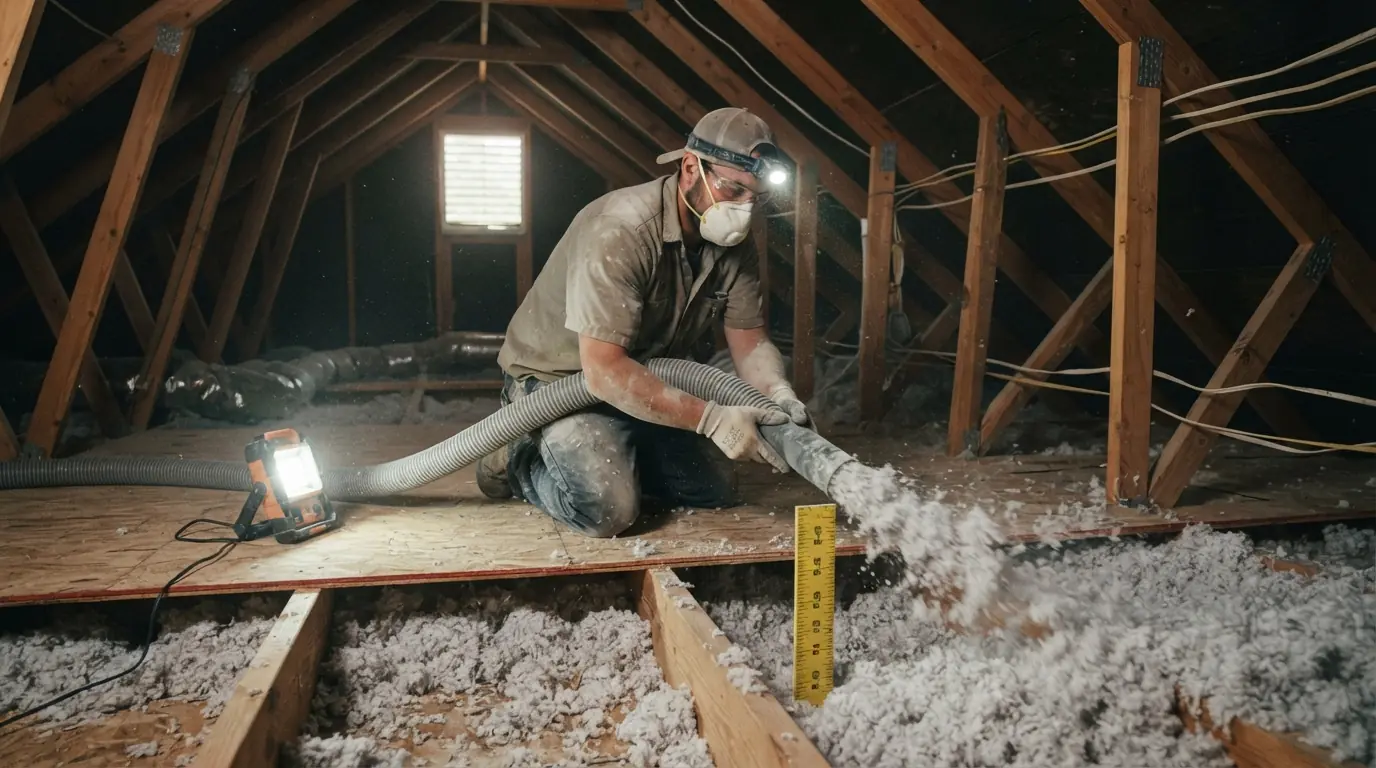
Blown-in insulation fills around joists, wiring and pipes where batts leave gaps, and it can top up existing insulation to the target depth in a single visit. We set depth markers across the attic, baffle the soffits so insulation does not block ventilation intake, and blow fiberglass or cellulose evenly to the target. Owens Corning, Johns Manville and CertainTeed all make blown products we install, and the installed depth is marked on each marker so you can check it yourself from the hatch.
Insulation removal and replacement
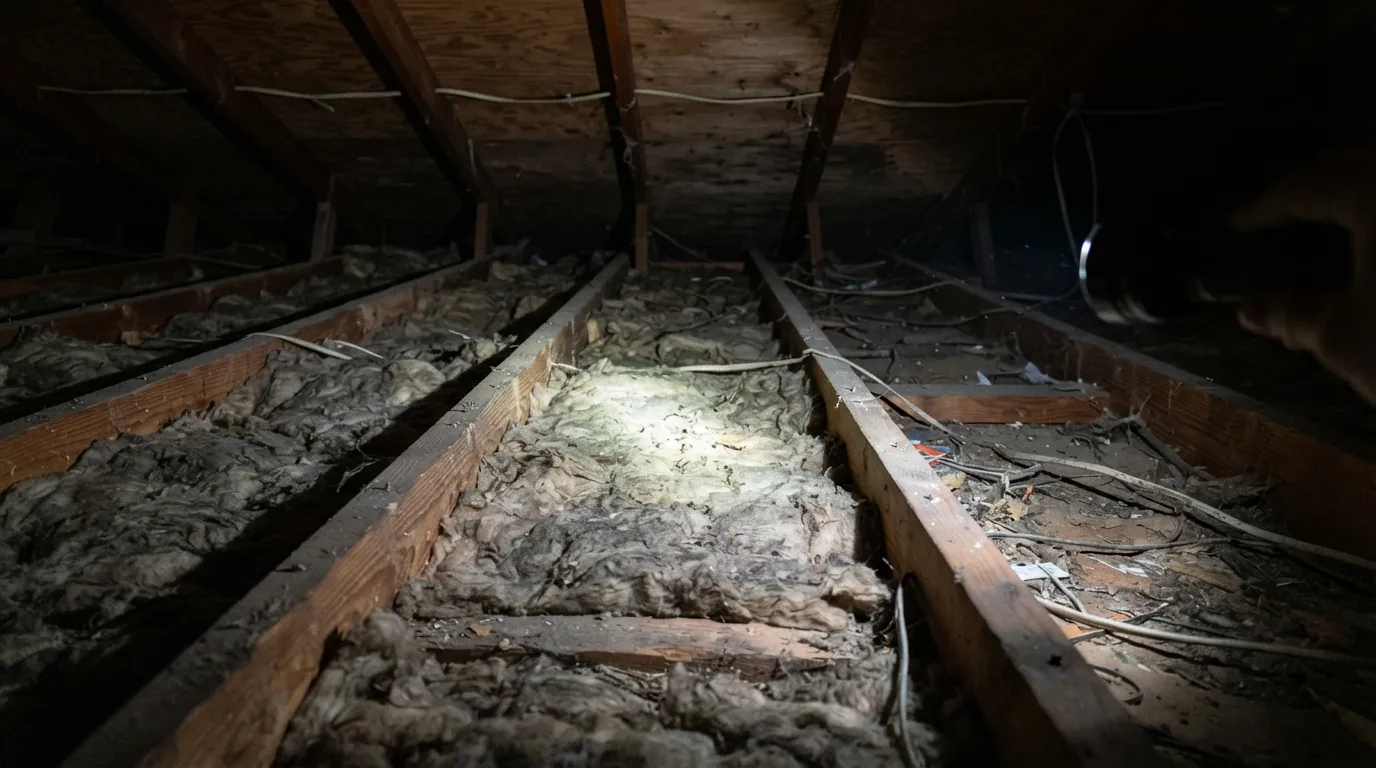
Insulation soaked by old roof leaks, packed down over the years, or contaminated by animals has to come out before new material goes in. We vacuum out the old insulation, fix the leak or seal the entry points that caused the problem, clean the attic floor, and then air seal and reinsulate. Removal is also the moment to check the ceiling drywall and wiring from above, since both are easy to see once the attic floor is bare, and any problems go on the photo report.
Air sealing the attic floor
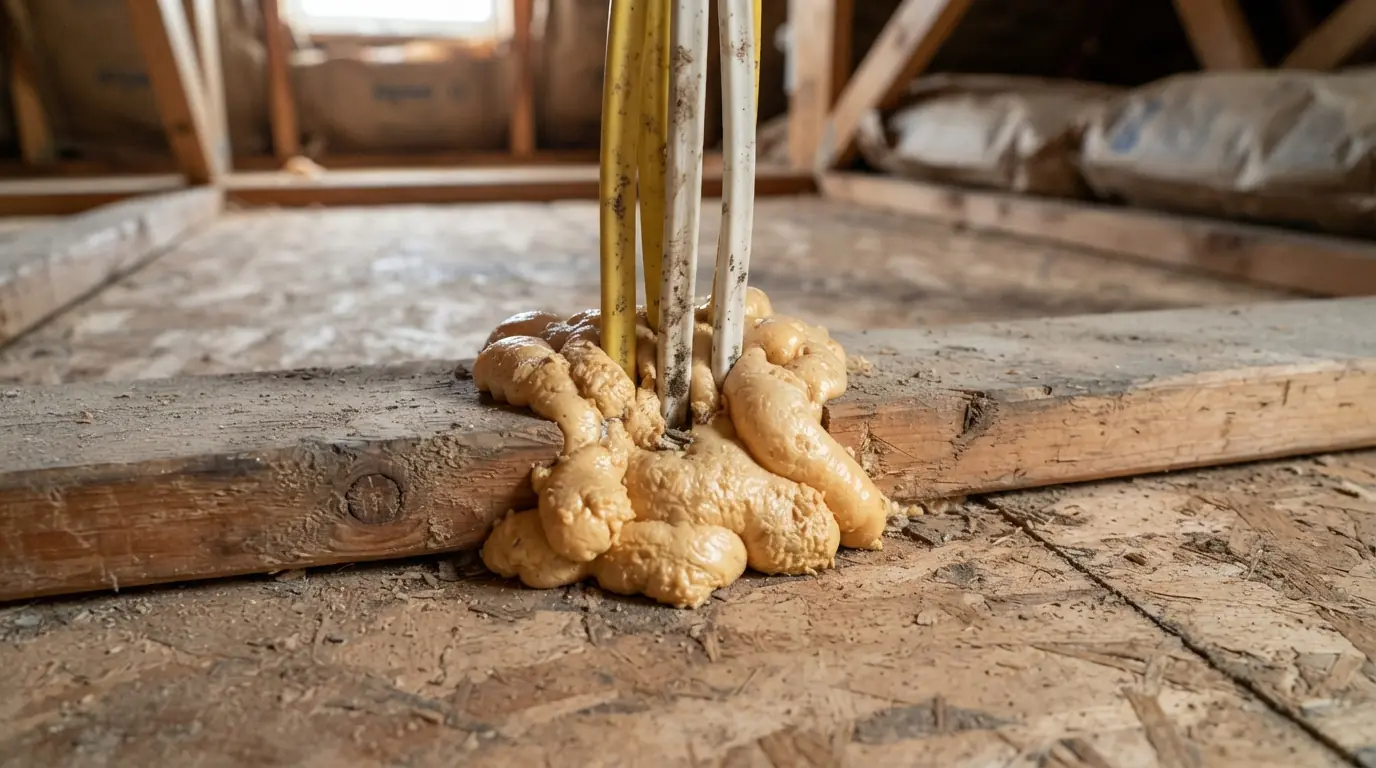
Before any new insulation goes down, we seal the gaps that let air move between the house and the attic: around recessed lights rated for contact, plumbing and wiring penetrations, the tops of interior walls, chimney chases with fire-rated material, and the attic hatch with weatherstripping and an insulated cover. Air sealing is invisible once the insulation is down, which is exactly why it has to happen first and why we photograph it. It usually takes a few hours on a typical attic, and the photos go into your report.
Local conditions
Insulation targets and Memphis heat
Tennessee's amended residential energy code calls for R-30 attic insulation in Climate Zone 3 and R-38 in Zone 4, and ENERGY STAR recommends R-49 for uninsulated attics in Zone 4, so a Memphis attic with a few inches of settled insulation is well short of any target. The heat makes the gap matter: summer 2026 brought Extreme Heat Warnings across the region as the city reached its hottest day of the year. We measure the existing depth and set the target before quoting.
How it runs
How an attic insulation job runs
- 01
Attic check
Depth, gaps, moisture and ventilation checked.
- 02
Written scope
Target R-value, material and prep listed.
- 03
Prep
Old insulation removed where needed; baffles set.
- 04
Air seal
Gaps in the attic floor sealed and photographed.
- 05
Blow in
Insulation blown to the target depth, markers set.
- 06
Clean up
Walkways cleared and photos sent to you.
Upstairs never cools down?
Call and we will measure the attic insulation and tell you how far it is from where it should be.
Call (901) 459-6395FAQ
Attic insulation questions from Memphis homeowners
Tennessee's code calls for R-30 or R-38 depending on climate zone, and ENERGY STAR recommends more. We measure what you have and set a target.
Yes, if the old insulation is dry and clean. Wet or contaminated insulation comes out first.
Not when soffit baffles are installed. They keep an air path open from the soffit vents.
Yes. Insulation slows heat, but air leaks move heat and moisture directly. Sealing first makes the insulation work.
Most attics take a day, including the air sealing.