Repairs & Leaks
Roof decking repair for soft or sagging Memphis roofs
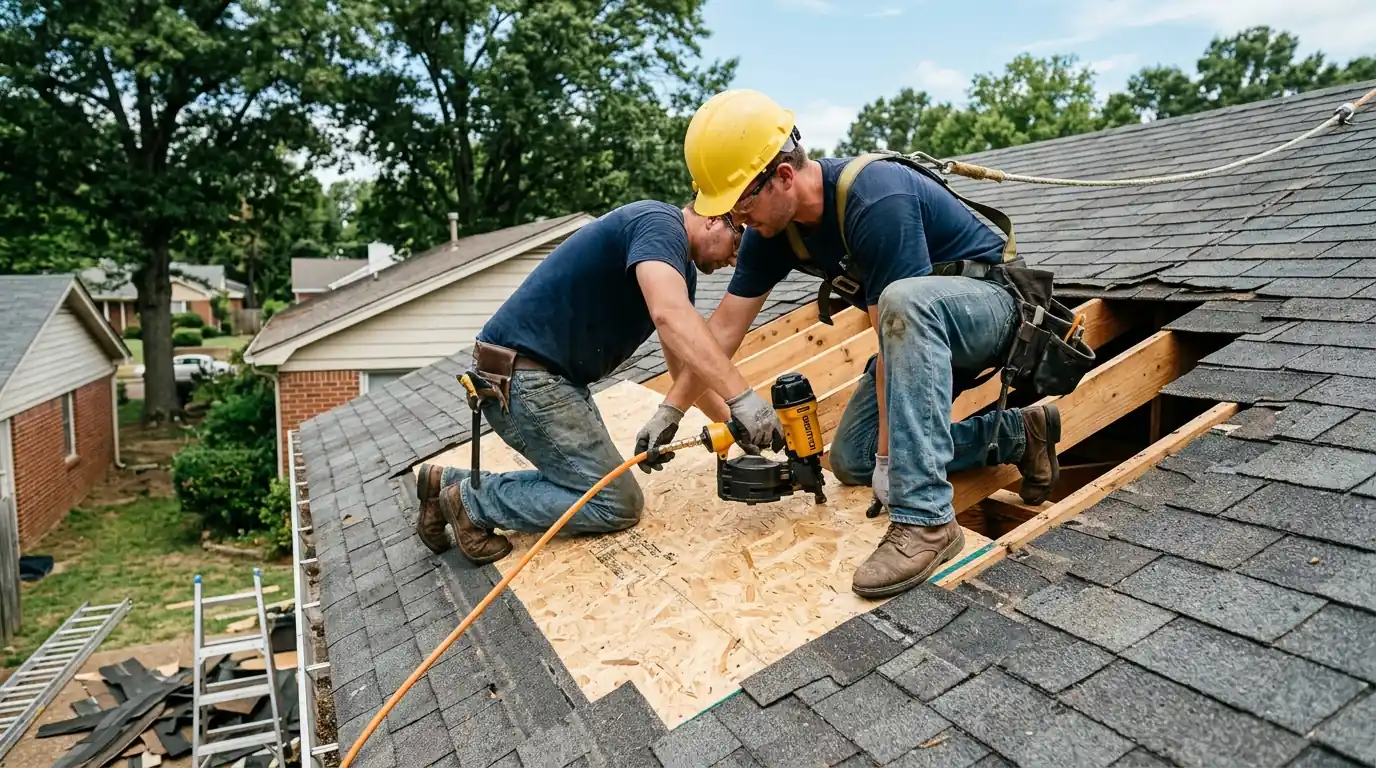
Shingles are only as good as the wood they are nailed to. When the deck goes soft, nails stop holding and the roof starts to wave. We cut out the bad sheets, find out why they rotted, and fix that too.
We answer 24/7 for roof leaks and decking failures across Memphis
The job
How roof decking fails
Quick answer
Roof decking repair in Memphis means cutting out rotted or delaminated plywood or OSB, usually in 4 by 8 foot sheets, and replacing it before the shingles go back on. It is needed when the deck feels soft underfoot, the roof line sags between rafters, or water has soaked the wood for months.
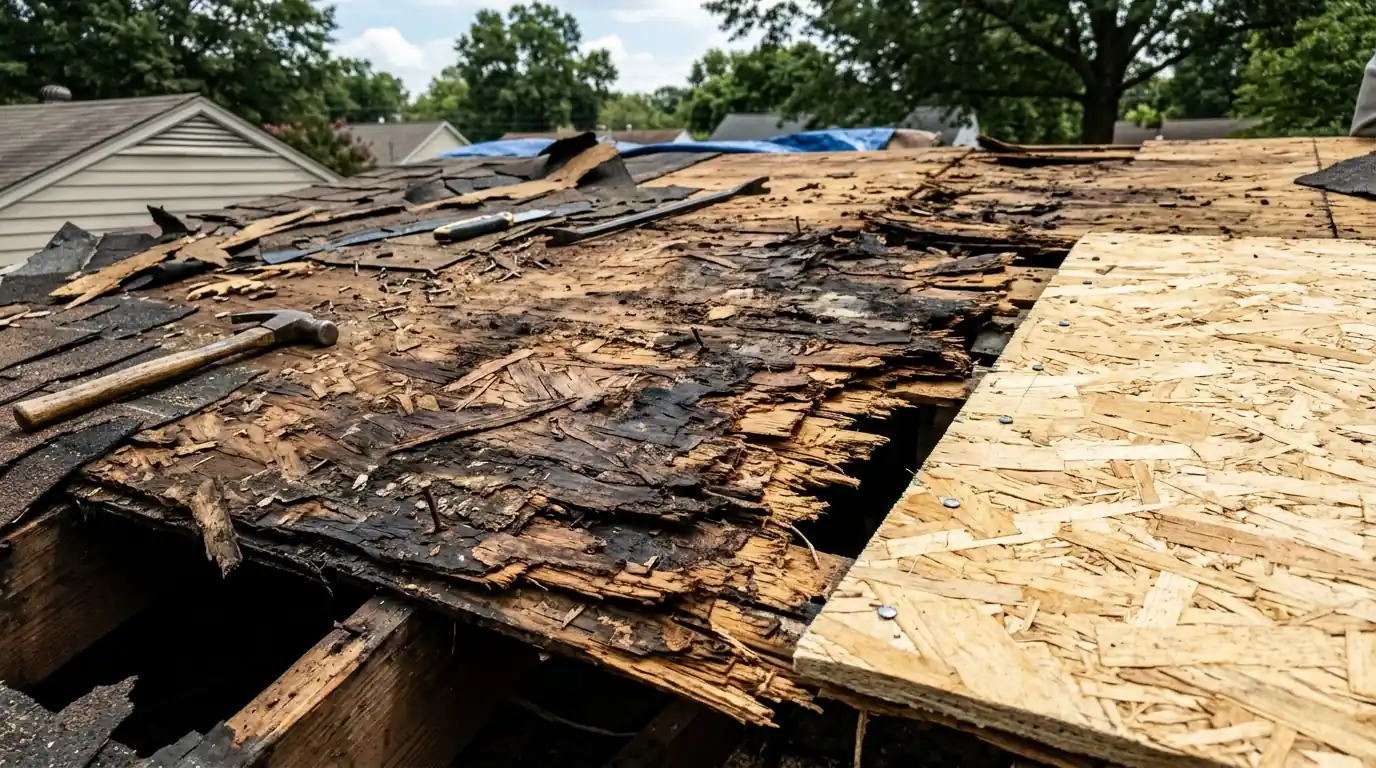
Decking rots from the top when a roof leaks slowly for a long time, and from below when a hot, damp attic condenses moisture on the sheathing. OSB swells and loses strength when it stays wet; plywood delaminates in layers. Either way, a new shingle on a soft deck will not stay put.
Decking repair often happens inside another job: a leak repair where the wood turns out to be gone, or a replacement where tear-off reveals bad sheets. It also stands on its own when a section of roof starts to dip.
Cost
What sets the price of decking repair
Decking is priced mostly by the sheet, with the roof work around it added.
- Number of sheets
Each 4 by 8 sheet removed and replaced is counted.
- Sheathing type
Plywood and OSB in matching thickness differ in price.
- Shingle layers
Two old layers both come off to reach the wood.
- Framing repairs
Sistered or added rafters are priced separately.
- Permit
Deck work triggers a county permit and inspection.
- Ventilation fixes
Added ridge or soffit vents if the attic caused the rot.
- Tear-off and disposal
Old shingles and wood hauled away.
Published 2026 Memphis figures put a Shelby County roof permit at about $136 and tear-off and disposal at $1 to $2 per square foot. Both appear as separate lines on your written scope.
Rotted plywood and OSB replacement
We mark the soft area from the roof and the attic, then cut the sheathing back to solid wood over the nearest rafters so every new sheet edge lands on framing. New sheets match the existing thickness so the roof plane stays flat, with the spacing gap panel makers call for and H-clips where the span needs them. Rotted spots next to sound wood are normal, so we price per sheet and show you each one before it comes off. The section is dried in with underlayment before the crew leaves for the day.
Sagging roof line repair
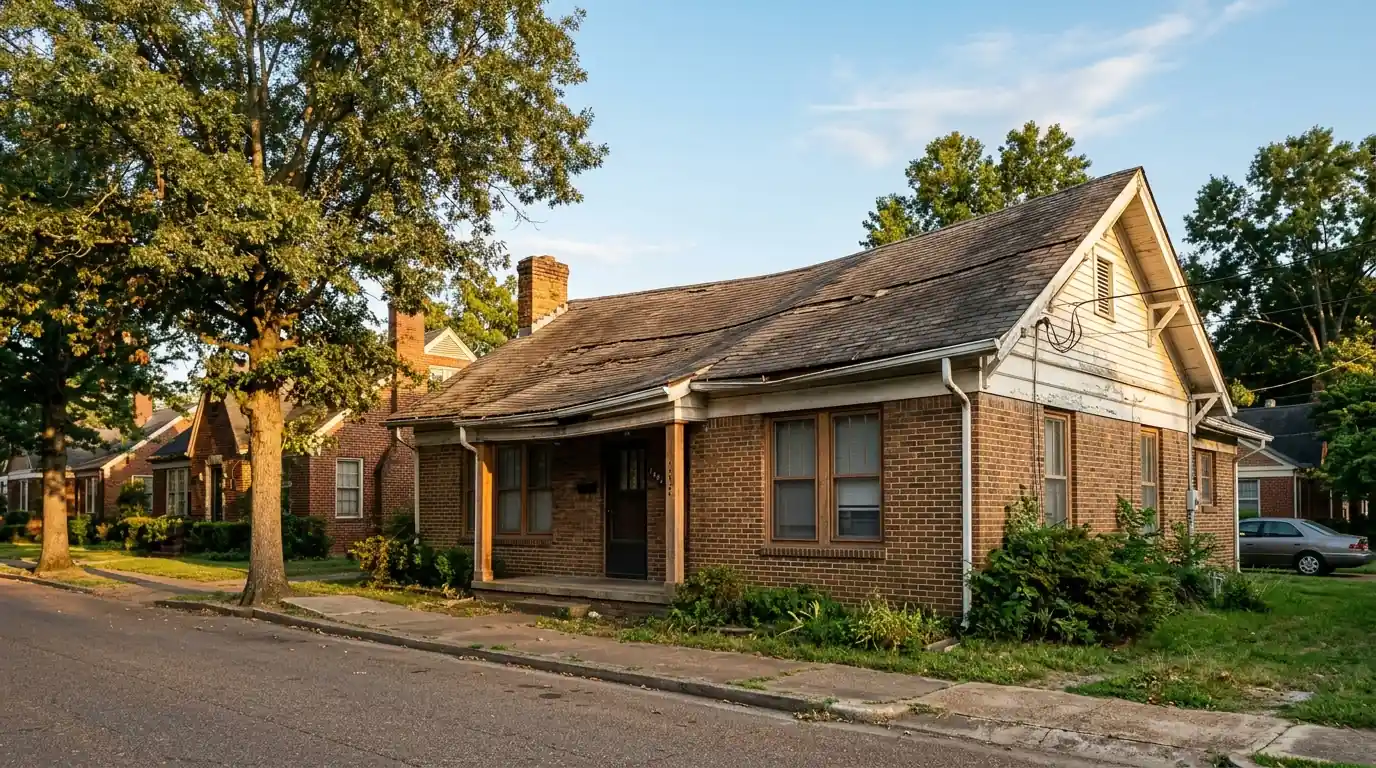
A dip between rafters is usually decking that sagged from moisture or thin sheathing, and that is a decking repair. A dip along a whole rafter or the ridge is the framing itself, which may need a sister rafter or added support from the attic. We look from both sides before telling you which one you have. Where the deck is the cause, new sheets and H-clips flatten the plane again. Where framing is involved, we say so plainly and scope that fix before any shingles go back.
Attic moisture damage
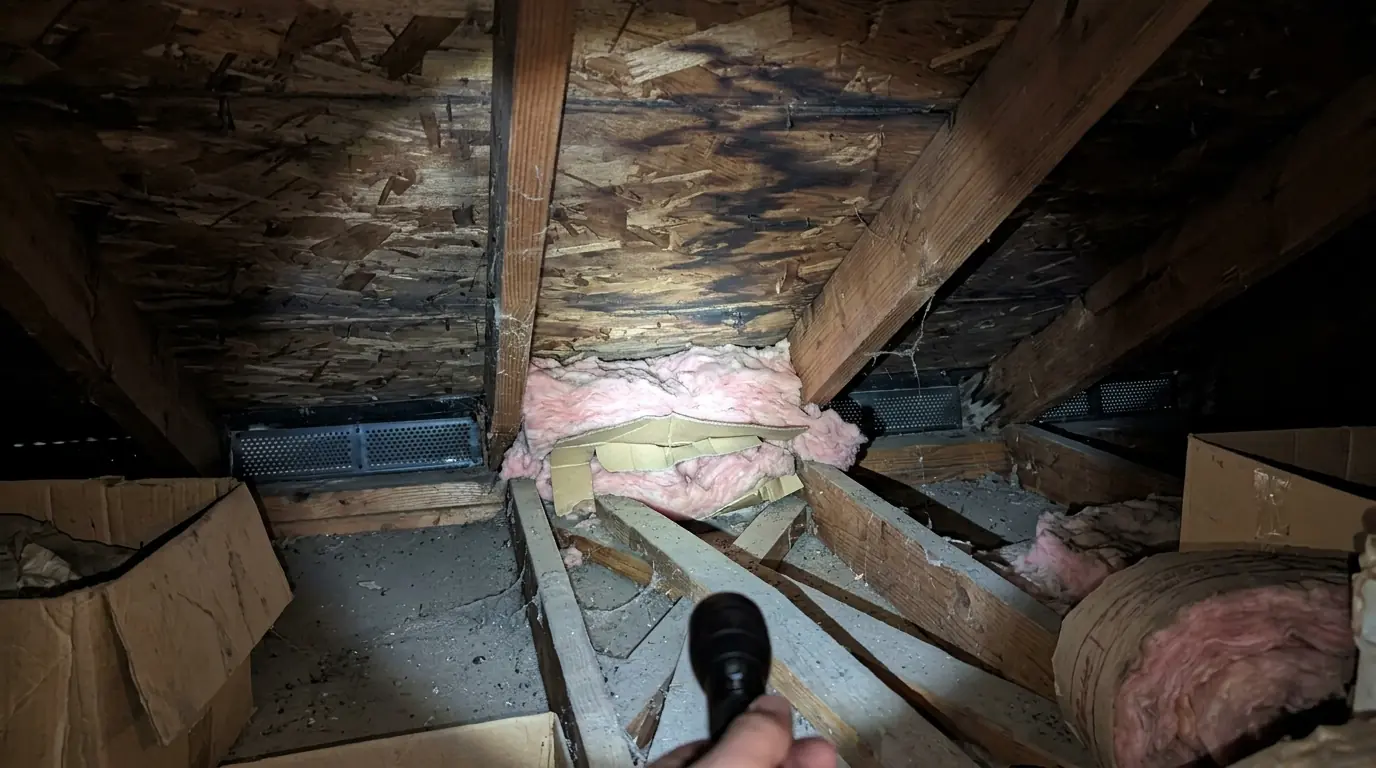
When the underside of the decking is black or fuzzy and the shingles above look fine, the problem is the attic. Memphis summers load an attic with heat and humidity; without enough intake at the soffits and exhaust at the ridge, moisture condenses on the sheathing and soaks it. Replacing the wood without fixing the airflow means doing it again. We check for insulation or paint blocking the soffit vents and bath fans that dump into the attic, and pair the decking repair with the ventilation it needs.
Local conditions
Permits and decking work in Shelby County
Shelby County does not require a permit to reroof a single-family home, but that changes once decking is replaced, because deck work is what triggers a permit under the county's roofing policy. That makes decking one of the few parts of a Memphis roof job an inspector may actually see. The county also leaves how many roofing layers can stay to site conditions and materials, so when we find soft decking under two layers of shingles, both layers come off to reach it.
How it runs
How we replace roof decking
- 01
Map the damage
Soft areas marked from the roof and checked from the attic.
- 02
Permit
Pulled for the deck work, as the county requires.
- 03
Strip and cut
Shingles removed, bad sheathing cut back to the rafters.
- 04
New sheathing
Matching sheets installed with gaps, clips and proper nailing.
- 05
Dry in
Underlayment and ice and water membrane go on the same day.
- 06
Reshingle and record
Shingles installed and photos of every stage sent to you.
Found soft spots or a leak over rotted wood?
Call any hour. We answer 24/7 and can tarp a failing section tonight so the damage stops spreading.
Call (901) 459-6395Warning signs
Signs the wood under your shingles is failing
- Soft or spongy spots
The roof gives underfoot, often near valleys, vents or eaves.
- Wavy roof line
Dips between rafters show from the street at low sun.
- Stains in the attic
Dark sheathing, mold spots or daylight through the boards.
- Nails backing out
Nail heads lifting shingles from below have lost their grip.
- Musty attic smell
A damp summer smell points to condensation on the deck.
FAQ
Roof decking questions from Memphis homeowners
No. Nails will not hold in rotted wood, shingles will not lie flat, and manufacturers require a sound deck. Bad sheets come out first.
Often you cannot until the old shingles are off. We walk for soft spots, check the attic, and price extra sheets per sheet so nothing surprises you.
Both meet code when installed correctly. Plywood tolerates brief wetting a little better; we match what is on the roof so the plane stays flat.
Rot from a slow leak or poor ventilation usually is not covered; damage from a sudden storm may be. Your policy and adjuster decide.
If the sag is between rafters, usually yes. If the rafters have bowed, the framing needs work too, and we show you which it is.