Storm guide
What to check on your roof after a Memphis storm
Wind is the Memphis storm. Here is how to spot what it did to your roof without climbing up there.
By Cora Padgett, Roofing Guides Editor Updated October 2026
We answer 24/7 across Memphis and Shelby County
Quick answer
After a Memphis storm, walk the yard before anything else: look for shingle pieces, granules at downspouts, dented gutters and vents, and fallen limbs. Then check ceilings and the attic for new stains. Photograph everything, stay off the roof, and have a roofer walk it within a few weeks while the damage is fresh.
Memphis storms are mostly wind
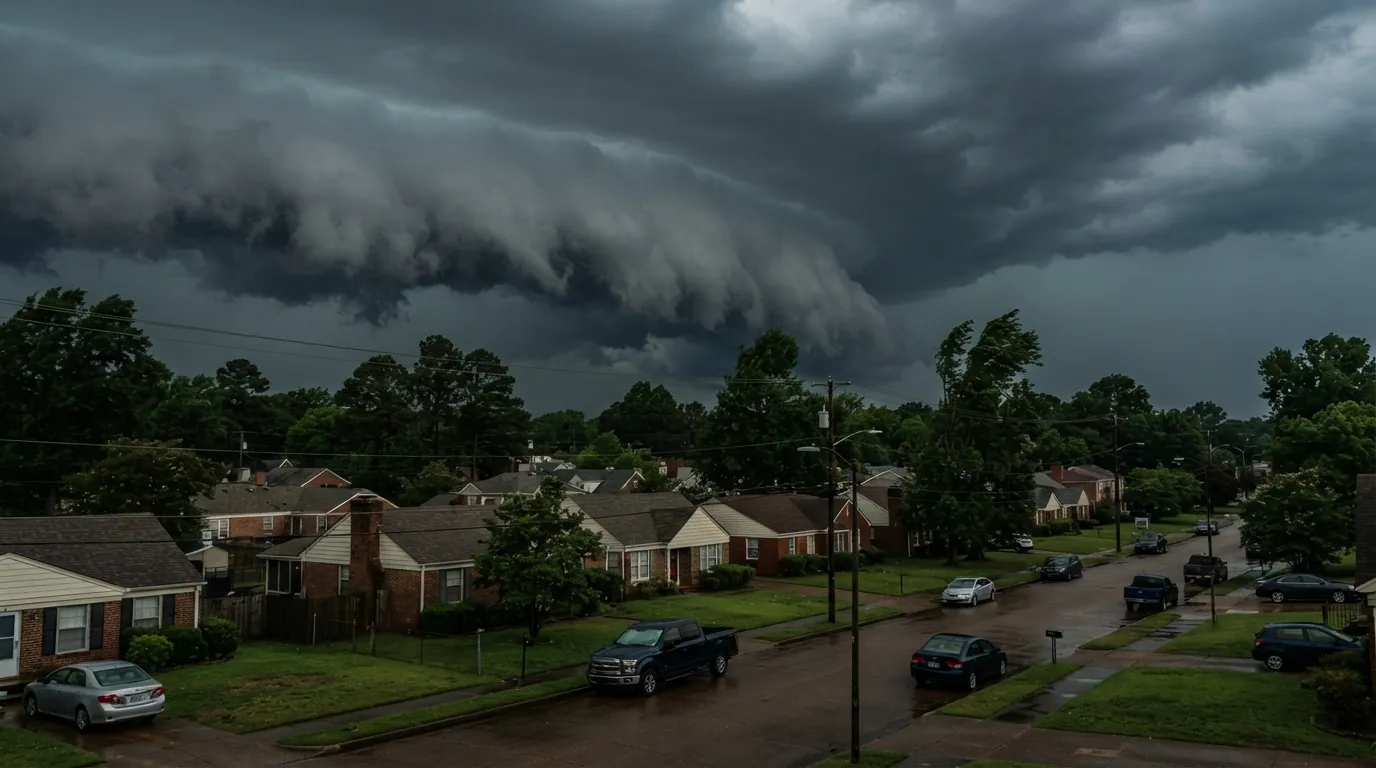
The National Weather Service office in Memphis notes that summertime damaging wind here comes almost entirely from convective thunderstorms, not tornadoes. The August 2026 storms were a clear example: MLGW confirmed winds over 70 mph with no tornado touchdown, and streets across the city were littered with fallen trees.
Wind does its damage along roof edges and ridges. It lifts shingles past their sealant strips, creases them and strips ridge caps. Much of that damage lies flat again afterward and is invisible from the street, which is why a checklist beats a glance.
The Ground-Level checklist
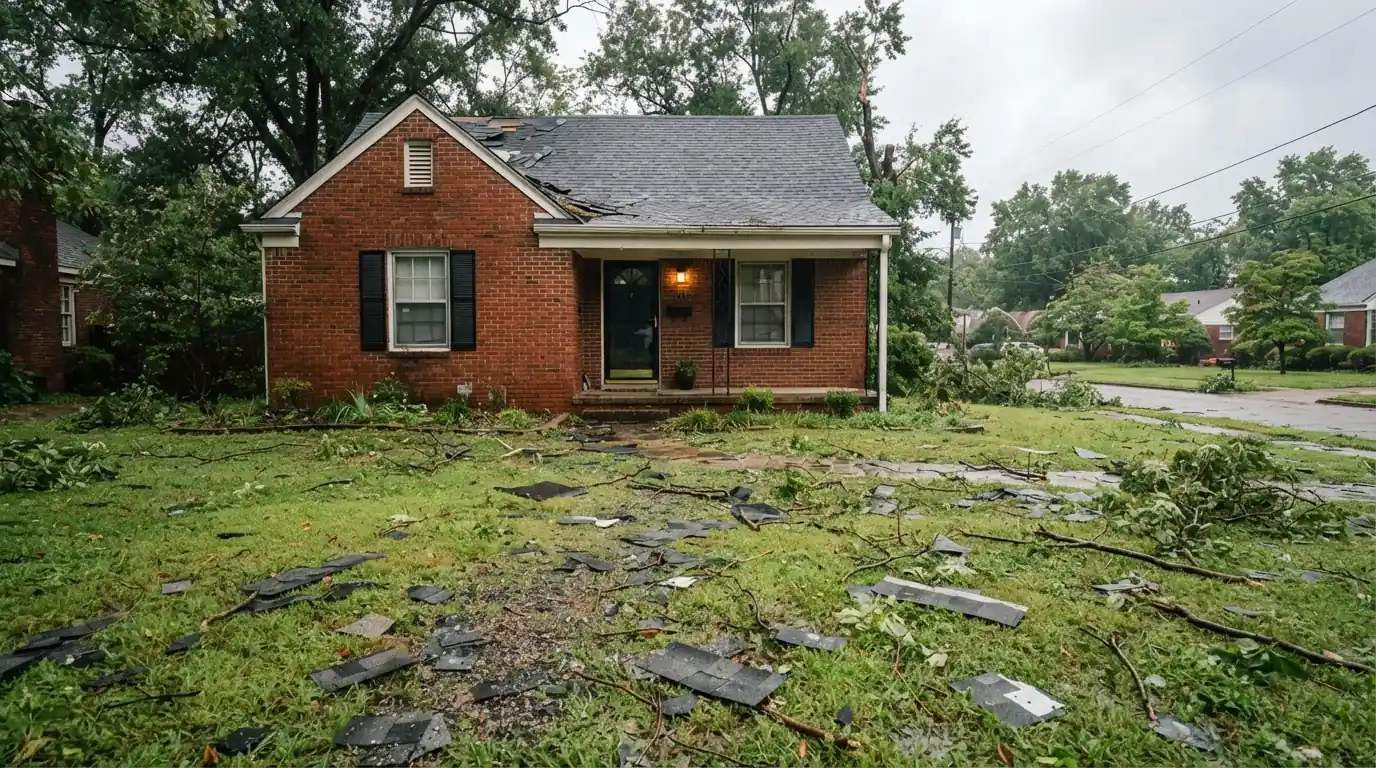
- Shingle pieces in the yard, the gutters or on the driveway
- Granules piled at the bottom of downspouts
- Dented gutters, downspouts and vents, a sign hail hit the roof too
- Missing ridge caps or a ridge line that looks uneven
- Lifted or flapping shingles, often along the rakes and eaves
- Limbs on the roof or broken branches hanging overhead
- Damage to cars, siding or fences on your street
- Loose flashing around the chimney
Inside the house
Check the top-floor ceilings, especially below valleys and around chimneys and bathroom vents. If you can safely get into the attic, look at the underside of the roof deck with a flashlight for wet spots, and at the insulation for dark or matted patches. New stains after a storm usually mean water found a way past lifted shingles or damaged flashing.
Storm just passed? Get the roof walked.
We answer 24/7, cover any open areas and photograph every slope.
Call (901) 459-6395What not to do
- Do not climb onto the roof. Wet shingles and damaged decking are dangerous, and creased shingles can tear underfoot.
- Do not sign a contract on the spot with someone knocking on doors after the storm. Take their card and get the roof documented first.
- Do not pressure wash or scrub the roof to look for damage.
- Do not wait months to have it checked if you see signs of damage. A lifted shingle that survives one storm often tears off in the next.
Document it for a possible claim
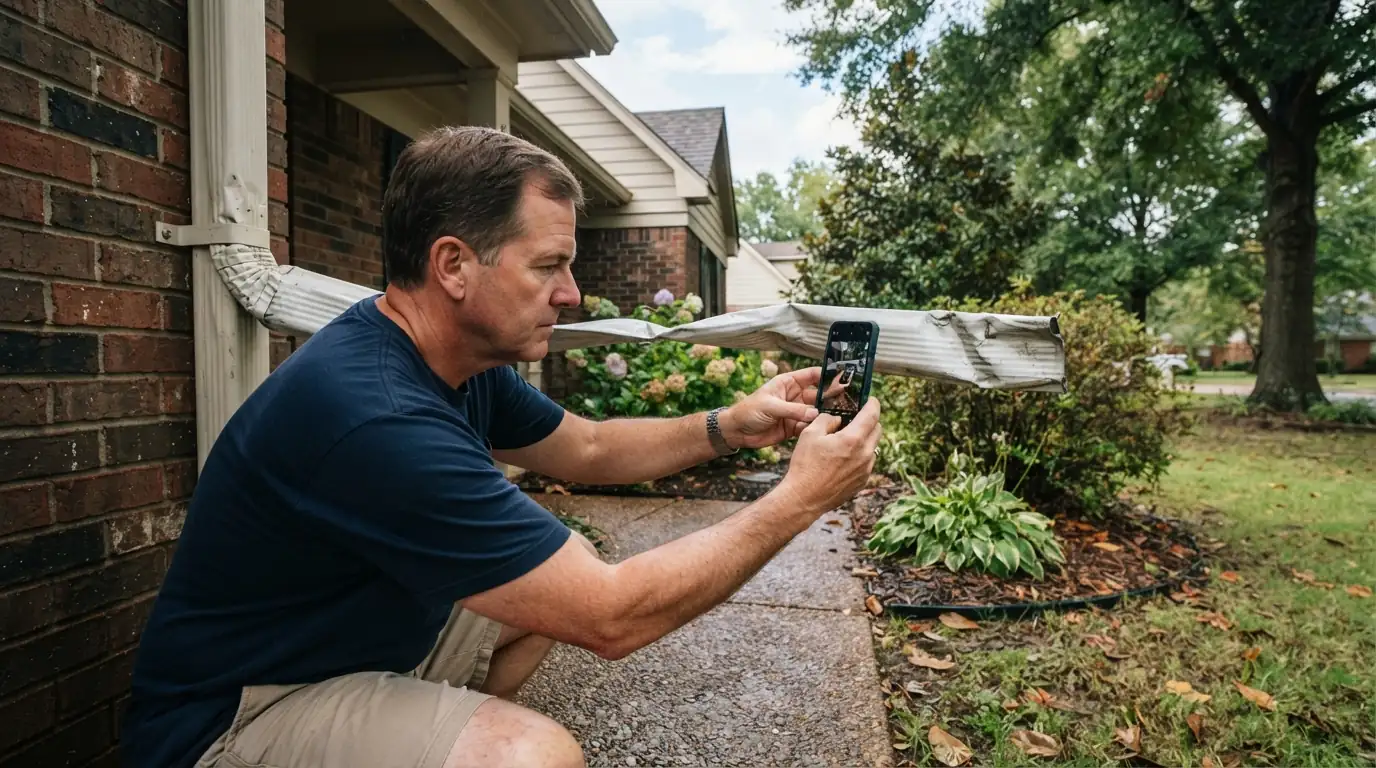
Take wide photos of each side of the house and close photos of anything damaged, and note the storm date and time if you know it. If you file, your carrier will want to know when the damage happened, and photos taken right after the storm are the strongest evidence. A roofer's inspection with test squares and a measured diagram adds the part you cannot see from the ground; our insurance claim help page explains what that includes.
Hail is different
Hail usually rides in with the same summer storms, but its damage hides better than wind's. A bruised shingle looks fine from below while the mat underneath has cracked, and it may not leak for months. If the gutters or vents are dented, assume the shingles took hits too. Our guide to spotting hail damage goes further, and our hail damage repair page explains how test squares work.
When to call and what happens next
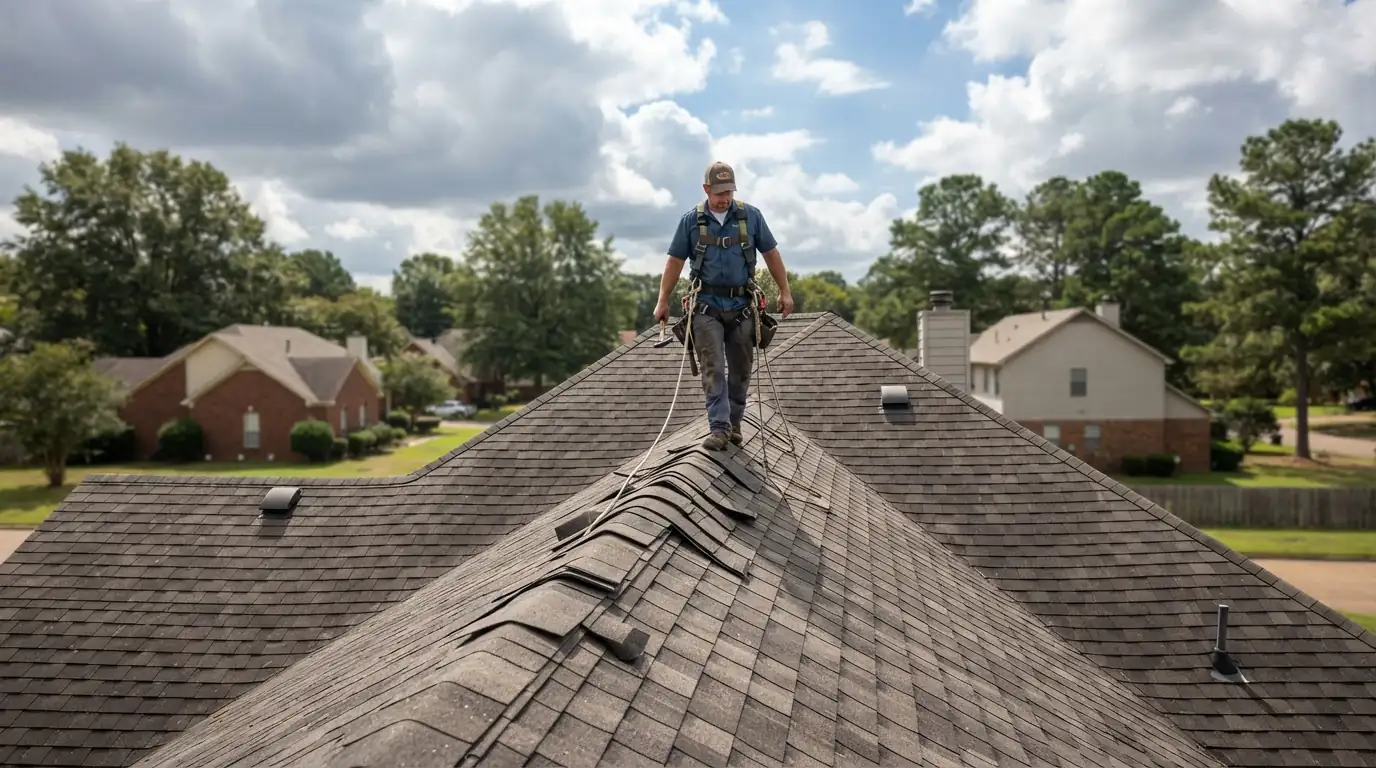
Call right away if water is coming in or a limb is on the roof; that is emergency work, and it starts with covering the roof. If a tree came down on the house, our tree damage page explains what follows. If nothing is leaking, a roof walk within a few weeks is enough. A roofer should walk every slope, check the edges and ridge tab by tab, photograph what they find, and tell you whether it is a repair, a claim, or nothing at all.
FAQ
Storm damage questions
Right away if water is coming in; otherwise within a few weeks, while damage is fresh and the storm date is clear.
Some of it: shingle pieces, missing ridge caps, dented metal. Creased and lifted shingles usually show only on a roof walk.
No. The National Weather Service warns that gusts around 60 mph can damage roofs; lighter storms often leave nothing.
Either order works, but a roofer's inspection tells you whether there is damage worth a claim before you file one.
Keep everyone out of the rooms below and call for emergency help. Do not try to cut or move it yourself.
Some are, some are not. Take a card, get your own inspection, and never sign on the spot.