Storm & Emergency
Roof insurance claim help for Memphis storm damage
An insurance claim is decided on evidence, and the evidence is on your roof. We document the damage the way adjusters expect to see it, meet them on the roof, and check their scope against what the roof actually needs.
We answer 24/7 after storms across Memphis and Shelby County
The job
What a roofer adds to your claim
Quick answer
Roof insurance claim help in Memphis means three things from a roofer: a documented inspection with dated photos and a measured diagram, a meeting with the adjuster on the roof, and a line-by-line review of the carrier's scope. The claim and the decision to file stay yours; the roofer's job is making sure the paperwork matches the roof.
Adjusters see many roofs a week after a storm and have limited time on each. A roofer who was on your roof first, with photos, test squares and measurements, makes sure damage on the far slope or under the ridge caps does not get missed.
We do not negotiate your settlement or act as a public adjuster. We document, explain and review, so the scope the carrier writes covers the work the roof needs.
Cost
What decides what you pay on a roof claim
On a claimed roof, what you pay out of pocket comes down to the policy more than the roof.
- Your deductible
The first share is yours; wind and hail deductibles may be a percentage.
- Replacement cost or cash value
Cash-value policies subtract depreciation from the payout.
- Roof age
Older roofs lose more to depreciation on cash-value policies.
- Extent of damage
Spot repair, slope replacement or a full roof.
- Code items
Some policies cover required upgrades; some do not.
- Matching
Whether unmatched slopes are included varies by carrier.
- Items found at tear-off
Storm-related hidden damage may be added by supplement.
What is included
What our claim documentation includes
- Storm date
The date you give us, noted throughout.
- Slope-by-slope photos
Every slope, labeled, wide and close.
- Test squares
Hit counts per slope where hail is involved.
- Wind damage marks
Creased, lifted and missing shingles located.
- Soft metals
Dented vents, gutters and flashing photographed.
- Measured diagram
Area and pitch for every slope.
- Interior damage
Ceiling stains and attic wet spots noted.
- Pre-existing wear
Old damage marked separately, honestly.
- Written scope
What the roof needs, line by line.
Damage documentation and photo reports
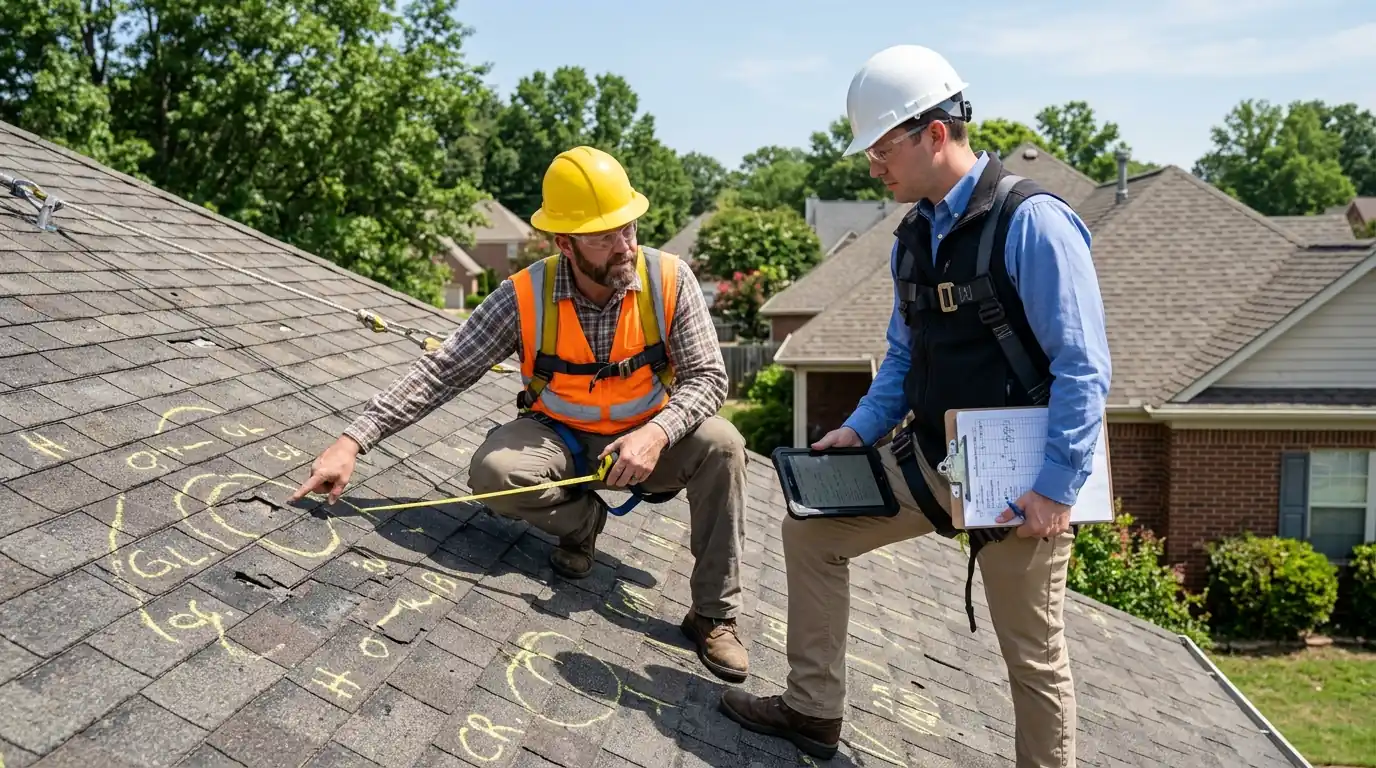
Good documentation is specific and honest. We photograph every slope from a distance and up close, chalk-mark hail hits inside test squares, circle creased and lifted shingles, and photograph dented vents, gutters and flashing. A measured diagram shows each slope's area and pitch, which is what the claim is priced from. We also mark wear that is not storm damage, because a report that calls everything storm damage loses credibility the moment an adjuster spots one old blister. Honest reports get read more carefully.
Adjuster meeting on the roof
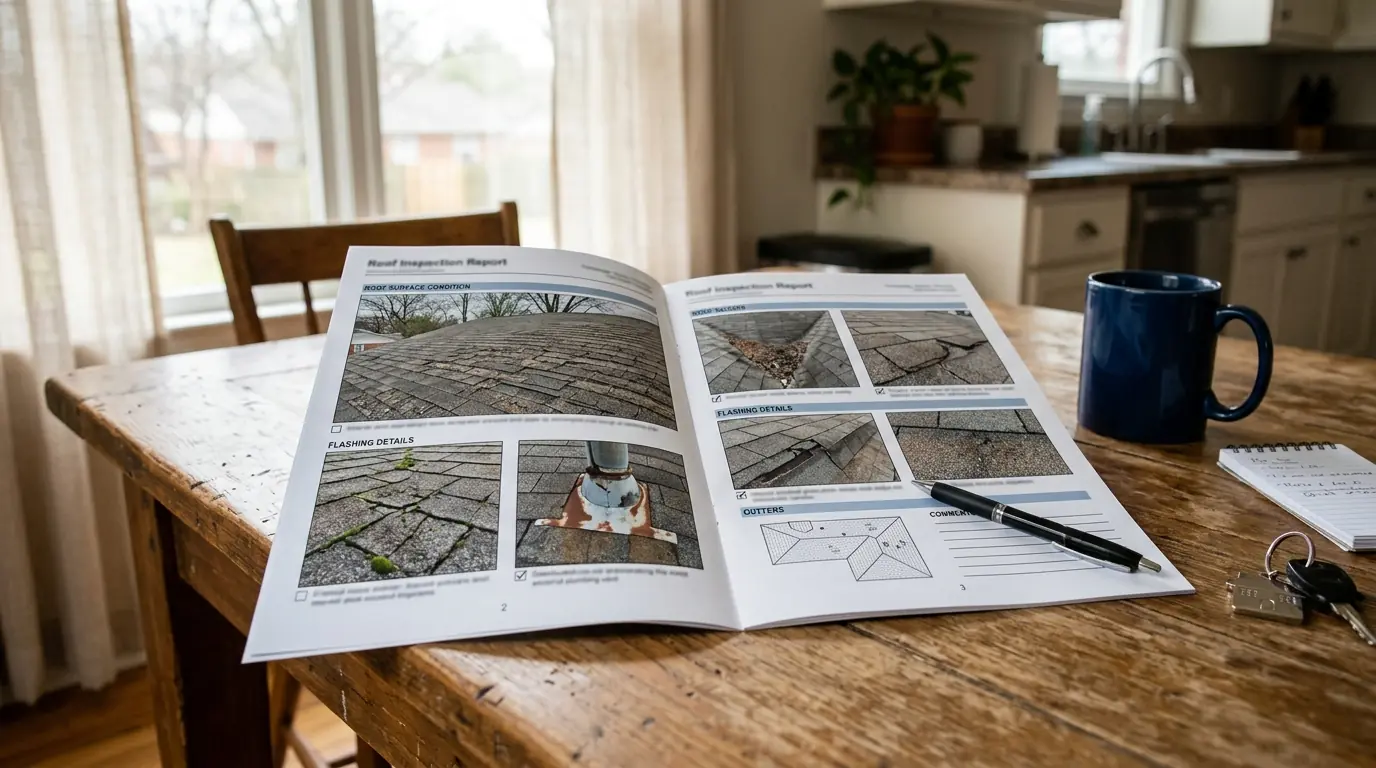
Most carriers send an adjuster to see the roof in person, and we meet them there when you ask us to. We walk the slopes together, point out each damaged area from our report, and make sure the adjuster sees the parts of the roof that are easy to miss from a ladder at the eave. We stick to facts about the roof and leave coverage decisions to the carrier. When the adjuster and our findings differ, it is usually over a specific slope, and that is easier to settle standing on it.
Supplement and scope reviews
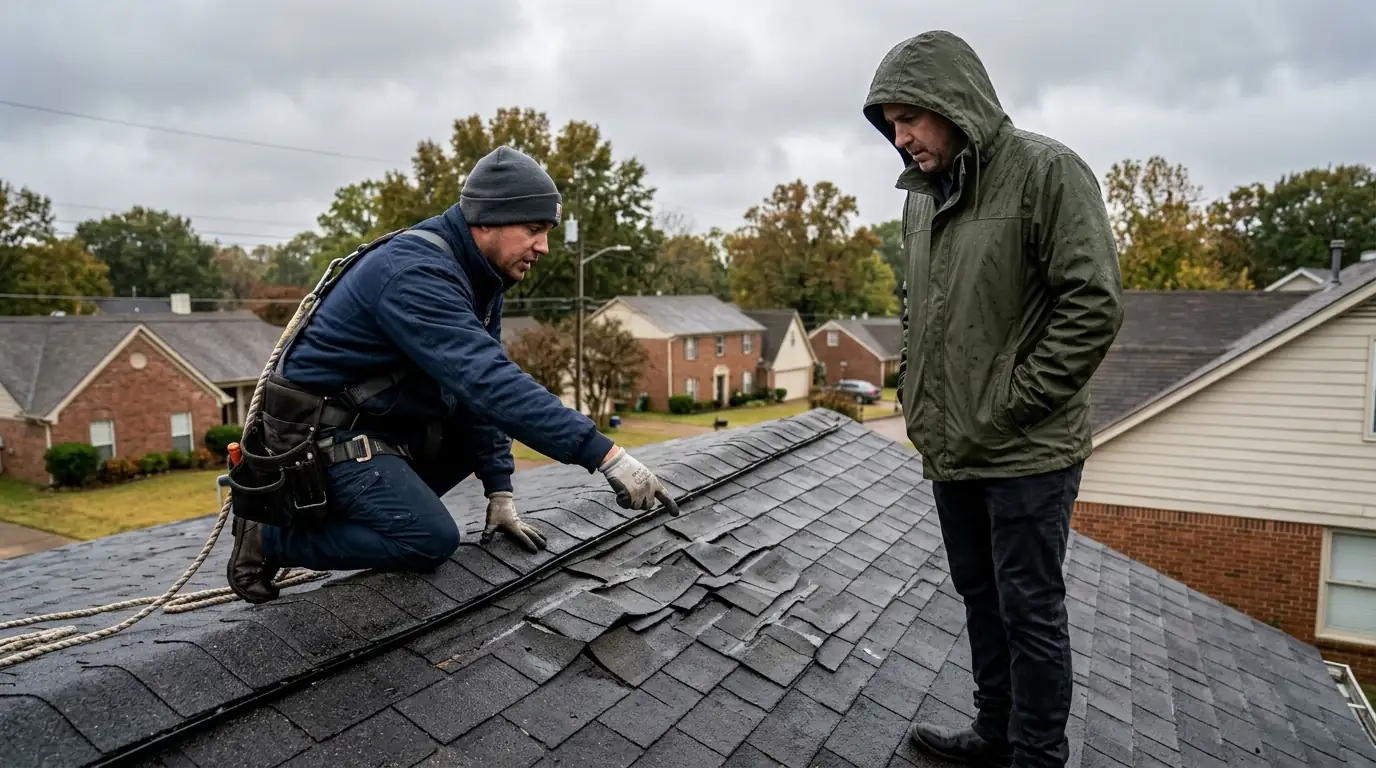
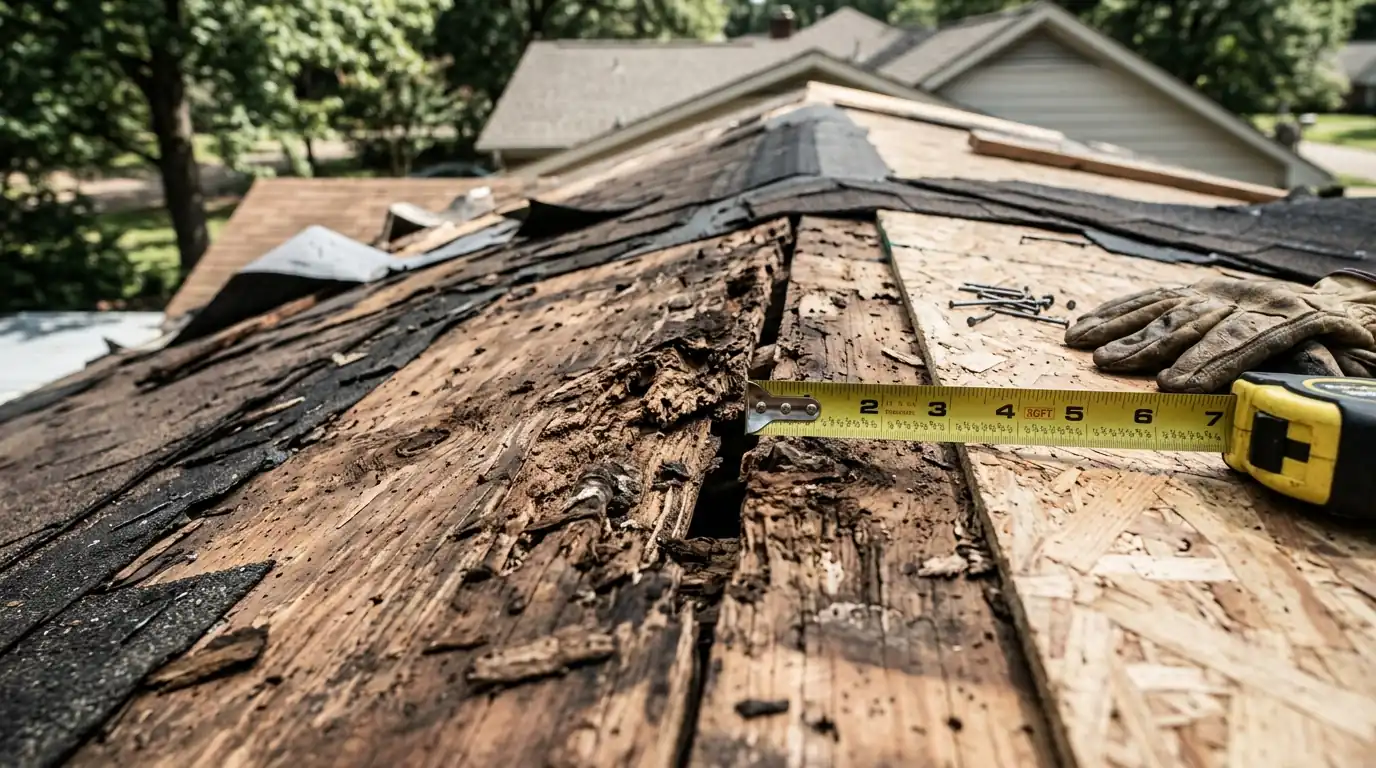
The carrier's estimate often misses items that only show up once the roof is measured or opened: drip edge, starter strip, ridge vent, pipe boots, extra decking, or a second layer to tear off. We compare their scope line by line against ours and, where something is missing, prepare a supplement with photos and measurements showing why it is needed. Items found during tear-off, such as rotted sheathing, are photographed before they are covered, so the evidence exists when the supplement is reviewed.
Local conditions
What the August 2026 storms showed about claims
More than 120,000 MLGW customers lost power in the August 2026 storm, which arrived under a National Weather Service warning that 60 mph gusts could damage roofs and siding. That is the typical Memphis claim: straight-line wind rather than a tornado, with storm cells tracked across Shelby County, including near Collierville. The utility has said its grid stays vulnerable whenever winds pass 60 to 70 mph, and roofs follow the same threshold, which is why dated photos taken soon after the storm carry so much weight with a carrier.
How it runs
How we help with a roof claim
- 01
Inspection
Full roof walk, photos, test squares and measurements.
- 02
Report to you
Photos, diagram and our scope, before you decide to file.
- 03
You file
You report the claim to your carrier and share the report.
- 04
Adjuster meeting
We meet the adjuster on the roof if you want us there.
- 05
Scope review
Carrier estimate checked line by line; supplements prepared.
- 06
Repair or replace
Work done to the approved scope and photographed.
Timeline
How long a roof claim usually takes
From your first call to a finished roof, a straightforward claim often runs a few weeks, and the adjuster's calendar sets most of it. After a storm that hits the whole county, carriers handle a surge of claims and visits take longer to book.
The part you control is the start: report the claim promptly, get the roof documented while damage is fresh, and cover any open areas. Most policies expect you to take reasonable steps to prevent further damage.
FAQ
Roof insurance claim questions from Memphis homeowners
Either works, but having the roof documented first tells you whether the damage is worth a claim before one is on your record.
We work with whichever carrier is on your policy, and our report is written to the same standard for all of them.
No one can. Coverage is the carrier's decision under your policy. We make sure the evidence of what happened to the roof is complete.
We point it out on the roof, and if the written scope still misses it, we prepare a supplement with photos and measurements.
In most cases you choose your own roofer. Check your policy and ask your carrier if you are unsure.