Commercial
Silicone and acrylic coatings for Memphis commercial roofs
A coating is not a new roof. On a membrane or metal roof that is still dry underneath, it seals seams, reflects summer heat and adds years of service without a tear-off.
We answer 24/7 for commercial roof calls across Memphis
The job
Where a coating makes sense and where it does not
Quick answer
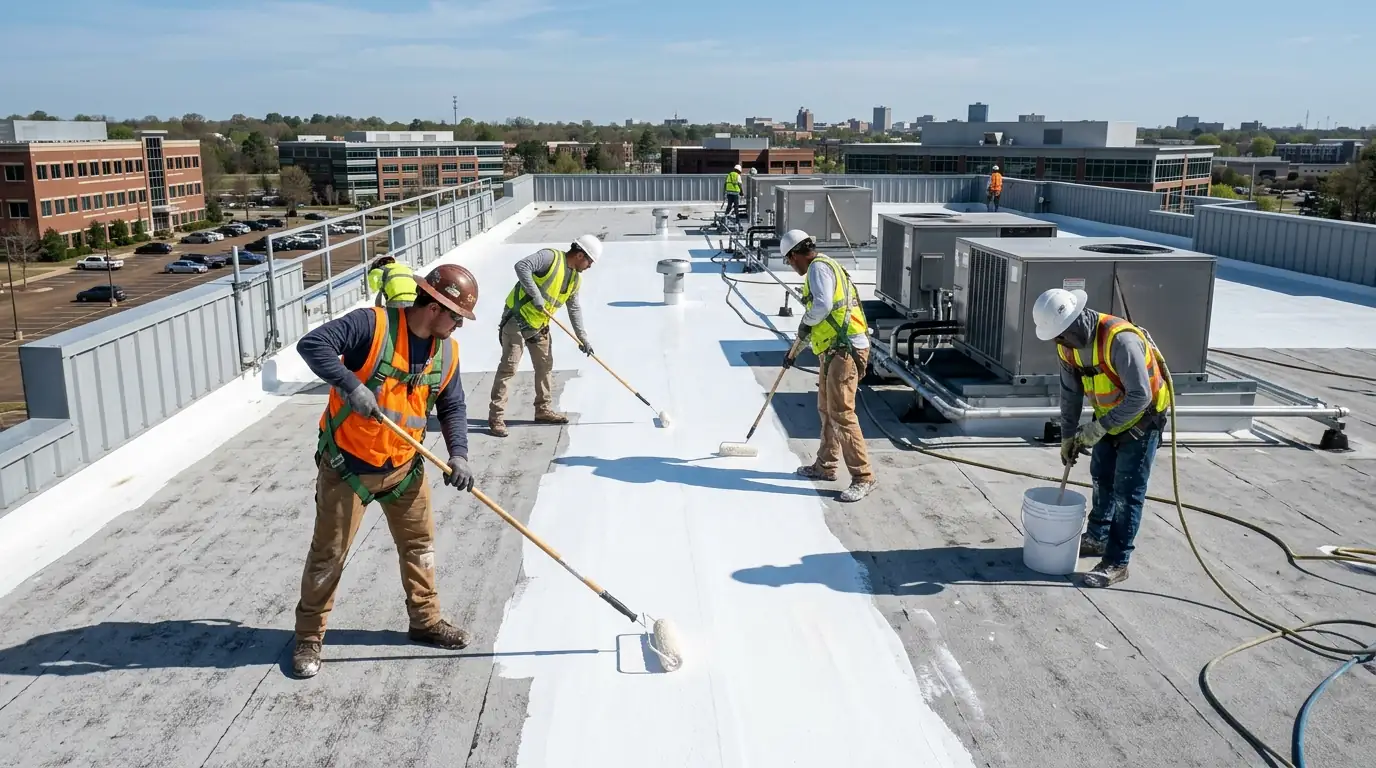
A roof coating in Memphis is a fluid-applied layer, usually silicone or acrylic, rolled or sprayed over an existing low-slope or metal roof after cleaning and repairs. It only works when the roof underneath is dry and structurally sound, so every coating job starts with a moisture check, not a price.
Coatings earn their keep on the roofs Memphis businesses actually have: aging TPO and EPDM on offices and strip centers, and exposed-fastener metal on warehouses and shops. Summer sun breaks membranes down and loosens fasteners, and a coating adds a fresh weathering surface over the old one.
The part that matters most happens before any coating goes down. Wet insulation has to be found and cut out, open seams and punctures repaired, and the surface cleaned so the coating bonds. Skip those steps and the coating peels.
Cost
What shapes the cost of a roof coating
Coating prices follow the prep work far more than the coating itself.
- Wet insulation
Saturated areas are cut out and replaced before coating.
- Seams and flashing
Open seams, curbs and edges get fabric and base coat first.
- Surface cleaning
Chalky membranes and dirty metal need washing, sometimes primer.
- Coating type
Silicone and acrylic differ in price and recoat options.
- Dry-film thickness
Thicker coats cost more and last longer; the spec sets it.
- Roof size and shape
Large open roofs cost less per foot than cut-up ones.
- Rooftop equipment
Every unit, curb and pipe adds detailing time.
What is included
What a coating job includes
- Moisture survey
Readings and cores to find wet insulation.
- Wet area replacement
Saturated insulation and membrane rebuilt.
- Power washing
Dirt, chalking and loose material removed.
- Seam reinforcement
Fabric and base coat over seams and laps.
- Fastener work on metal
Loose or rusted screws replaced and sealed.
- Penetration detailing
Pipes, curbs and drains sealed one by one.
- Adhesion testing
Tests decide whether the surface needs primer.
- Full application
Coating applied and checked with a thickness gauge.
- Photo record
Each stage photographed for your maintenance file.
Silicone roof coatings
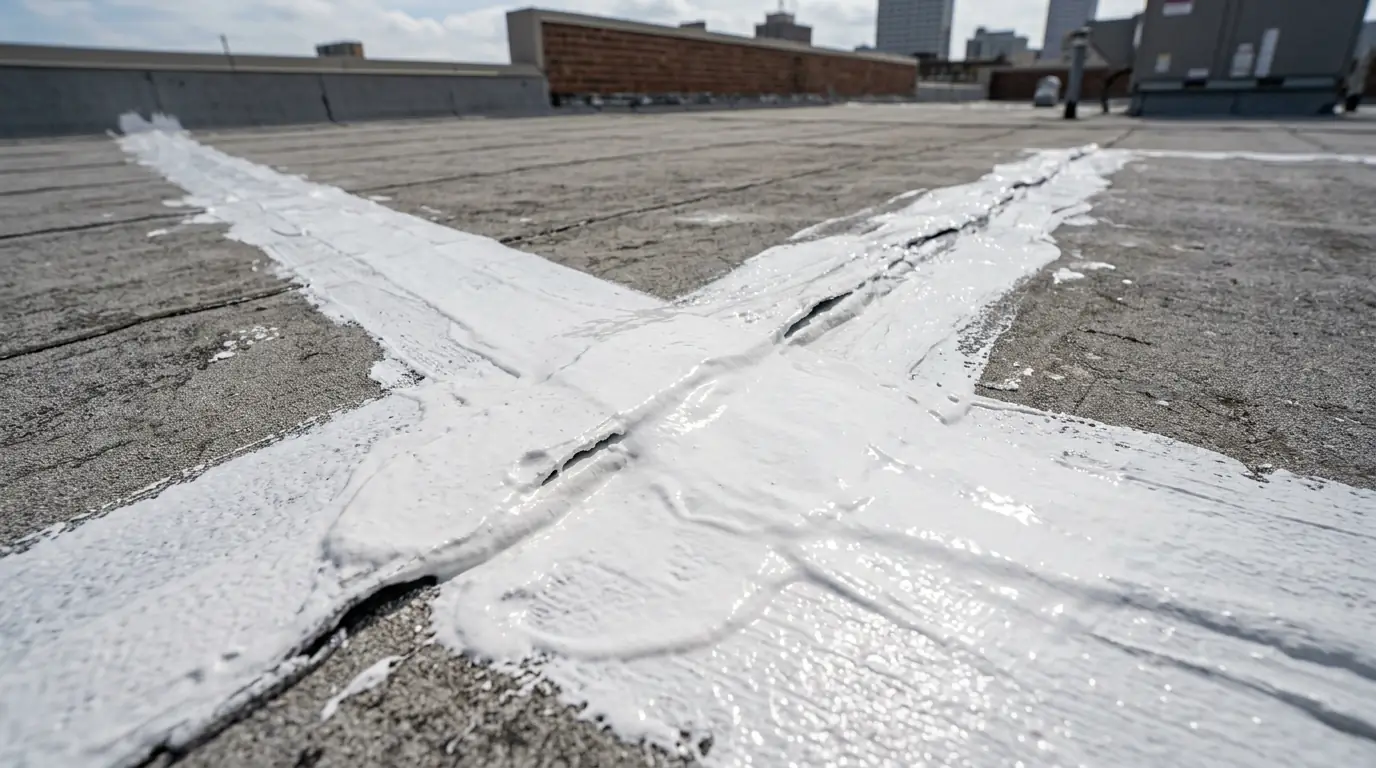
Silicone is the choice for roofs that hold water after a rain. It tolerates ponding far better than acrylic, stays flexible in a cold snap and resists the ultraviolet exposure that ages roofs here every summer. The tradeoff: silicone collects dirt, loses some reflectivity over time, and bonds well mainly to more silicone, so future recoats stay in the same family. We apply it over a cleaned, primed membrane, with seams and fasteners detailed first in reinforcing fabric, at the dry-film thickness the manufacturer specifies.
Acrylic elastomeric coatings
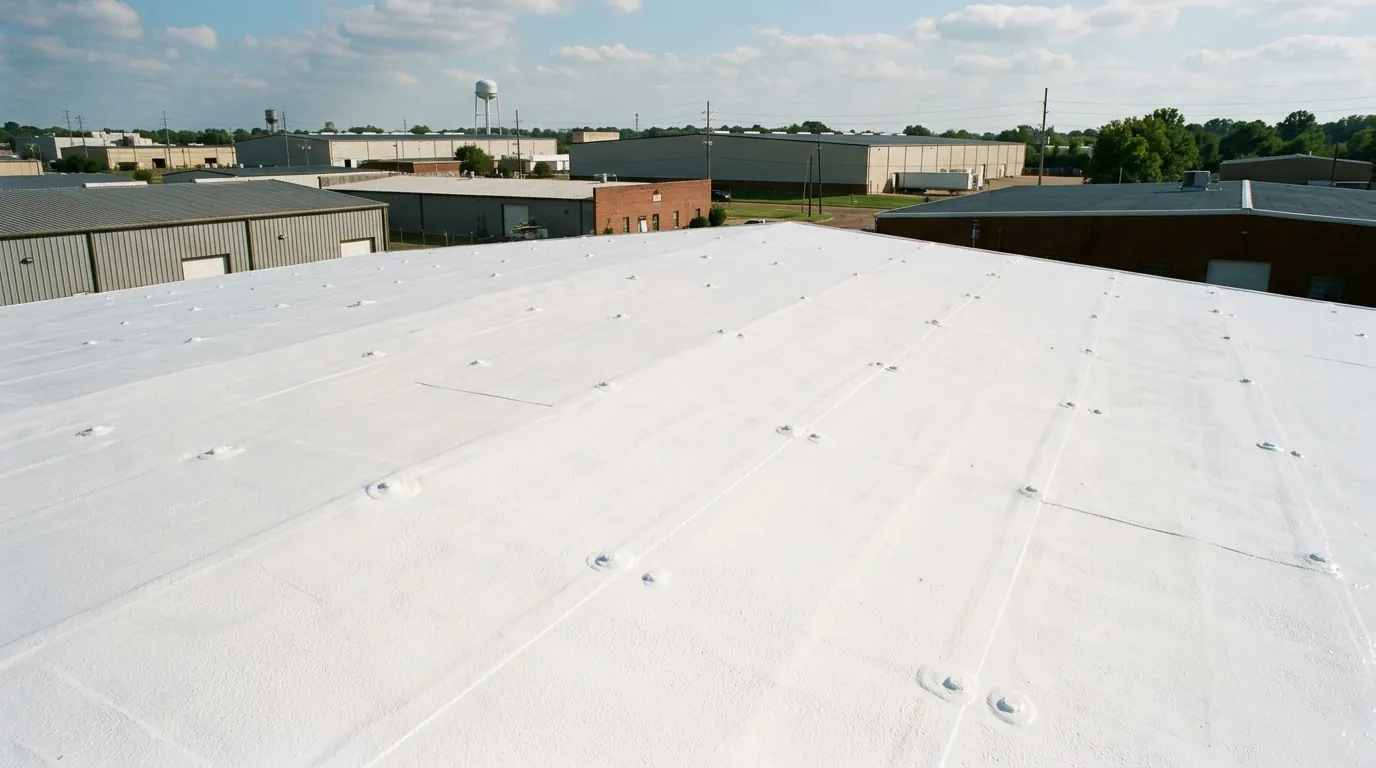
Acrylic suits roofs that drain well, such as sloped metal and single-ply roofs with working drains. It is bright white, very reflective and easy to recoat, which makes it a practical way to keep a warehouse or shop cooler under a July sun. Acrylic does not tolerate standing water, so before recommending it we look at where water sits two days after rain. Where a roof has a few low spots, we correct them with tapered patches or added drains rather than coating over a pond.
Metal roof coating restoration
On exposed-fastener metal roofs, leaks start at the screws and laps far more often than in the panels. Restoration means replacing backed-out or rusted fasteners with oversized ones, sealing every lap and fastener head, priming rust with a product made for it, and then coating the whole surface. The old panels stay in place and the building never opens to the weather. Henry, Gardner and GAF each make coating systems designed for metal, and we choose by the roof's condition rather than by habit.
Local conditions
Coating roofs through Memphis summers
Long, hot summers and seasonal extremes put a Memphis roof through wide swings every year, since the city sits in the mixed-humid climate zone. That cycle is hard on aging membranes and loosens metal-roof fasteners, which is the wear a coating is meant to answer. The flat commercial roofs around Downtown are a different pricing and material world from a simple ranch roof in East Memphis, and those low-slope roofs are where a coating does its best work, adding a reflective surface that also helps with summer cooling loads.
How it runs
From first visit to finished coating
- 01
Roof survey
We walk the roof, check drains and look for wet spots.
- 02
Written scope
Repairs, coating type and thickness listed on one page.
- 03
Repairs first
Wet areas, seams and fasteners fixed before any coating.
- 04
Clean and prime
Surface washed, dried and primed where tests call for it.
- 05
Apply the coating
Base and top coats go on in dry weather, thickness checked.
- 06
Final walk
Drains cleared and photos of each stage sent to you.
Commercial roof leaking into the building?
Call any hour. We answer 24/7, find the entry point and seal it temporarily so your business keeps running.
Call (901) 459-6395Brands we install and service
Shingles, membranes, metal and skylights from Henry, Gardner, GAF and the other makers below.
FAQ
Roof coating questions from Memphis building owners
Yes, after the leaks are found and repaired. Coating over wet insulation traps the water and the roof keeps rotting underneath.
If water sits on the roof two days after rain, silicone. If the roof drains well and you want the brightest, easiest recoat, acrylic.
When the leaks are at fasteners and laps, a restoration that replaces and seals those points before coating is a dependable fix.
Service life follows the thickness applied. At the end, most systems can be cleaned and recoated instead of torn off.
Usually. Coating is quiet next to a tear-off, the building stays closed to weather, and we schedule around deliveries.