Storm & Emergency
Wind and storm damage roof repair across Memphis
Most Memphis storm damage is wind, not tornadoes. It lifts and creases shingles, strips ridge caps and throws debris, and it often looks minor from the street while water gets in at the nail line.
We answer 24/7 after storms across Memphis and Shelby County
The job
What wind does to a shingle roof
Quick answer
Storm damage roof repair in Memphis usually means fixing what straight-line wind did: shingles lifted past their seal or creased, ridge caps blown off, and holes from flying debris. Gusts around 60 mph are enough to damage roofs, and many damaged shingles lie back down afterward, so a roof walk finds what the street view misses.
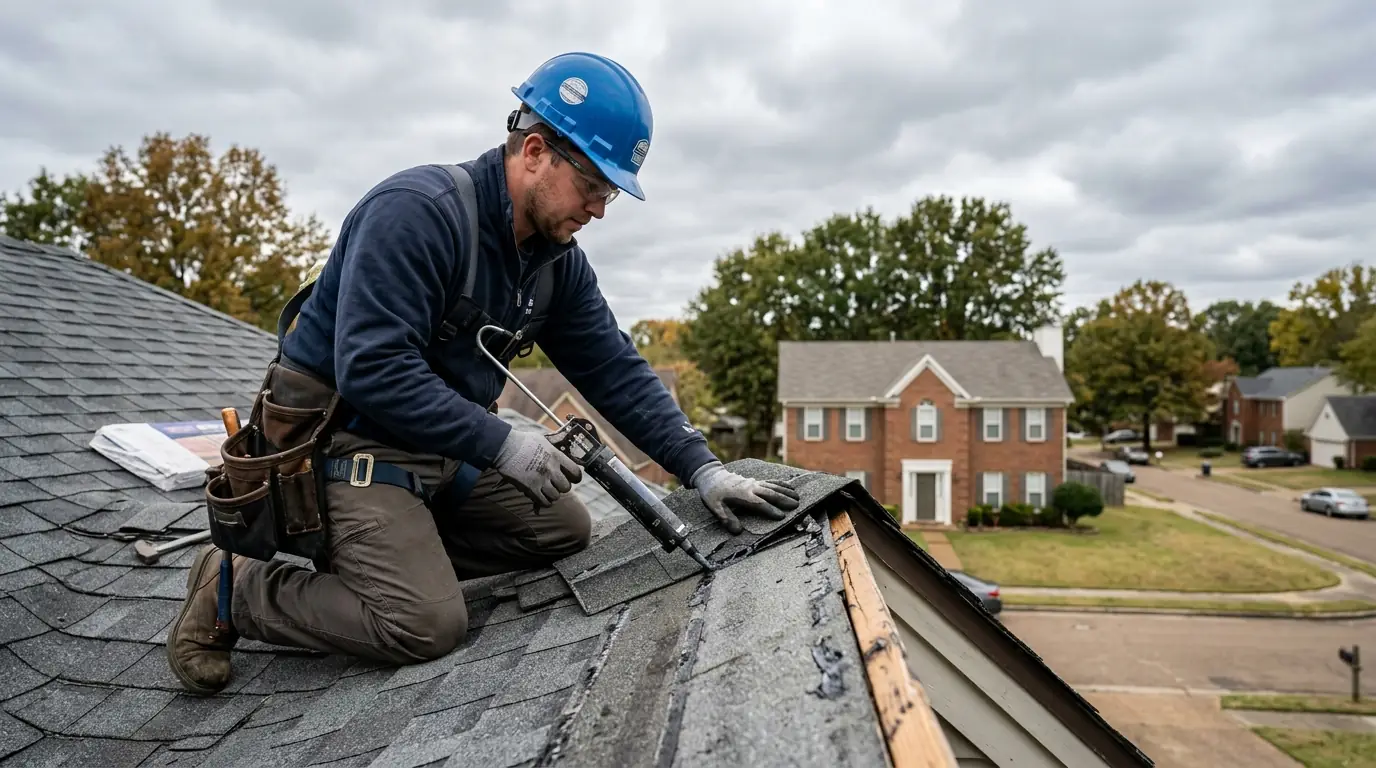
Shingles are held down by nails and a factory sealant strip. A strong gust gets under the leading edge, breaks that seal and bends the shingle back. If it creases, the shingle has lost its strength along that line and will not hold in the next storm, even lying flat.
Wind also works from the edges in. Rakes, eaves and ridges take the highest pressure, so that is where damage starts and where repairs need the most care.
How it runs
What happens after you call about storm damage
- 01
Call any hour
We answer 24/7 and ask whether water is getting in.
- 02
Cover if needed
Open areas are tarped before anything else.
- 03
Roof walk
Edges, ridges and every slope checked tab by tab.
- 04
Photo report
Damage marked and photographed, claim or no claim.
- 05
Repair
Creased shingles replaced, lifted ones sealed, caps restored.
- 06
Final check
Edges and ridge rechecked; photos of the finished work sent.
Timeline
How long storm repairs take after a big storm
A typical wind repair is a few hours on the roof once the shingles are in hand. The wait is usually the schedule, not the work: after a storm that hits the whole county, every roofer's phone rings at once.
We sort calls by what is happening inside the house. Active leaks get covered first, documented repairs follow in order, and you know where you stand.
Local conditions
Straight-Line wind is the Memphis storm
The National Weather Service office in Memphis notes that summertime damaging wind here comes almost entirely from convective thunderstorms, and the August 2026 storms were a textbook case: MLGW confirmed winds over 70 mph with no tornado touchdown. Wind of that kind does its damage along roof edges and ridges rather than tearing whole roofs away, so a storm repair here is usually about finding every edge that let go, not replacing the roof by default. That is why our roof walks start at the rakes, eaves and ridge.
Wind-Lifted and creased shingles
The damage that matters most is the kind you cannot see from the ground: shingles whose sealant bond broke and that now flap in every gust, or tabs creased across the middle. We find them by gently lifting tabs along the edges and ridges, where wind pressure is highest, and by looking for the telltale crease line. Lifted but undamaged tabs can be hand-sealed back down. Creased ones are replaced, with the courses around them refastened so the repair does not become the next weak spot.
Blown-Off ridge caps
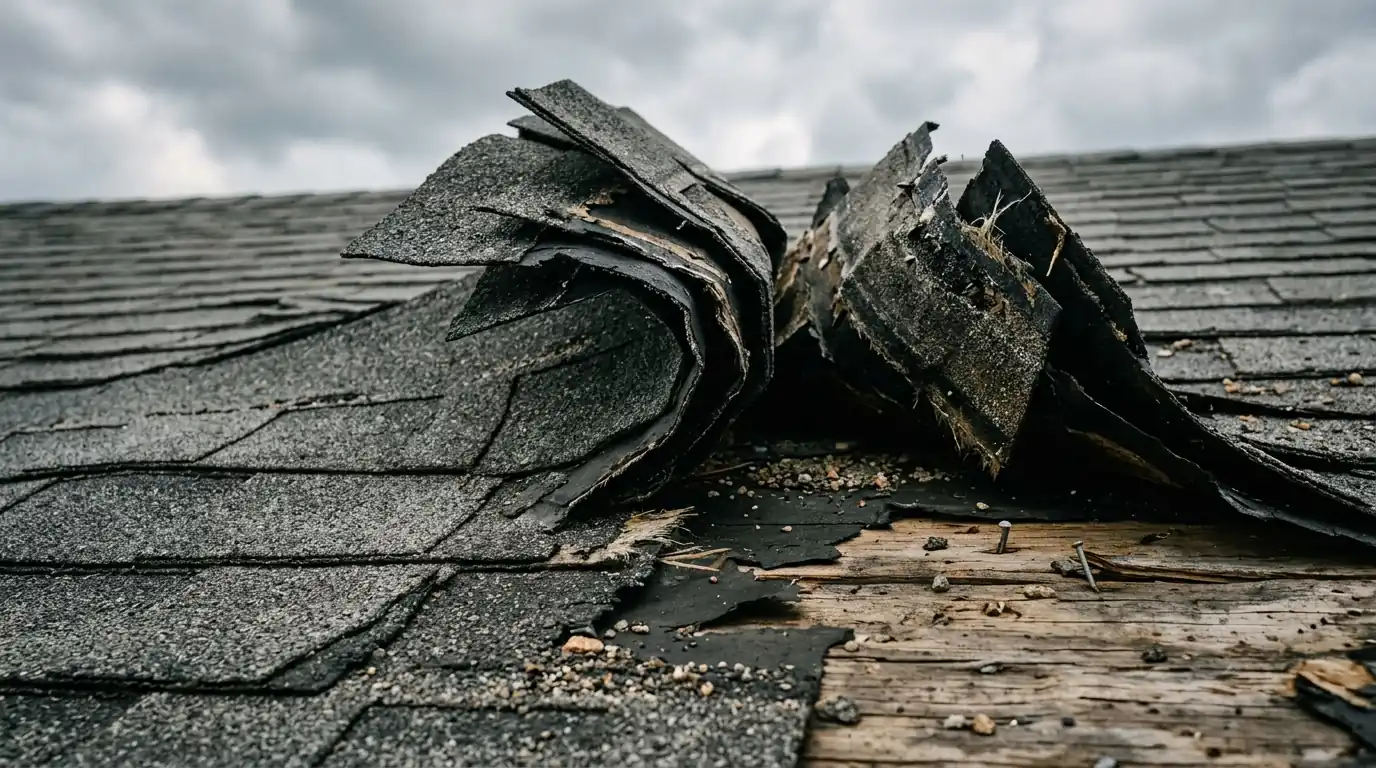
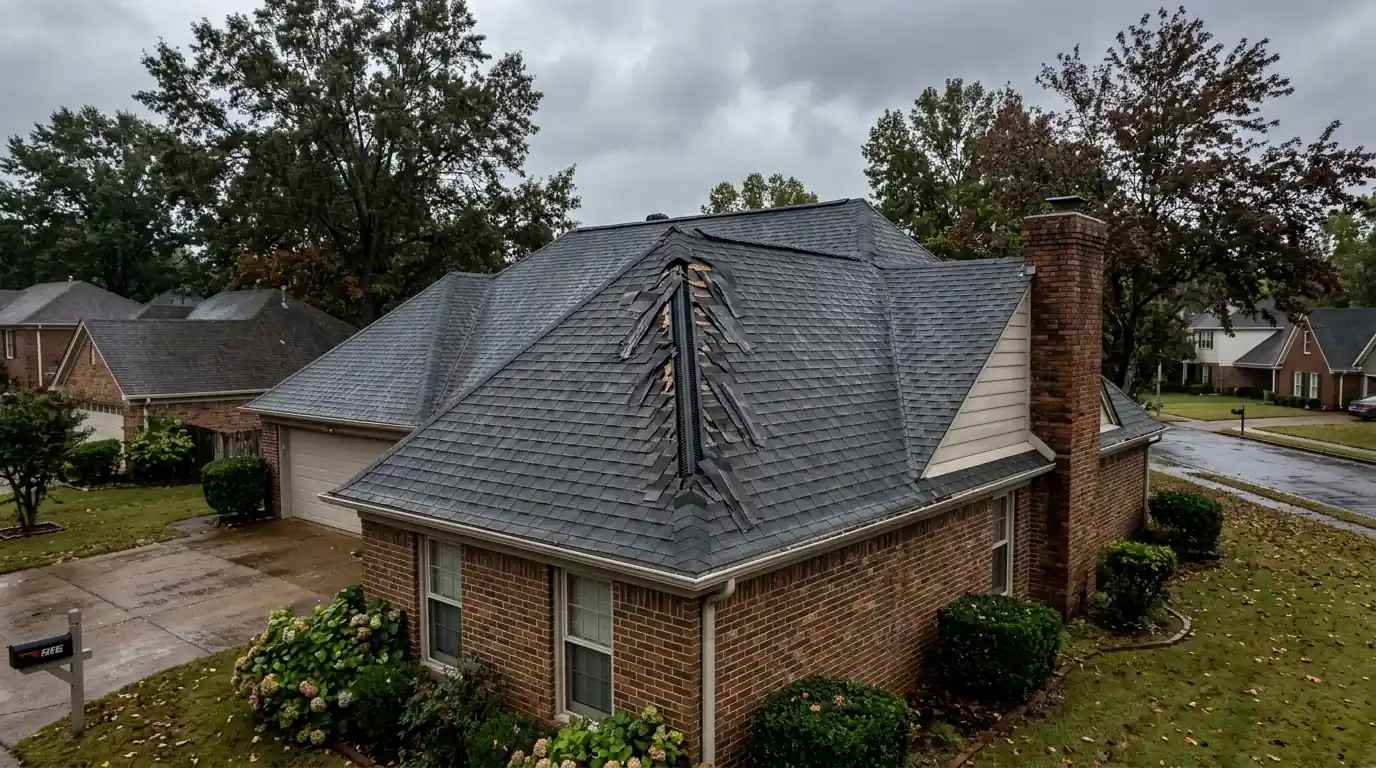
Ridge caps sit where wind is strongest and are often the first thing a storm takes. Missing caps expose the ridge vent or the top of the deck to rain running down both slopes. We replace caps back to a sound piece, check the ridge vent underneath for damage, and fasten new caps with nails long enough to reach solid wood. Purpose-made ridge shingles from GAF, Owens Corning or CertainTeed hold up far better than caps cut from ordinary three-tab shingles, so that is what goes back on.
Debris punctures
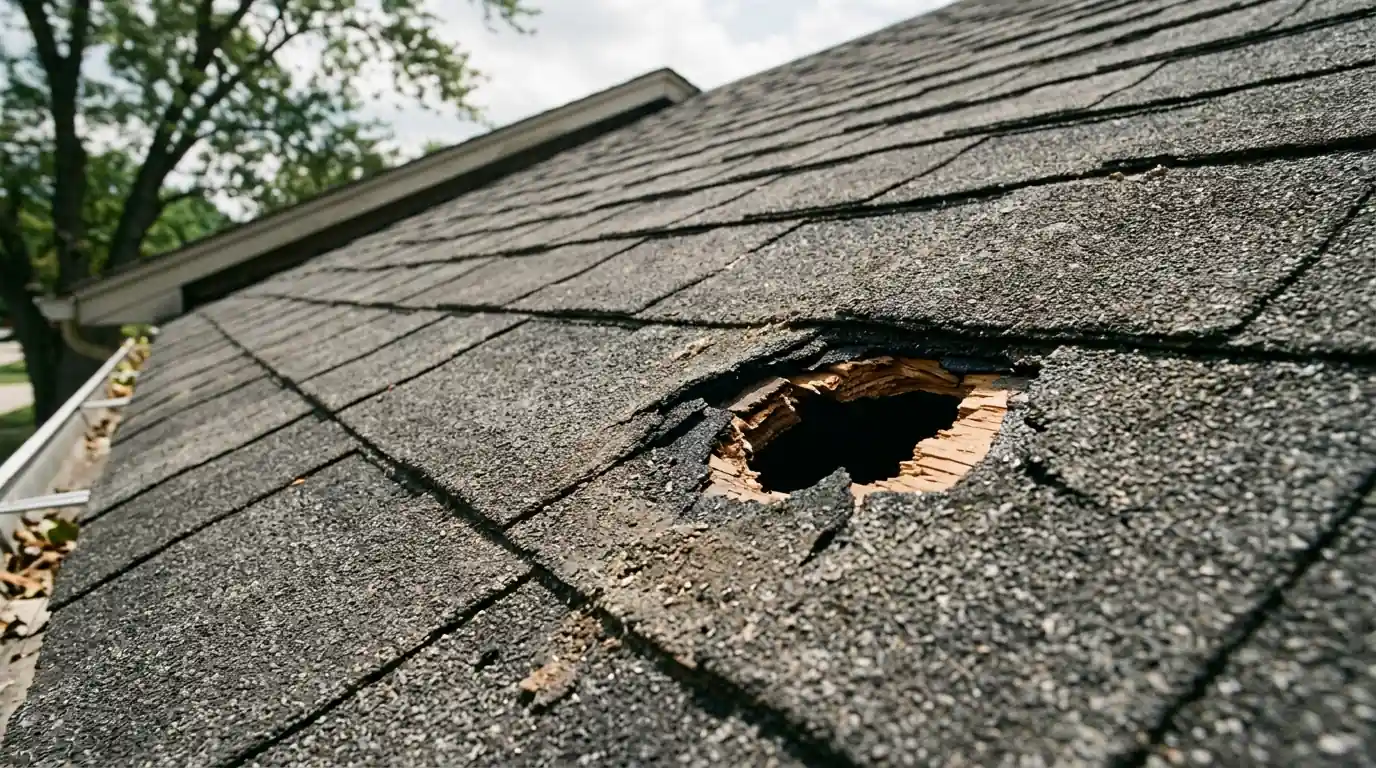
Punctures happen when branches, patio furniture or loose materials from nearby hit the roof edge-on. A small hole in a shingle is easy to miss and rarely stops at the shingle; it usually reaches the underlayment and sometimes the deck. We open the area, replace any decking that was pierced, and relay underlayment and shingles in full courses rather than sealing a patch over the hole. Punctures near valleys get extra attention, since that is where the most water on the roof runs.
Shingles in the yard after last night's storm?
Call any hour. We answer 24/7 and can cover exposed areas before the next line of storms comes through.
Call (901) 459-6395Brands we install and service
Shingles, membranes, metal and skylights from GAF, Owens Corning, CertainTeed and the other makers below.
Cost
What drives the cost of a storm repair
Storm repairs are priced by what the wind actually damaged, which we map before quoting.
- Damaged areas
One lifted edge, or damage on every slope.
- Creased or lifted
Creased tabs are replaced; lifted ones are resealed.
- Ridge and hip length
Cap replacement is priced by the foot of ridge.
- Punctures
Holes through the deck add decking and underlayment work.
- Emergency cover
Tarping an open area comes first when rain is due.
- Shingle availability
Discontinued shingles may widen the repair.
- Pitch and height
Steep and two-story roofs slow every step.
FAQ
Storm damage questions after a Memphis wind storm
Shingle pieces in the yard, granules at the downspouts and new ceiling stains are the clear signs. Creased shingles usually show only on a roof walk.
If they are not creased or torn, yes. Creased ones have lost their strength and need replacing.
Wind is a covered peril on most homeowner policies, subject to the deductible. Our photos show what happened; the carrier decides coverage.
Soon. A lifted shingle that survives one storm often tears off in the next, and an open spot lets water into the decking.
Only when the damage calls for it. Most wind damage is repaired edge by edge, and the photos decide it.