Repairs & Leaks
Chimney, step and wall flashing repaired in Memphis
Where the roof meets a chimney, a wall or a dormer, shingles alone cannot keep water out. Flashing does that job, and when it rusts, pulls loose or was installed with caulk instead of metal, those joints are where leaks start.
We answer 24/7 for roof leaks across Memphis
The job
Why flashing fails before the shingles do
Quick answer
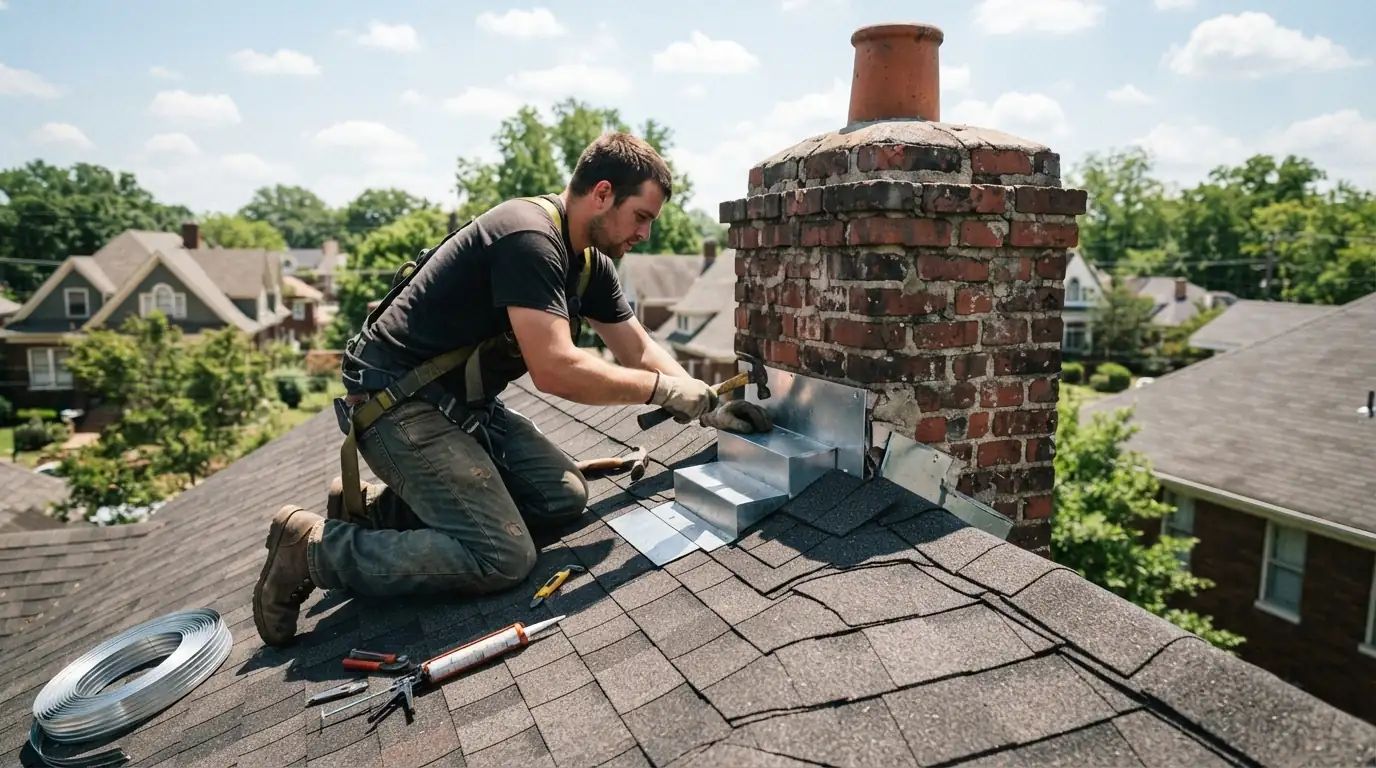
Flashing repair in Memphis means replacing the metal that seals the roof where it meets a chimney, wall, dormer or roof edge: step flashing woven into each shingle course, counterflashing cut into the masonry, and kickout flashing that turns water away from siding. Many leaks blamed on shingles actually start at one of these joints.
Flashing is sheet metal bent to carry water past a joint that shingles cannot seal. It fails in predictable ways: it rusts through, the sealant along its top edge dries out, masonry shifts and opens the counterflashing, or an earlier repair relied on a bead of caulk instead of lapped metal.
A proper fix removes the shingles along the joint, installs new metal lapped so water always runs over the piece below it, and ties it back into the courses.
Cost
What drives the cost of flashing repair
Flashing is priced by the joint, and the joint's size and material decide most of it.
- Type of joint
Chimneys cost more than a single wall run or pipe.
- Chimney size
Wide chimneys may need a cricket on the uphill side.
- Masonry work
Cutting new grooves or repointing loose mortar adds time.
- Metal choice
Aluminum, galvanized, painted steel and copper differ.
- Shingle removal
Courses along the joint come off and go back on.
- Hidden rot
Soft decking or trim under the flashing is replaced.
- Siding removal
Wall flashing may need siding pieces lifted and reset.
Chimney flashing and counterflashing
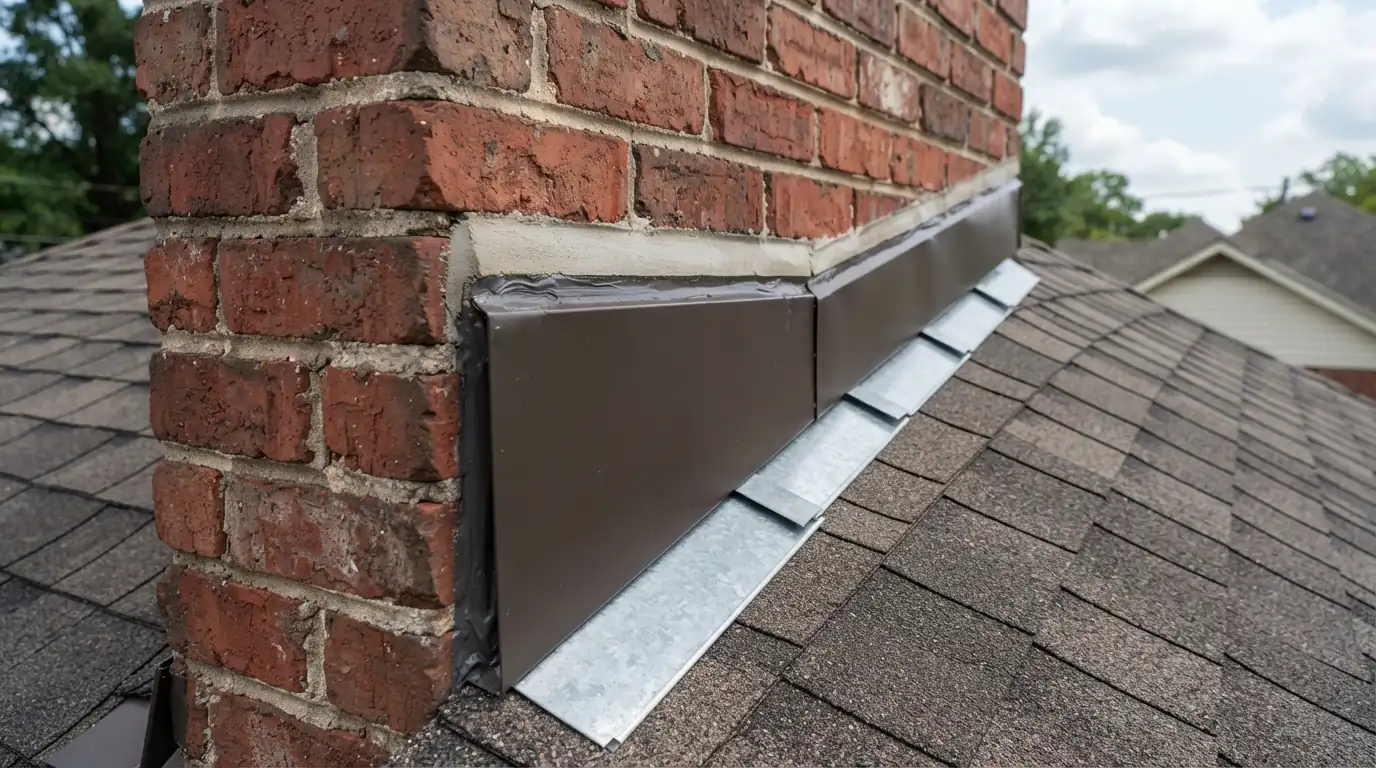
A chimney needs two layers of metal. Step flashing is woven into the shingles along each side, and counterflashing is cut into a mortar joint and folded down over it, so the two can move independently as the house and chimney settle. The uphill side needs a cricket, a small peaked diverter, on any chimney wider than about 30 inches, or water and leaves pile against the brick. We cut a new groove into the mortar, set new counterflashing, and seal it with masonry sealant rather than smearing tar over the top.
Step and kickout flashing
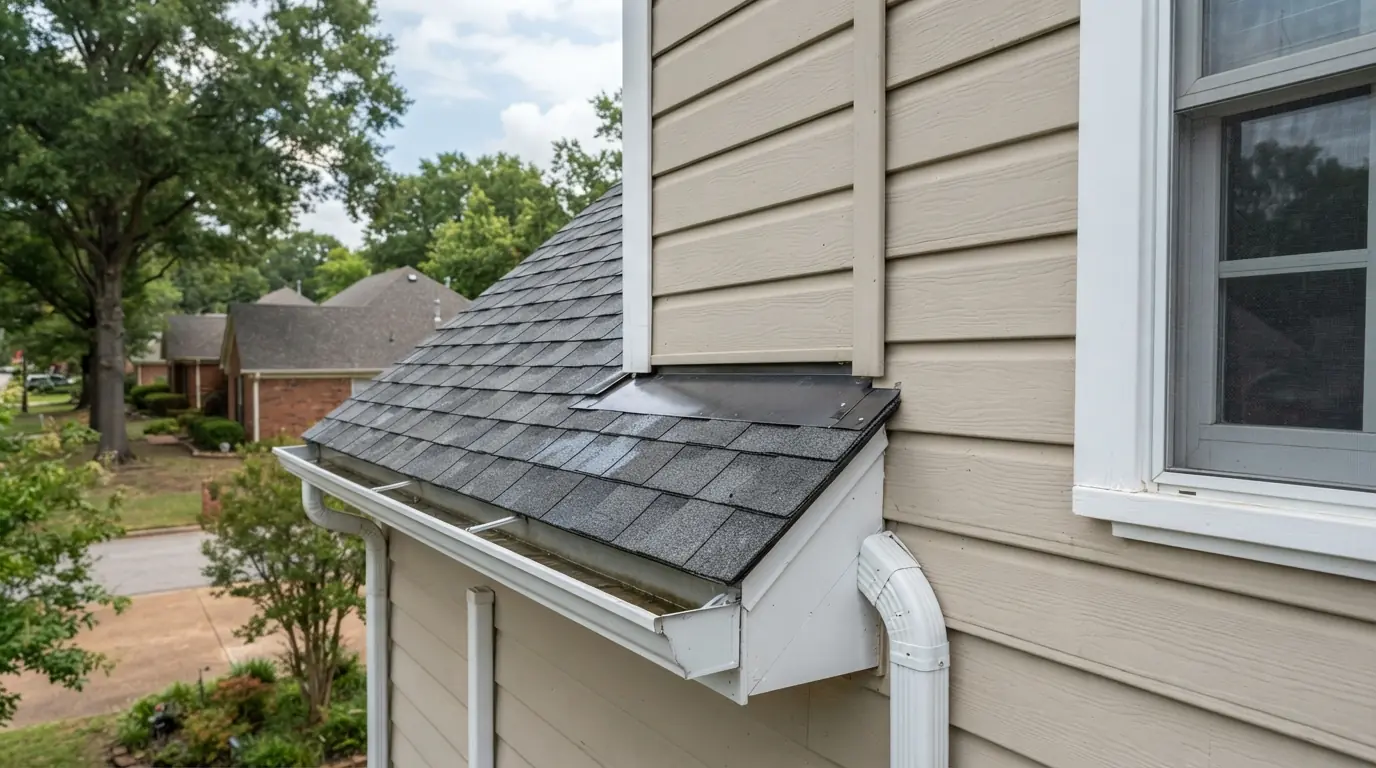
Where a roof slope runs alongside a wall, each shingle course gets its own L-shaped piece of step flashing, lapped over the one below. It is slow work, which is why it gets skipped and replaced with one long bent strip that funnels water behind the siding. At the bottom of that wall, a kickout flashing turns the water into the gutter instead of down the wall. A missing kickout is a classic source of hidden rot, often showing first as soft trim outside or stained drywall inside.
Drip edge and wall flashing
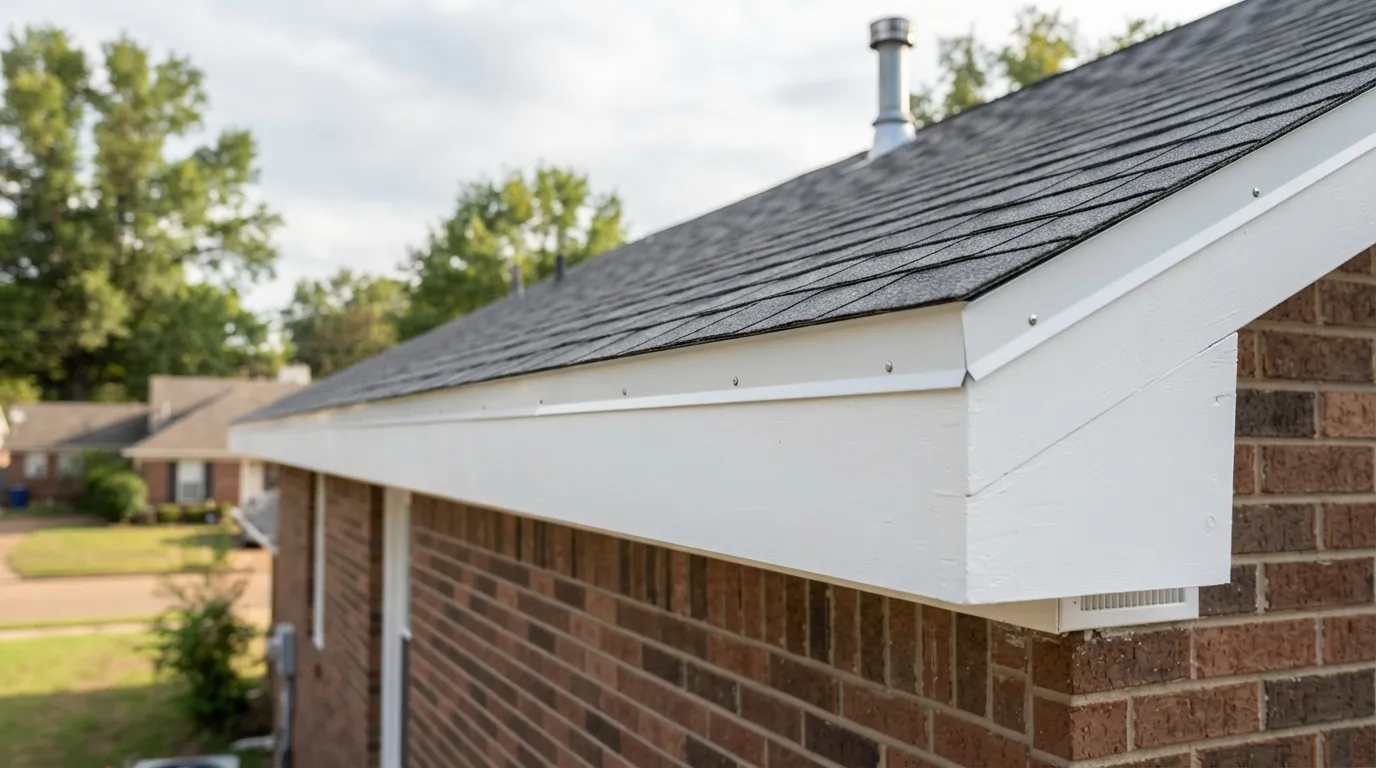
Drip edge is the metal along the eaves and rakes that carries water off the shingle edge and into the gutter instead of behind it. Many older roofs never had it, and the fascia behind the gutter shows the result. Headwall flashing, where the top of a roof slope meets a wall, needs an apron piece lapped over the top course and tucked behind the siding above. We replace or add both, matching the metal to the roof so the pieces last as long as the shingles around them.
Local conditions
Flashing on Midtown's historic chimneys and dormers
Central Gardens alone has about 1,540 structures, most built between 1900 and 1930, and its Queen Anne, Craftsman, bungalow and Tudor houses carry far more chimneys, dormers and wall-to-roof joints than a modern ranch. Each one is a flashing detail. Across Midtown, including Annesdale, those homes sit in historic districts, and Central Gardens is a locally protected Historic Overlay District, so we match the look of existing metal where it shows from the street and keep changes to visible materials modest.
How it runs
How we rebuild a flashing joint
- 01
Find the entry
Stains are traced back to the joint from inside and outside.
- 02
Open the joint
Shingles and old metal come off along its full length.
- 03
Check the wood
Soft decking or trim is replaced before new metal.
- 04
Membrane
Ice and water membrane runs up the wall or chimney face.
- 05
New metal
Step, counter, apron or kickout pieces installed and lapped.
- 06
Close and test
Shingles relaid, then a hose test on the finished joint.
Leak showing up beside the chimney?
Call any hour. We answer 24/7 and can cover the joint before the next rain while the metal is being made up.
Call (901) 459-6395Warning signs
Signs your flashing is letting water in
- Stain beside the chimney
Ceiling or wall stains next to the chimney chase.
- Streaks on siding
Dark streaks below where a roof edge meets a wall.
- Rust or gaps
Rusted metal or open gaps visible from a ladder.
- Caulk-only joints
Thick sealant beads where metal should be.
- Rot at wall bases
Soft trim where a lower roof meets a wall.
FAQ
Flashing questions from Memphis homeowners
Yes. Flashing is replaced joint by joint, with the shingles along it lifted and relaid. It is one of the most common stand-alone roof repairs.
Only briefly. Sealant dries and cracks within a few summers; properly lapped metal lasts as long as the roof.
A small peaked structure behind a chimney that splits water around it. Chimneys wider than about 30 inches should have one.
Usually a missing kickout flashing, which lets roof water run behind the siding instead of into the gutter.
Yes, where the house calls for it, often on older homes that already have copper. It costs more and lasts for decades.