Repairs & Leaks
Slate and tile roof repair for older Memphis homes
Slate and tile roofs can outlast the houses under them, but only if broken pieces and worn flashing are dealt with. Most of the work is replacing a few slipped slates or cracked tiles properly, without breaking more on the way.
We answer 24/7 across Memphis and Shelby County
The job
Why slate and tile need a different crew
Quick answer
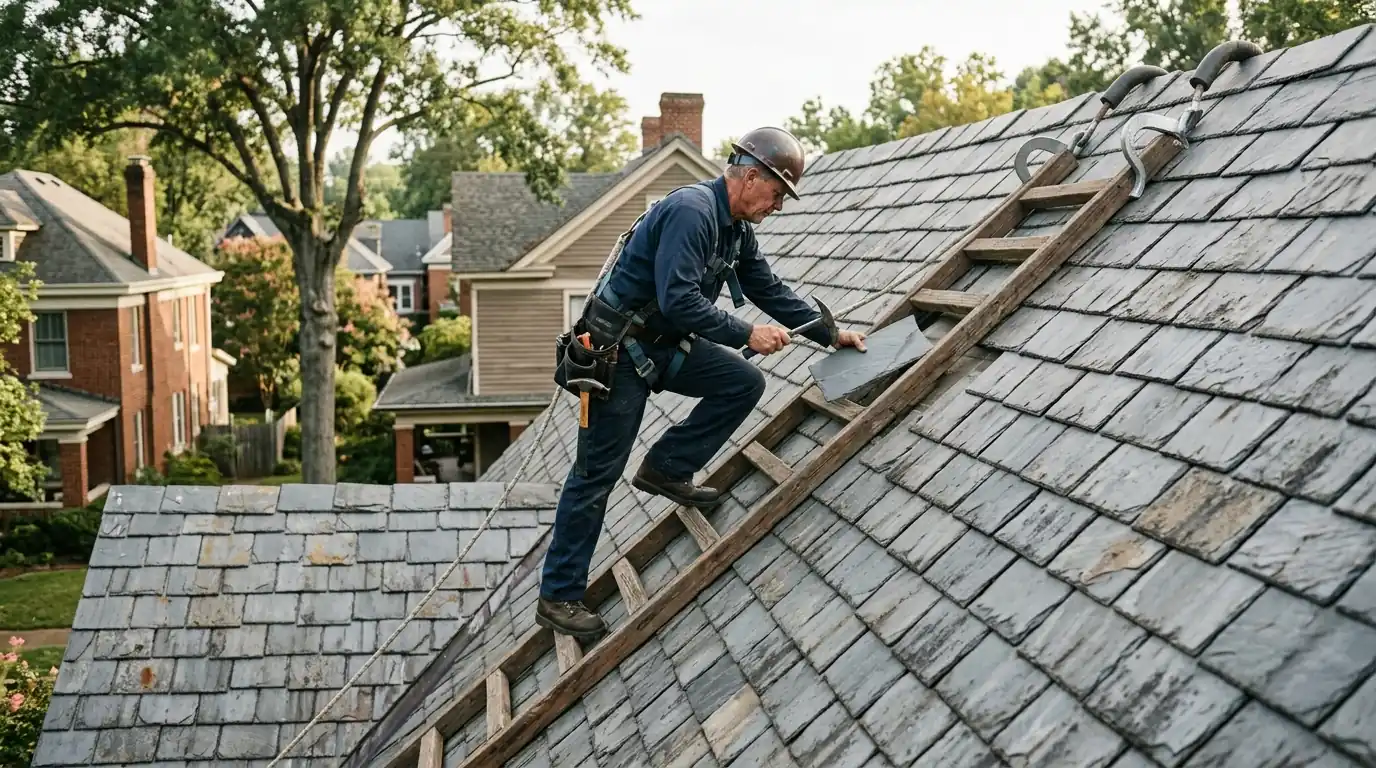
Slate and tile roof repair in Memphis means replacing slipped, cracked or missing pieces one at a time with matching material, and renewing the flashing that usually fails first. These roofs are worked from ladders and roof hooks, not walked on, because a careless step breaks more pieces than the storm did.
Slate and clay tile are some of the longest-lasting roofs there are. What fails is usually the nails holding them, the flashing around chimneys and valleys, or individual pieces cracked by falling limbs or careless foot traffic.
Repairs use copper nails, slate hooks or tile clips, and replacement pieces matched in size, thickness and color, sourced from salvage where the original is no longer made.
Cost
What affects the cost of slate and tile repair
Slate and tile repairs are priced by the piece and by the access they need.
- Number of pieces
Each slate or tile replaced is counted.
- Matching material
Salvaged slate or discontinued tile takes sourcing.
- Flashing
Copper or lead flashing replaced in kind costs more.
- Access
Steep roofs need hooks, ladders and staging.
- Underlayment
Lifting tile to renew underlayment adds labor.
- Ridges and hips
Mortared ridges take longer than capped ones.
- Historic review
Material changes may need a Landmarks application.
Slate roof repair
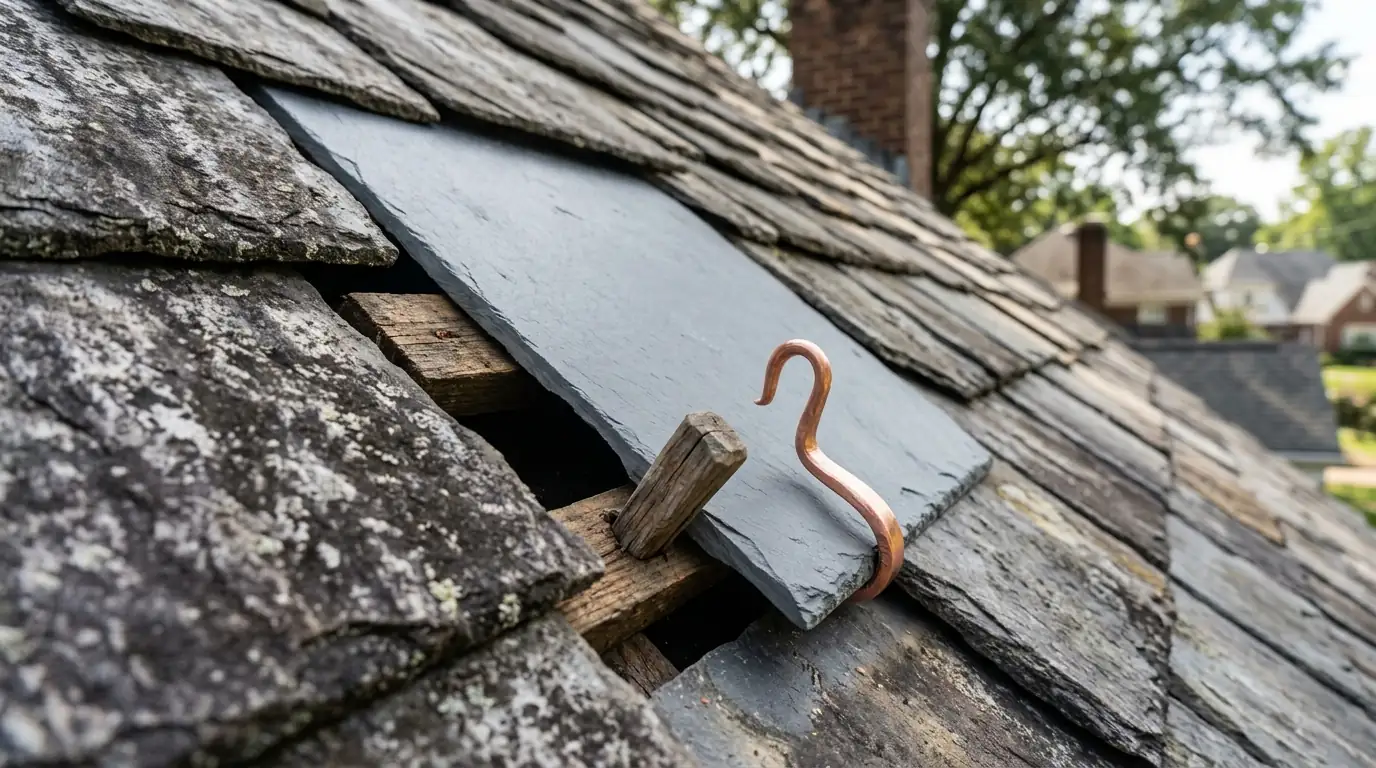
A slipped slate usually means its nails rusted through, not that the slate failed. We slide out the broken piece, cut the old nails with a slate ripper, and fit a matching slate held with a copper hook or a nail through the joint above, covered with a flashing bib. Slate is matched by size, thickness and color, often from salvage. Valleys and chimney flashings on slate roofs are usually copper or lead, and when they wear out we replace them in kind rather than smearing tar over them.
Clay and concrete tile roof repair
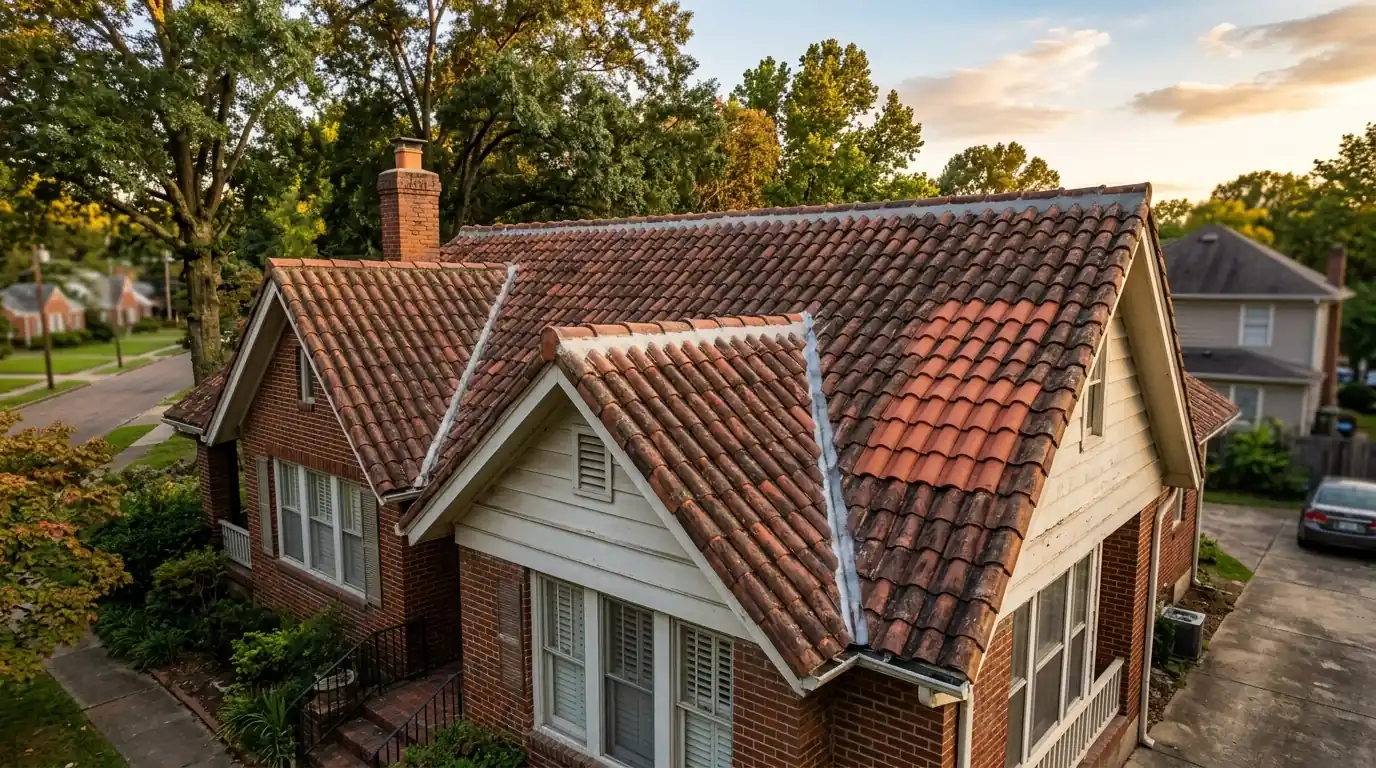
Tile roofs crack from falling limbs and foot traffic more than from weather. We replace cracked or broken tiles with matching profiles, reset slipped ones on their battens, and check the underlayment beneath, which on older tile roofs often wears out before the tile does. Where the underlayment has failed, the tiles can be lifted, the underlayment renewed, and the same tiles reinstalled. Mortar at hips and ridges is repointed or replaced with a modern ridge system, and every replaced tile is photographed in place.
Synthetic slate replacement
When a slate roof has too many failed pieces, or the slate itself is delaminating, full replacement may be the honest answer, and real slate is not the only option. Synthetic slate, made from polymer or rubber composites, gives a similar look at far lower weight and cost. On historic homes, check the Landmarks review first, because visible roofing material changes can need approval. We price real and synthetic side by side so you decide with both numbers in hand.
Do it yourself or call
Walking a slate roof is where damage starts
What you can do
- Look from the ground with binoculars for slipped or missing pieces
- Keep any broken pieces from the yard; they help us match
- Keep gutters clear from a ladder
- Photograph any leaks inside
Leave these to us
- Walking on slate or tile, which cracks underfoot
- Pressure washing, which strips the surface
- Patching with roofing cement, which traps water
- Replacing pieces with mismatched material
Local conditions
Slate, tile and historic review in Memphis
The early-twentieth-century houses of Central Gardens and the rest of Midtown include the kind of steep, complex roofs where slate and tile turn up. The Memphis Landmarks Commission reviews exterior work visible from the street in the city's historic districts, and it has set roofing-material conditions there, such as requiring architectural shingles on a new house built in a district. So before any change of material on a historic roof, we check whether a Certificate of Appropriateness is needed, and on repairs we match what is there.
How it runs
How a slate or tile repair runs
- 01
Inspect from ladders
Pieces and flashing checked without walking the roof.
- 02
Match the material
Size, thickness and color matched, from salvage if needed.
- 03
Remove broken pieces
Old nails cut with a slate ripper.
- 04
Install replacements
Copper hooks, nails and bibs, or tile clips.
- 05
Renew flashing
Worn valleys and chimney flashing replaced in kind.
- 06
Photos
Before and after pictures of every repair.
Slates or tiles in the yard after a storm?
Call any hour. We answer 24/7 and can protect the opening until matching pieces are in hand.
Call (901) 459-6395FAQ
Slate and tile roof questions
Good slate can last generations. The nails and flashing usually fail long before the slate itself.
Usually, by size, thickness and color, often from salvaged slate. We show you the match before installing it.
No. Slate and tile crack underfoot. Repairs are done from ladders and roof hooks.
It looks similar and weighs and costs far less than real slate. On historic homes, check the review rules first.
The underlayment beneath older tile often wears out first. Tiles can be lifted and reinstalled over new underlayment.