Replacement & Installation
Roofing for new homes, additions and builders in Memphis
On a new build, the roof is on the critical path: nothing inside moves until the house is dried in. We work to the builder's schedule, install to the manufacturer's spec, and leave a roof the inspector and the owner both sign off on.
We answer 24/7 across Memphis and Shelby County
The job
Roofing a house that is still being built
Quick answer
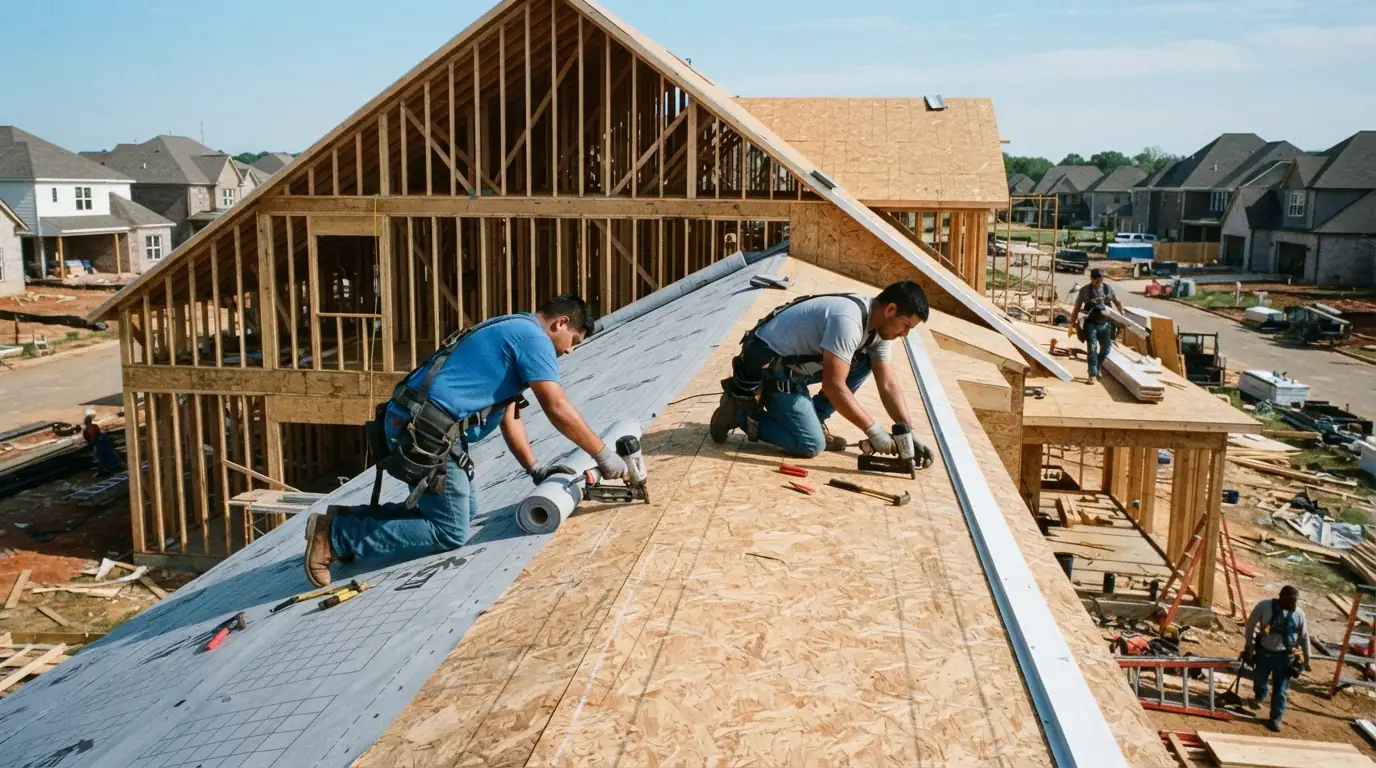
New construction roofing in Memphis runs in two stages: dry-in, where drip edge, membrane and underlayment go on right after the deck so the framing stays dry, and final roofing, where shingles or metal, flashing and ventilation are installed once other trades clear the roof. Getting dry-in done soon after sheathing protects both the lumber and the schedule.
New construction has advantages a reroof never gets: a clean deck, framing we can see, and the chance to get ventilation, flashing and valley details right from the start. It also has pressures, mainly schedule and weather, since every day framing sits open to rain costs the build.
We coordinate with the builder or owner on dry-in timing, penetrations from the mechanical trades, and when the roof is clear of other crews, so flashing goes on once and stays right.
Cost
What shapes a new construction roofing bid
New construction is bid from the plans, by the square, with the details that make each house different.
- Roof area
Measured from plans, then confirmed on site.
- Pitch
Steep roofs need more safety setup and labor.
- Complexity
Valleys, dormers and turrets add flashing and cutting.
- Material
Shingle line or metal system chosen by the owner.
- Ventilation design
Ridge, intake and any powered venting.
- Penetrations
Plumbing, HVAC and electrical penetrations flashed.
- Schedule
Separate dry-in and final visits or one mobilization.
Custom home roofing
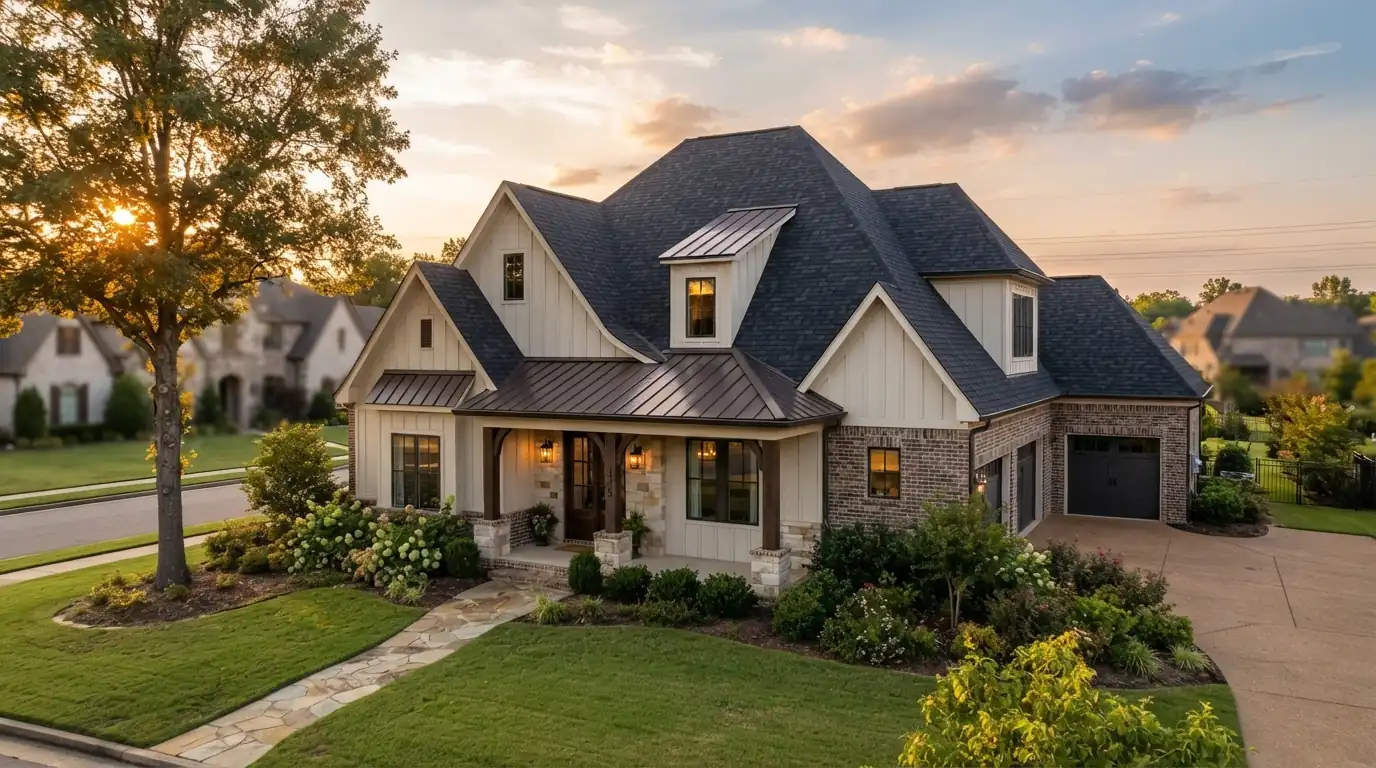
Custom homes bring the details that make roofing interesting: steep pitches, several valleys, dormers, turrets and mixed materials such as a metal porch roof against shingled main slopes. We review the plans before bidding to catch valley layouts that trap water and ventilation that does not add up, and raise them while they are still easy to change. Materials are written into the bid by product line, whether GAF, Owens Corning or CertainTeed shingles or a standing seam system, so the finished roof matches what the owner chose.
Additions and garage roofs
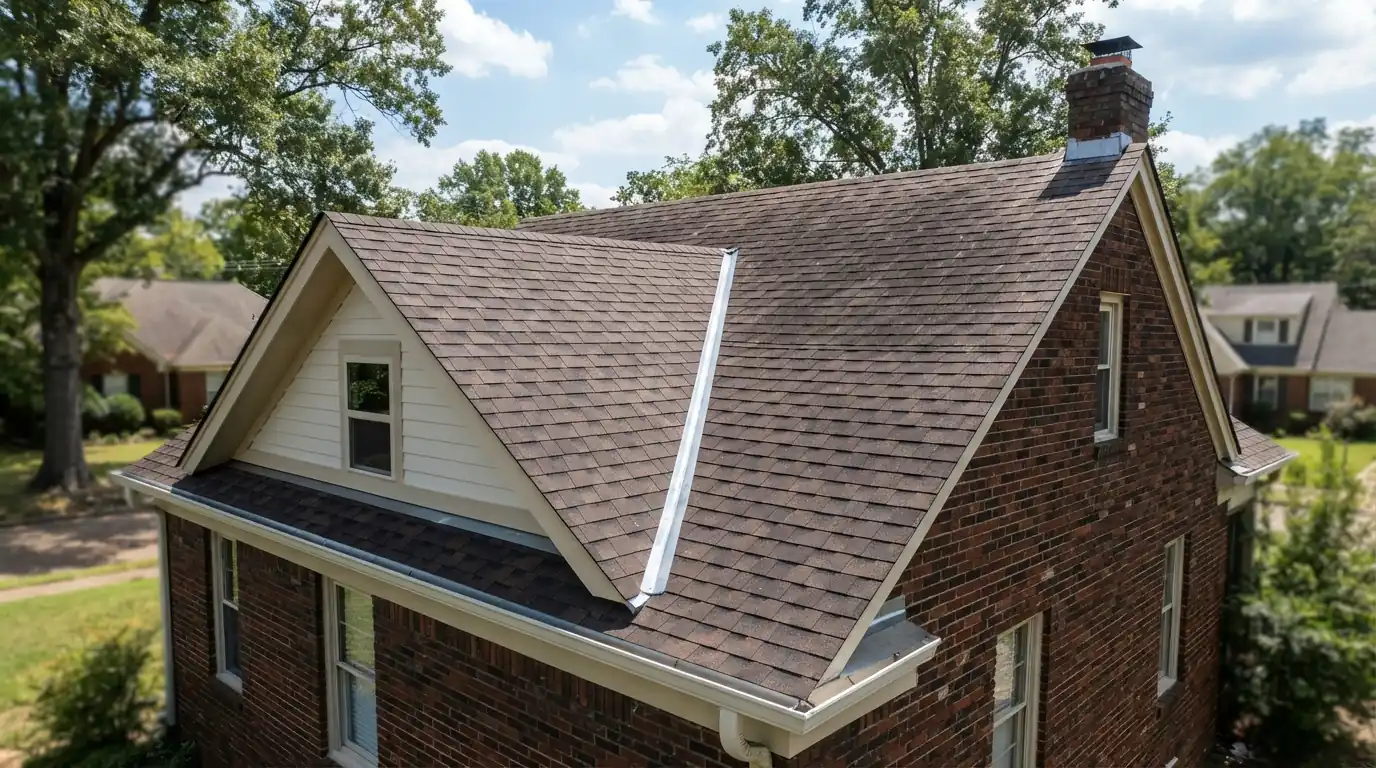
An addition has to join the existing roof so cleanly that nobody can tell where one ends. That means tying new framing into the old, weaving new shingles into the existing courses where the planes meet, and matching the shingle as closely as current products allow. Where the addition roof sits lower than the house, we flash it up the existing wall behind the siding rather than surface-sealing it. Detached garages and carports are simpler, but they still get proper drip edge, underlayment and ventilation.
Builder and contractor roofing
For builders, the value is predictability: a clear bid per house or per square, dry-in dates that hold, and a crew that leaves the site clean for the next trade. We work from your plans and schedule, flag framing issues that affect the roof before we start, and photograph each stage for your records and the inspector. Punch-list items are handled on a return visit, not left for the homeowner to find after closing. Change orders are priced in writing before the work, so nothing surprises you on the final invoice.
Local conditions
Building around Memphis and Germantown
New homes in Memphis and the surrounding towns are permitted and inspected through the county's Construction Enforcement office, and Germantown adds its own footing and foundation permit on new houses, so builders there plan an extra step before framing starts. Size matters for the roof too: Cordova already has more four- and five-bedroom houses than almost any neighborhood in the country, and big houses mean long valleys, many hips and more flashing than a starter home, which is where roof plans deserve a second look before the bid.
How it runs
How we roof new construction
- 01
Plan review
Valleys, ventilation and penetrations checked on the drawings.
- 02
Bid
Per house or per square, materials named.
- 03
Dry-in
Drip edge, membrane and underlayment right after sheathing.
- 04
Coordinate trades
Penetrations and wall finishes done before final roofing.
- 05
Final roofing
Shingles or metal, flashing, vents and ridge.
- 06
Closeout
Inspection support, photos and punch list.
Framing going up and rain in the forecast?
Call and we will schedule the dry-in so the deck is covered before the weather turns.
Call (901) 459-6395Timeline
How long new construction roofing takes
Dry-in on a typical house takes a day or two once the deck is sheathed, and it is the step worth rushing. Final roofing follows after windows, siding and mechanical penetrations are in, and takes a few days depending on size and complexity.
Weather is the main variable. We schedule dry-in around the forecast so the deck is covered before rain, not after it.
Brands we install and service
Shingles, membranes, metal and skylights from GAF, Owens Corning, CertainTeed and the other makers below.
FAQ
New construction roofing questions
As soon as framing dates are set. Dry-in should follow sheathing within days, so booking early protects the lumber.
Yes. We bid from plans and flag roof details that are hard to flash or ventilate before the framing is built.
As closely as current products allow. Where an exact match is impossible, we show you the options before ordering.
Yes. Mixed roofs are common on custom homes, and the transitions between them need careful flashing.
Yes, as well as builders and general contractors. The schedule and the bid work the same way.