Upkeep guide
Black streaks on a Memphis roof: Algae, moss and what to do
What the streaks are, why they show up on one side, and how to remove them without stripping the shingles.
By Cora Padgett, Roofing Guides Editor Updated October 2026
We answer 24/7 across Memphis and Shelby County
Quick answer
Black streaks on a Memphis roof are almost always algae, which grows on damp, shaded slopes and spreads by airborne spores. It is mostly cosmetic but darkens the roof so it absorbs more heat. Remove it with a low-pressure soft wash, never a pressure washer, and slow its return with zinc or copper strips near the ridge.
What the streaks are
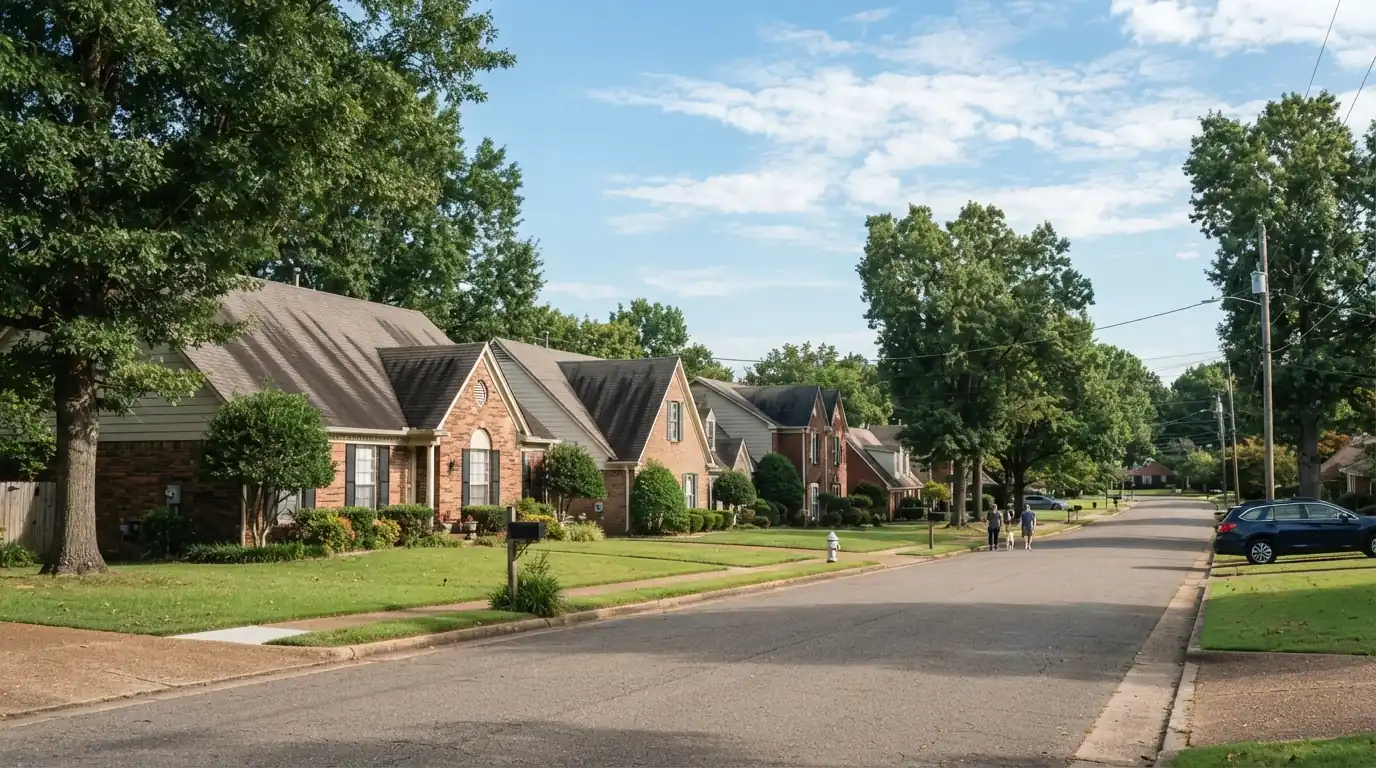
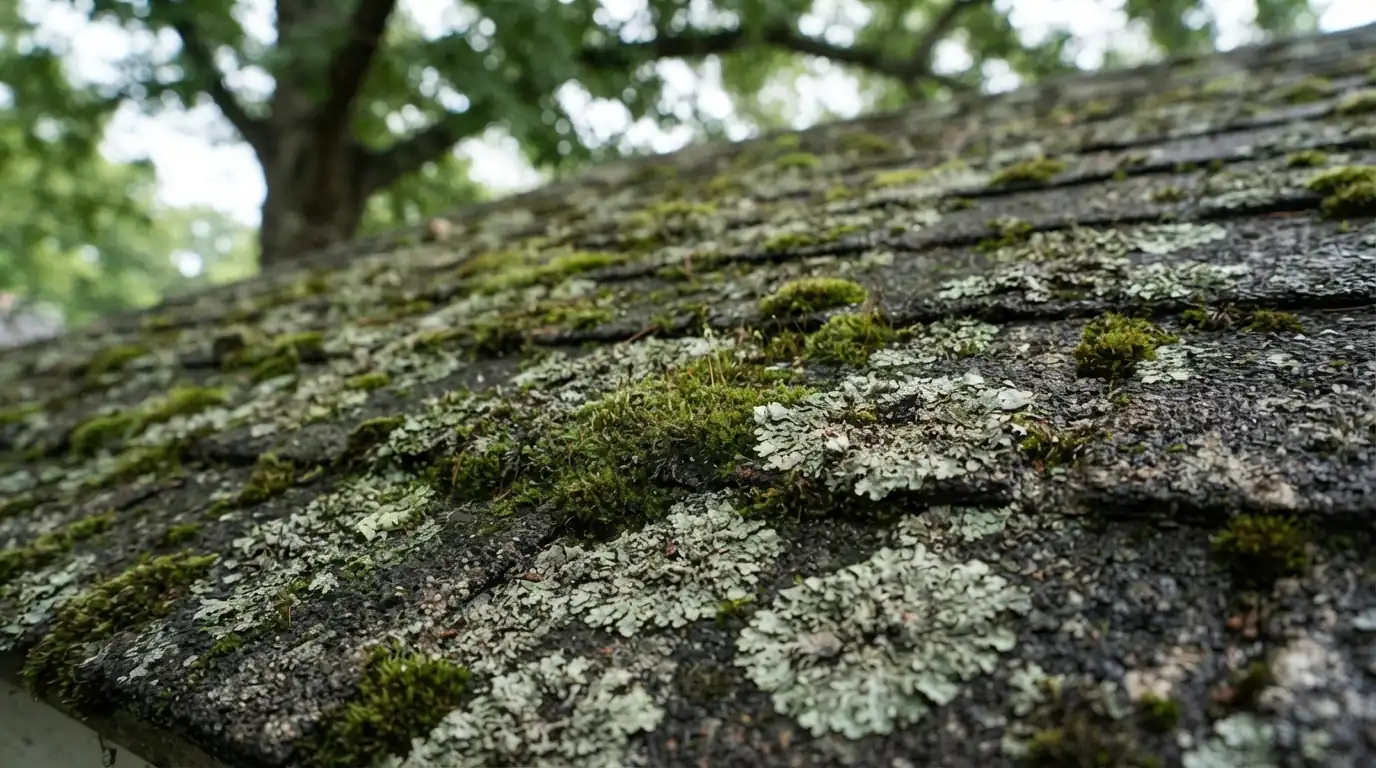
The dark streaks running down many shingle roofs are a blue-green algae, often identified as Gloeocapsa magma, that feeds on the limestone filler in asphalt shingles. It spreads by airborne spores, which is why streaks appear on house after house down the same street. Green, fuzzy growth is moss, and flat gray-green patches are lichen; both are harder on the roof than algae.
Why they show up on the shaded side
Algae needs moisture, so it thrives where the roof stays damp longest: north-facing slopes, areas under trees, and anywhere morning dew lingers. Sunny slopes dry quickly and stay cleaner. Streaks also tend to start below the ridge and run downhill, following the water that carries spores down the roof.
Do the streaks damage the roof?
Algae on its own rarely causes leaks. The bigger effect is heat: a darkened roof absorbs more sun, and in summer 2026, when Extreme Heat Warnings covered the region as Memphis hit its hottest day of the year, that matters for the attic and the shingles. Moss is a different story. It holds water against the shingles and lifts their edges as it grows, which lets wind and water get underneath.
Streaks or moss on your roof?
We look first, tell you what it is, and clean it without harming the shingles.
Call (901) 459-6395How to clean them safely
The safe method is a soft wash: a cleaning solution applied at about garden-hose pressure, left to work, then rinsed gently. Pressure washers strip the protective granules off shingles and shorten the roof's life, and shingle makers warn against them. Plants below should be wetted before and after, and runoff kept away from beds. On anything steep or two stories, the slippery surface makes this a job for a roof cleaning crew rather than a weekend project.
Keeping them from coming back
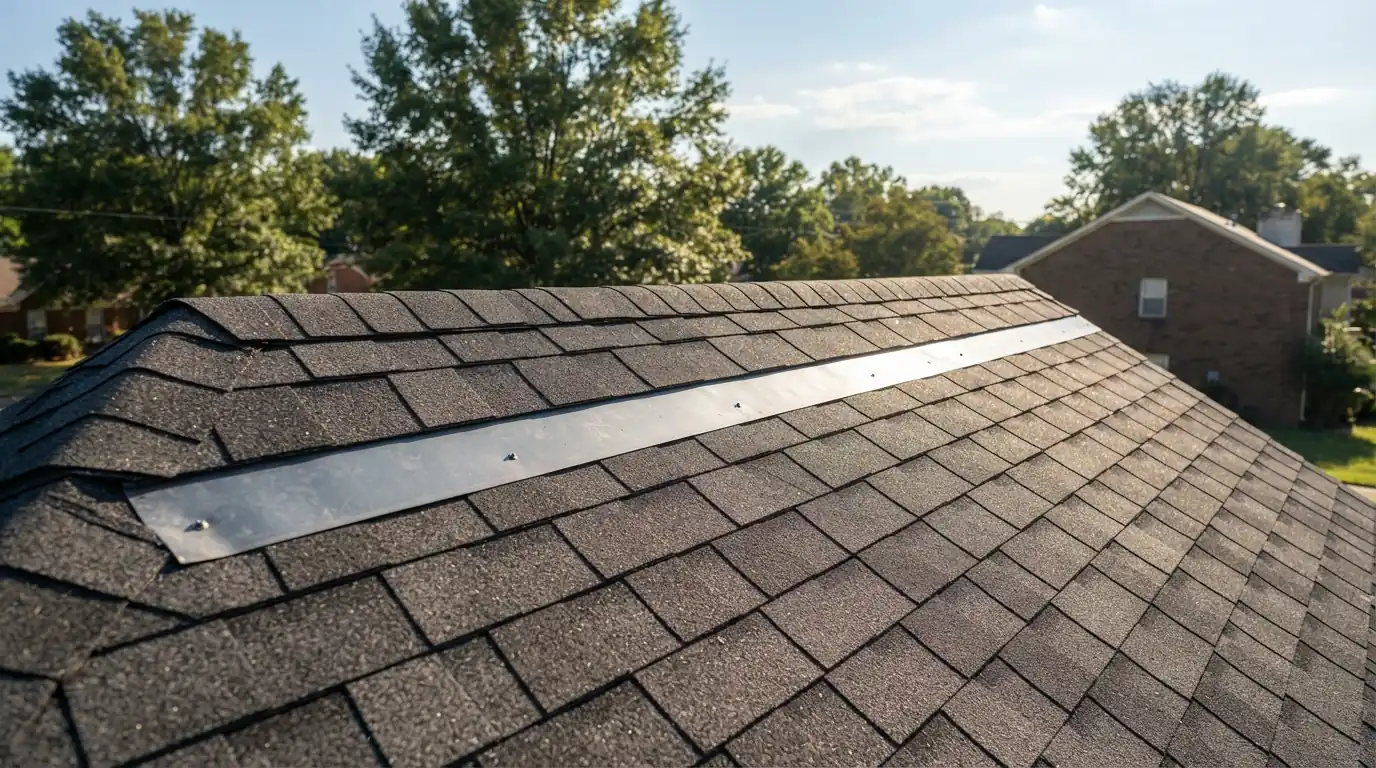
- Zinc or copper strips. Installed near the ridge, they release metal ions with each rain that slow new growth.
- Trim overhanging branches. More sun and less debris means a drier roof.
- Keep gutters and valleys clear. Trapped leaves keep the roof damp.
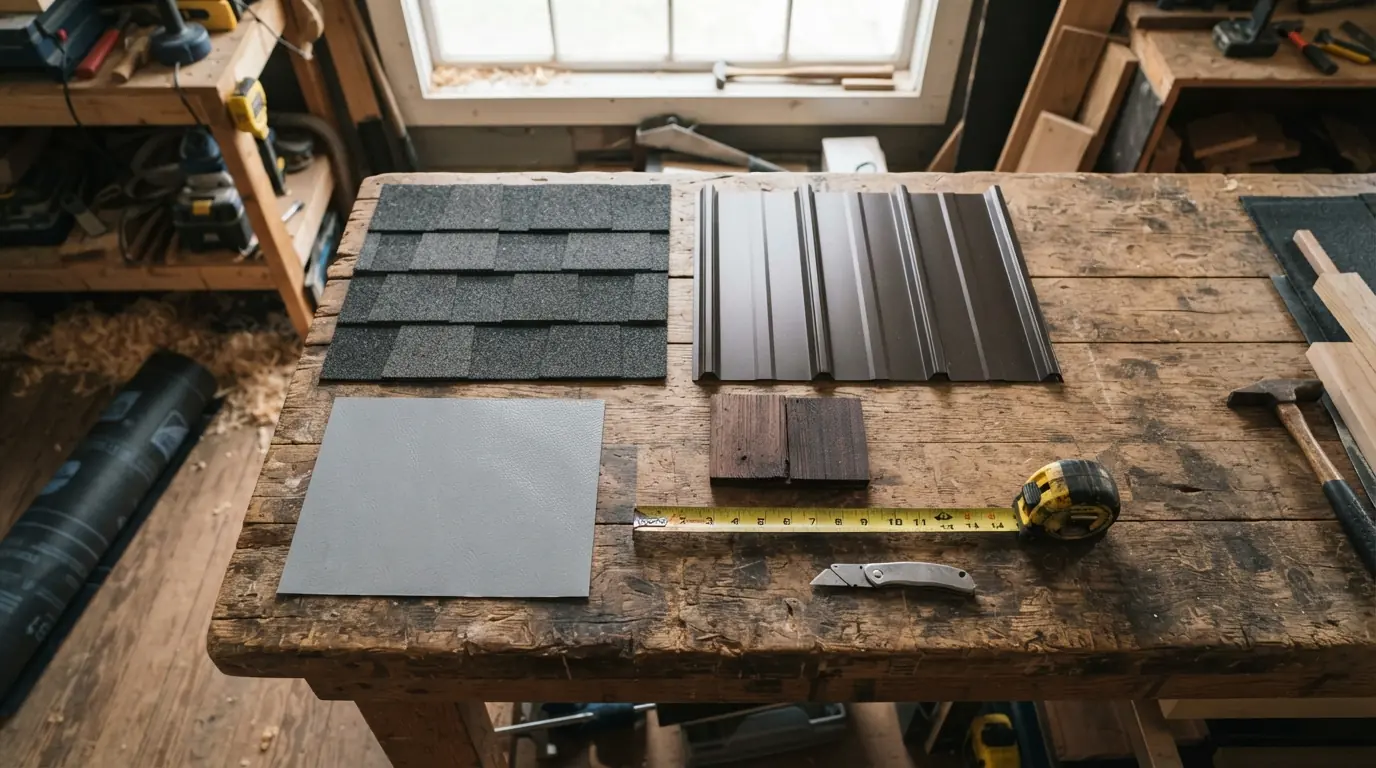
- Choose algae-resistant shingles. When the roof is replaced, major makers offer lines with copper-containing granules.
Streaks, moss or something worse?
Not every dark patch is algae. Bald spots where the black asphalt shows are granule loss, a sign of age or hail, and granules piling up in the gutters point the same way. If you cannot tell which you have, a roof inspection or a maintenance visit will sort it out, and our hail damage guide explains how bruising differs from streaking.
FAQ
Roof streak and algae questions
They are algae, not household mold. They are mostly cosmetic, though they make the roof absorb more heat.
No. High pressure strips the granules that protect shingles and can void manufacturer coverage. Use a soft wash.
On shaded slopes, eventually. Zinc or copper strips and trimming nearby trees slow the return.
Yes. Moss holds water and lifts shingle edges, which can lead to leaks.
It can. Wetting plants before and after, and managing runoff, protects them.
Not because of streaks alone. If the roof is sound underneath, cleaning is enough.